

In Summary
Two bodies, two dedicated lenses: the X-T5 with the 56mm f/1.2 and the X-T5 with the 18mm f/1.4 cover 90% of a wedding day between them.
Carry system matters as much as kit: an UpStrap on the shoulder and a Spider Black Widow holster on the hip means both cameras are accessible within seconds, all day long.
Available light first, always: the only supplementary light in the bag is a Manfrotto Lumimuse LED — and it only comes out for the dancing.
Shoot to both card slots simultaneously: at a wedding there is no reshoot. Redundancy is non-negotiable.
Carry more backup than you think you need: a spare X-T5, an X-Pro3, two backup lenses, and a minimum of six spare batteries travel to every wedding.
After photographing somewhere close to 800 weddings, you might think the question of kit would go away.
I don’t spend as much time thinking about cameras as I perhaps once did. Not on a wedding day, anyway. By that point, the cameras need to become part of the process.
Even so, I’m still asked fairly often what I actually photograph weddings with.
So this post is an answer to that question.
This is the kit I carry, the bits I rely on, the things I keep in reserve, and perhaps just as importantly, the things I don’t feel the need to bring at all.
It has taken a long time to arrive at a setup that feels this settled. Fifteen years or so of photographing weddings has taught me that I just need what works - everything else can become cumbersome.
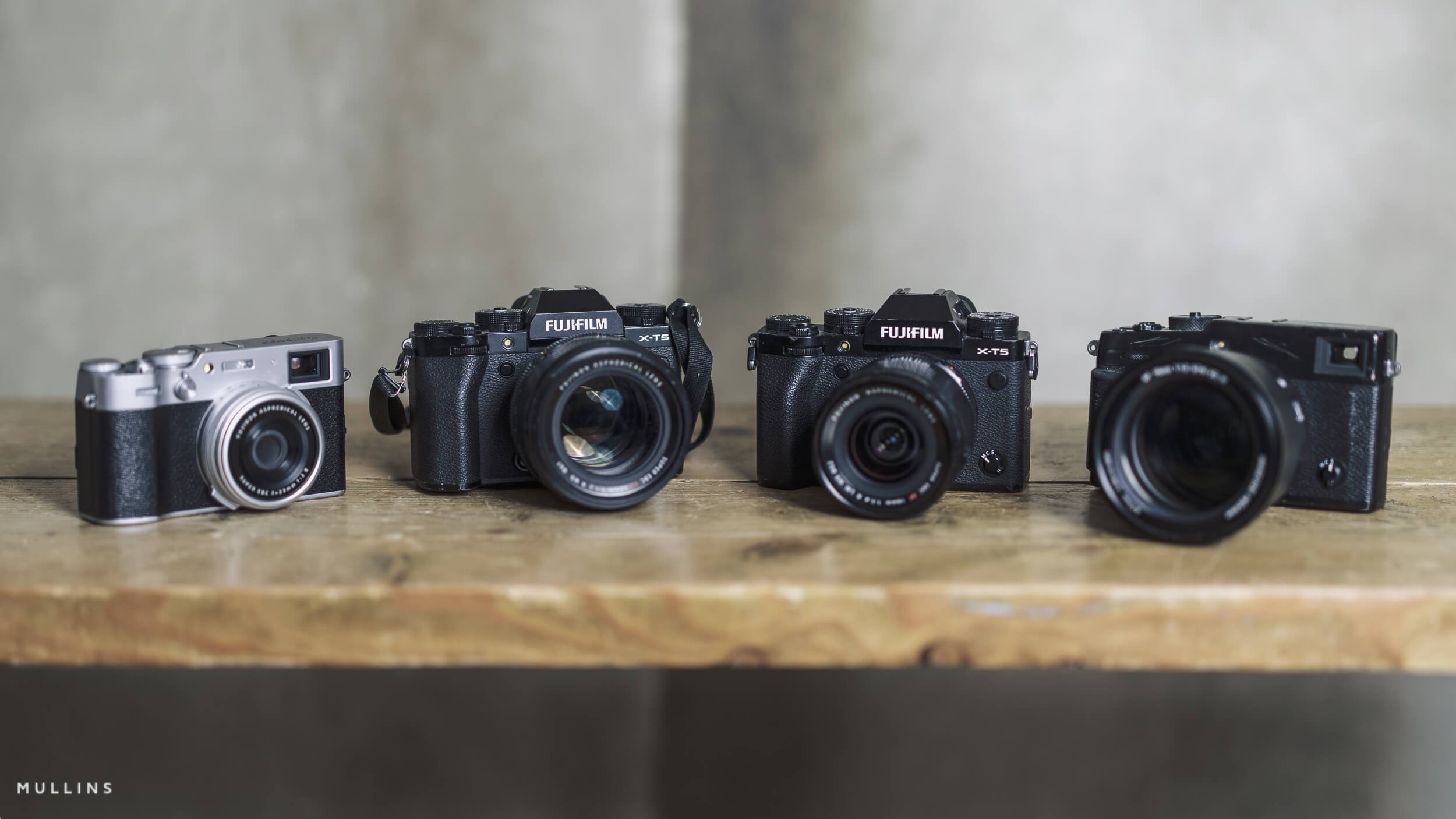
Fujifilm X-T5s and Reserve Cameras X100VI and X-Pro3
Why My Kit Has Become Simpler Over Time
If there is one thing weddings have taught me, it is that more kit does not necessarily make you better prepared.
Quite often, it just makes you slower. In the early days, I took all the gear I had, which actually led to missed moments and worries about security, etc.
Weddings move quickly. People move quickly. Light changes. Rooms fill up. Something happens in one corner while something else is happening somewhere else.
The best moments won’t wait while you unzip another compartment in your camera bag and wonder which lens might be best.
So over the years, my kit has become simpler rather than bigger. I want enough with me to cover a full day properly, to handle low light, difficult spaces, fast-moving moments, and the occasional surprise.
But I don’t want to spend the day thinking about gear instead of watching people.
At this point, my wedding kit is built around speed, familiarity and trust. I want cameras I know intimately, lenses that suit the way I see, and a carrying system that lets me move through the day without feeling like I’m lugging half a camera shop around on my shoulders.
This article is part of my Fujifilm Learning Hub.
A growing collection of real-world guides, camera setup tips, lens suggestions by use-case, practical assignments, and buying advice with examples.
Prefer to see everything I write, brand-agnostic pieces on documentary & street work, reviews, tips, and the business of photography? Browse Main Articles & More.
The Primary Setup: Two Fujifilm X-T5 Bodies
At the heart of everything these days are two Fujifilm X-T5 bodies. This is the core setup. It is what I work from for almost the entire day.
Each body has a dedicated lens attached, and both are available to me at all times. One sits on my shoulder, the other on my hip.
Between them, they cover almost everything a wedding throws at me, from cramped bridal prep rooms to ceremonies, speeches, fleeting reactions and the chaos of the dance floor later on.
I like working this way because it removes hesitation. There is no rummaging in a bag. No stopping to swap lenses while something unfolds in front of me. I can move between two very different ways of seeing in a second or two, and after enough years of doing it, that becomes second nature.
It is a setup that suits documentary wedding photography very well. One camera helps me tell the wider story. The other helps me isolate the important moments within it.
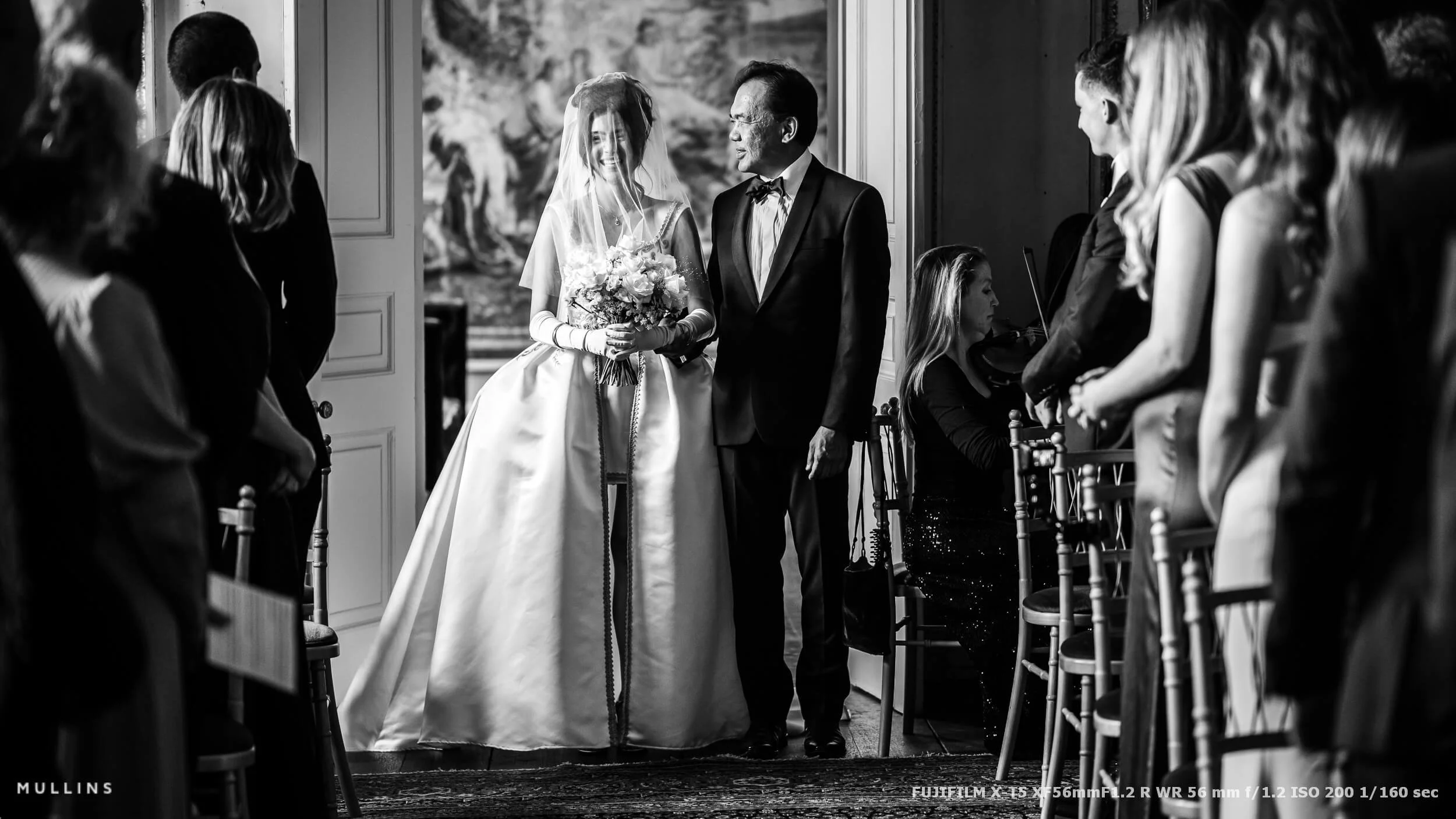
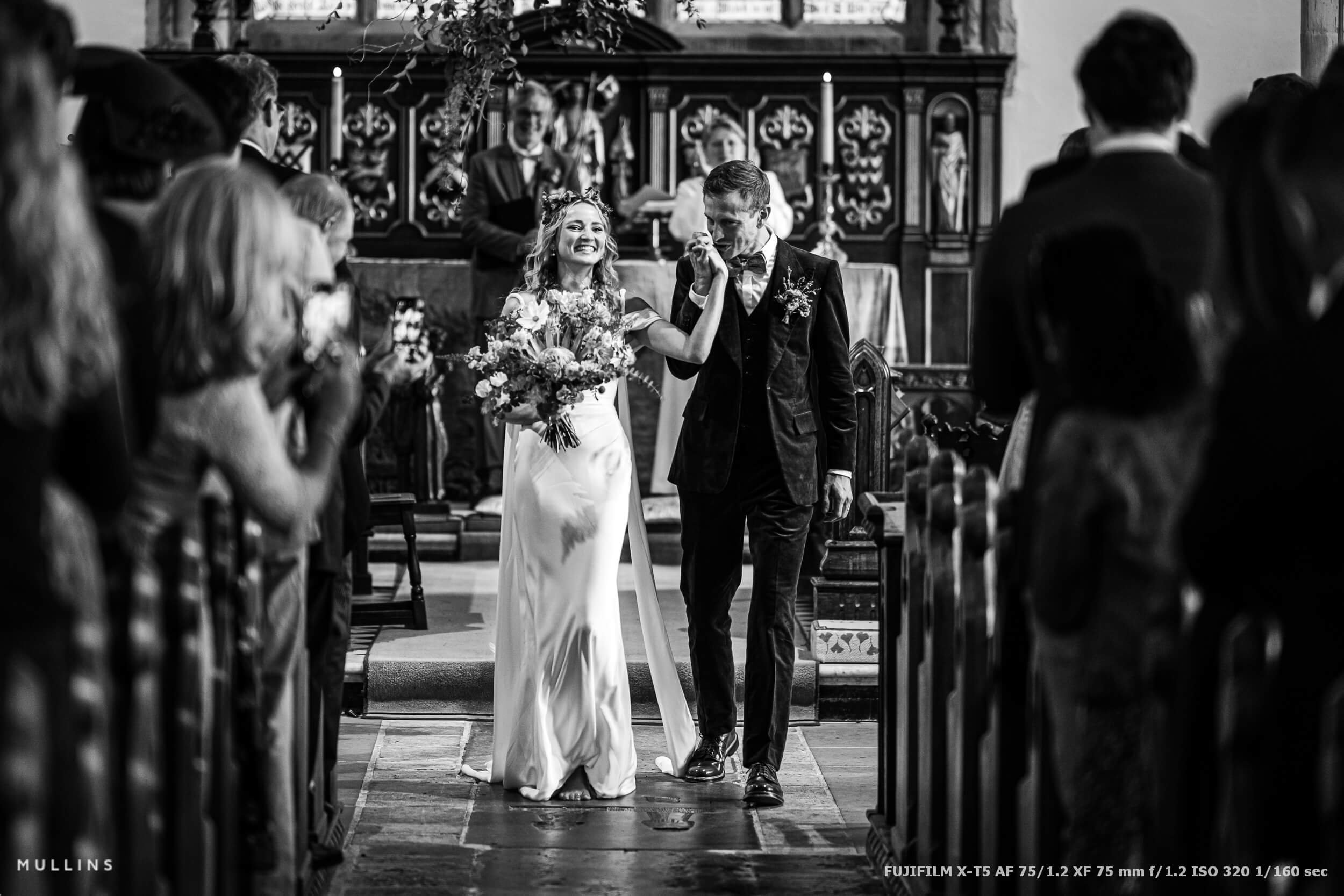
Body One: Fujifilm X-T5 with XF 56mm f/1.2 R WR
The 56mm is my longer lens, and I love it. It gives me that classic short telephoto look that feels so right for weddings.
On Fujifilm, of course, it offers an angle of view roughly equivalent to 85mm, a focal length I have always loved, dating back to my Canon days.
There is a loveliness to the way this lens sees. It flatters people without looking unnatural, and it compresses beautifully. It allows me to work from a respectful distance, which matters a great deal to me, and at f/1.2 it gives exactly the sort of subject separation I want when I need a little softness around the edges of a scene.
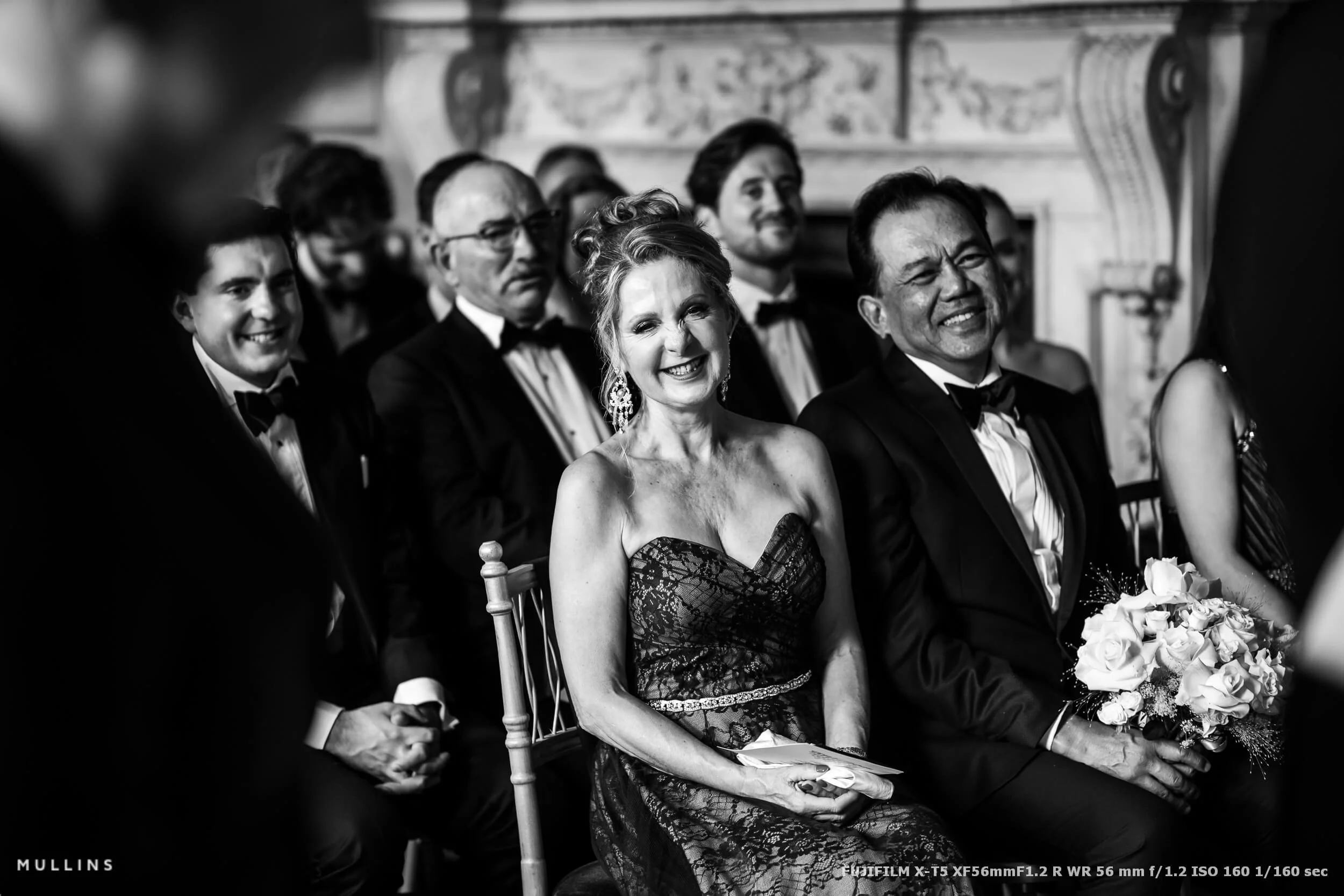
I use this combination throughout the day. Ceremony coverage from the edge of a room. Reactions during speeches. Unposed portraits during drinks. Little moments between people when I want to keep my distance and let things unfold without my presence changing them.
That is really the point of this lens for me. It helps me stay unobtrusive, and I’ve been using it since the first iteration was released many years ago.
The X-T5 and 56mm together produce beautiful files. The resolution is obviously there, but the files have a depth and clarity that feel rich without becoming overly digital.
One of the reasons I love the sensors in the Fujifilm cameras.
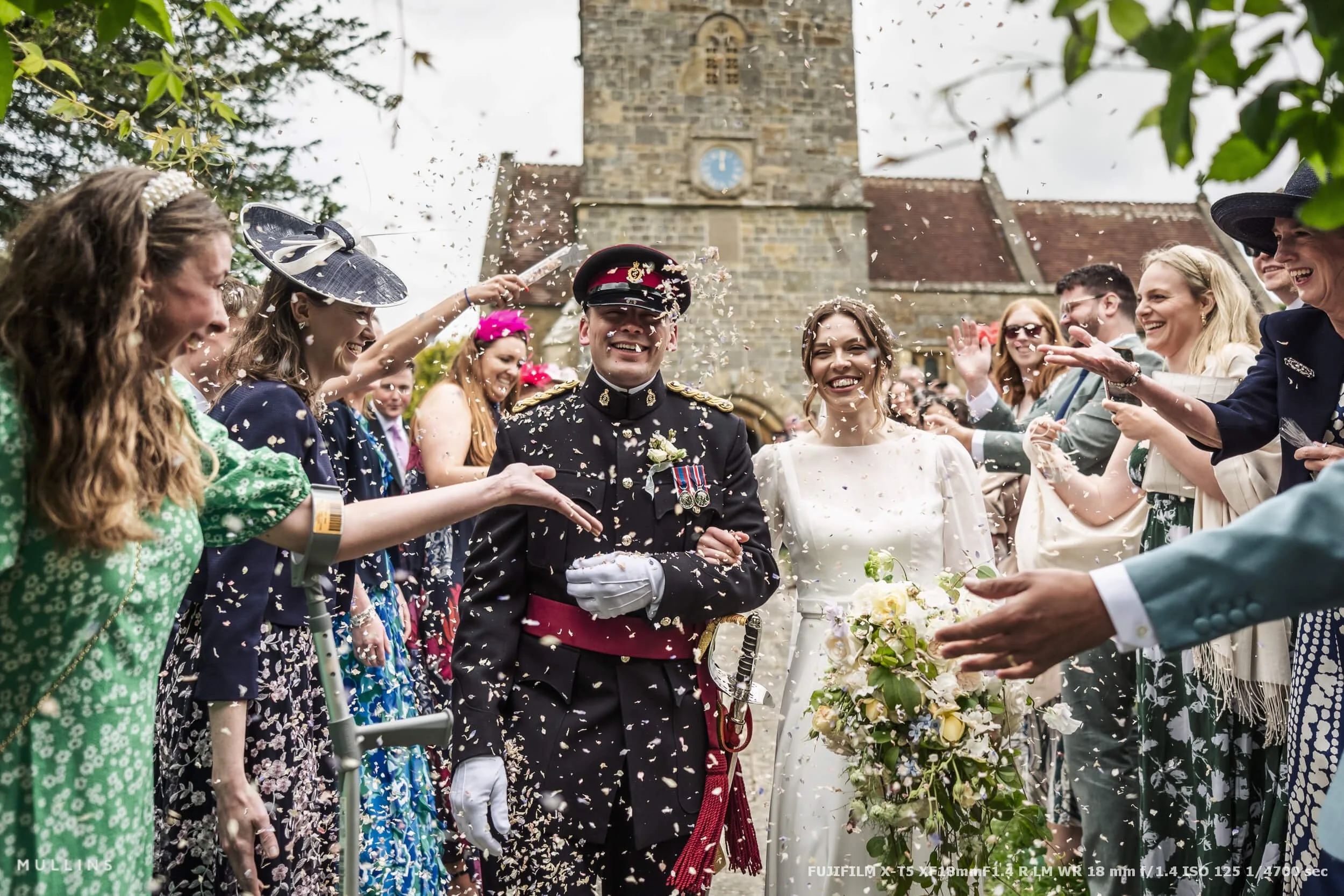
Body Two: Fujifilm X-T5 with XF 18mm f/1.4 R LM WR
This is the lens I reach for when I want the photograph to feel like part of a wider story rather than just a single person in a frame. On Fujifilm, it gives a field of view roughly equivalent to 27mm, which is wide enough to include context without, in my view, becoming gimmicky or distorted.
The 18mm is incredibly important to the way I photograph weddings. It allows me to show people in relation to the space they are in. The room. The guests around them. The weather outside. The clutter of prep. The architecture of a venue. The sheer busyness of a dance floor.
All the little environmental details that make a wedding feel like a real, lived day rather than a series of disconnected portraits.
I use it heavily during preparation, during moments of movement, and whenever I want a frame to have a bit more context.
It is also wonderful in low light. At f/1.4, it is fast enough for the way I work, and autofocus performance is excellent. It’s quick, dependable, and I trust it completely.
To be honest, the pairing of 18mm and 56mm does almost everything I need at a wedding. Between those two focal lengths, I can perhaps cover the whole day.
Everything else I bring is either there for very specific moments or as a proper backup.
Why This Pairing Works for Me
I think one reason this setup has lasted is that it matches the way I naturally see.
The 18mm is there for context, atmosphere and storytelling. The 56mm is there for simplification, emotion and distance.
There are, obviously, many other ways to photograph a wedding. Plenty of photographers work brilliantly with zooms. Plenty of people use flash all day long. Plenty favour a 23mm and 33mm pairing, or perhaps just one body and one lens.
None of that is wrong.
This is simply the setup that most closely matches the way I like to work.
It encourages me to move. It keeps me engaged with what is happening in front of me. And because I know both focal lengths so well, there is very little thought process involved in using them.
How I Carry Both Bodies
This sounds dull until you have photographed a few hundred weddings and realised how important it really is.
A wedding day is long. You are on your feet for hours. You are moving constantly. You are crouching, bending, climbing stairs, weaving through crowds, backing out of rooms, working in heat, cold, rain, dark corners and packed dance floors. So how you carry your cameras matters a lot.
One X-T5 sits on my shoulder using an UpStrap. I’ve used one for years, and I still think they are superb.
The key thing is the material. It grips properly, which means the camera stays where I put it rather than slowly sliding around and becoming an irritation.
The second body sits on my hip in a Spider Black Widow holster. Quite honestly, this is one of the best investments I have made in all my years of photographing weddings.
The camera is instantly accessible, the weight sits on the hip rather than dragging on the neck or shoulder, and the whole thing just feels more balanced over the course of a long day.
Together, the strap and holster system mean both cameras are with me, ready, comfortable and easy to reach without opening a bag or breaking stride.
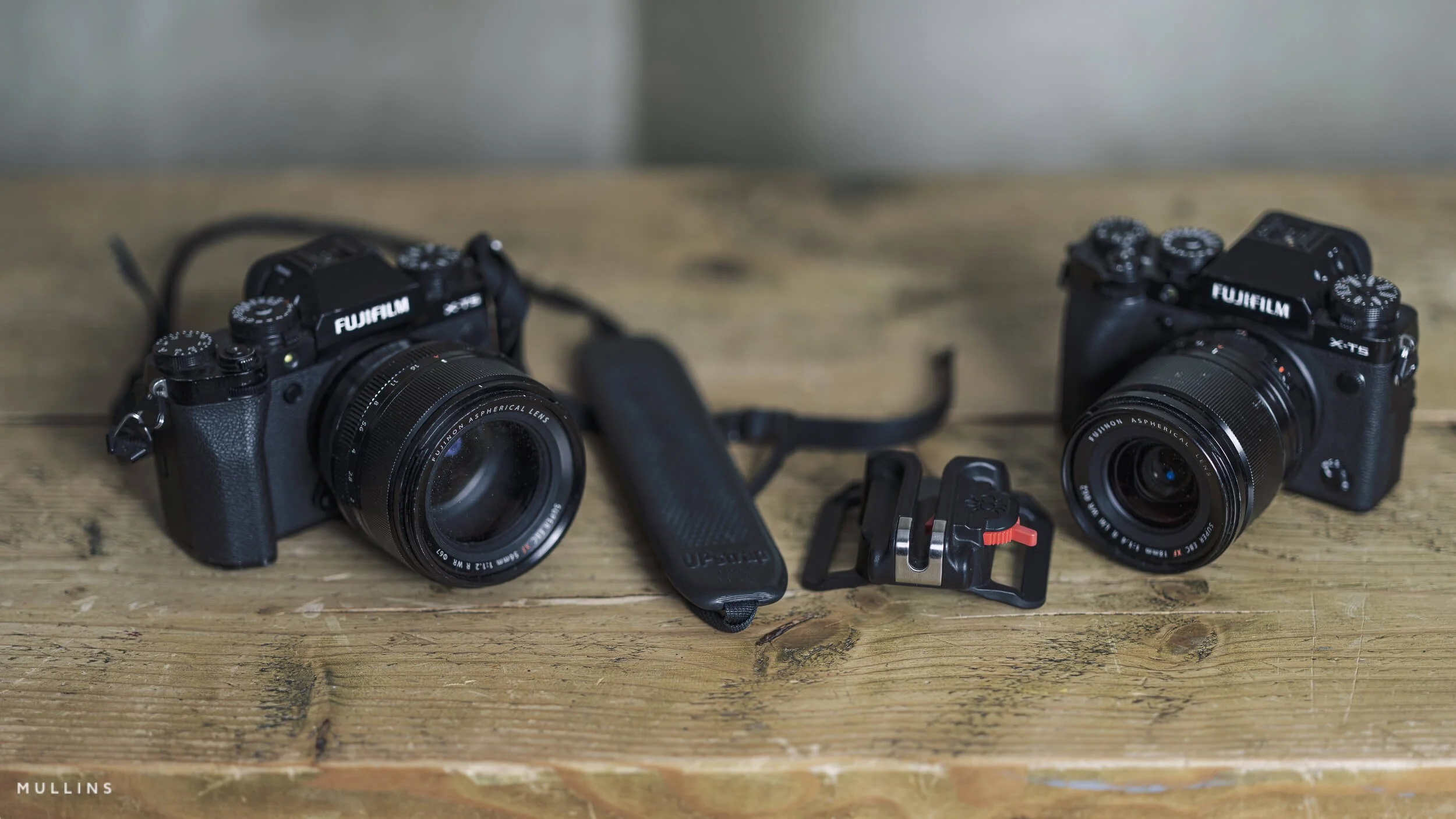
The UpStrap Camera Strap and Spider Holster.
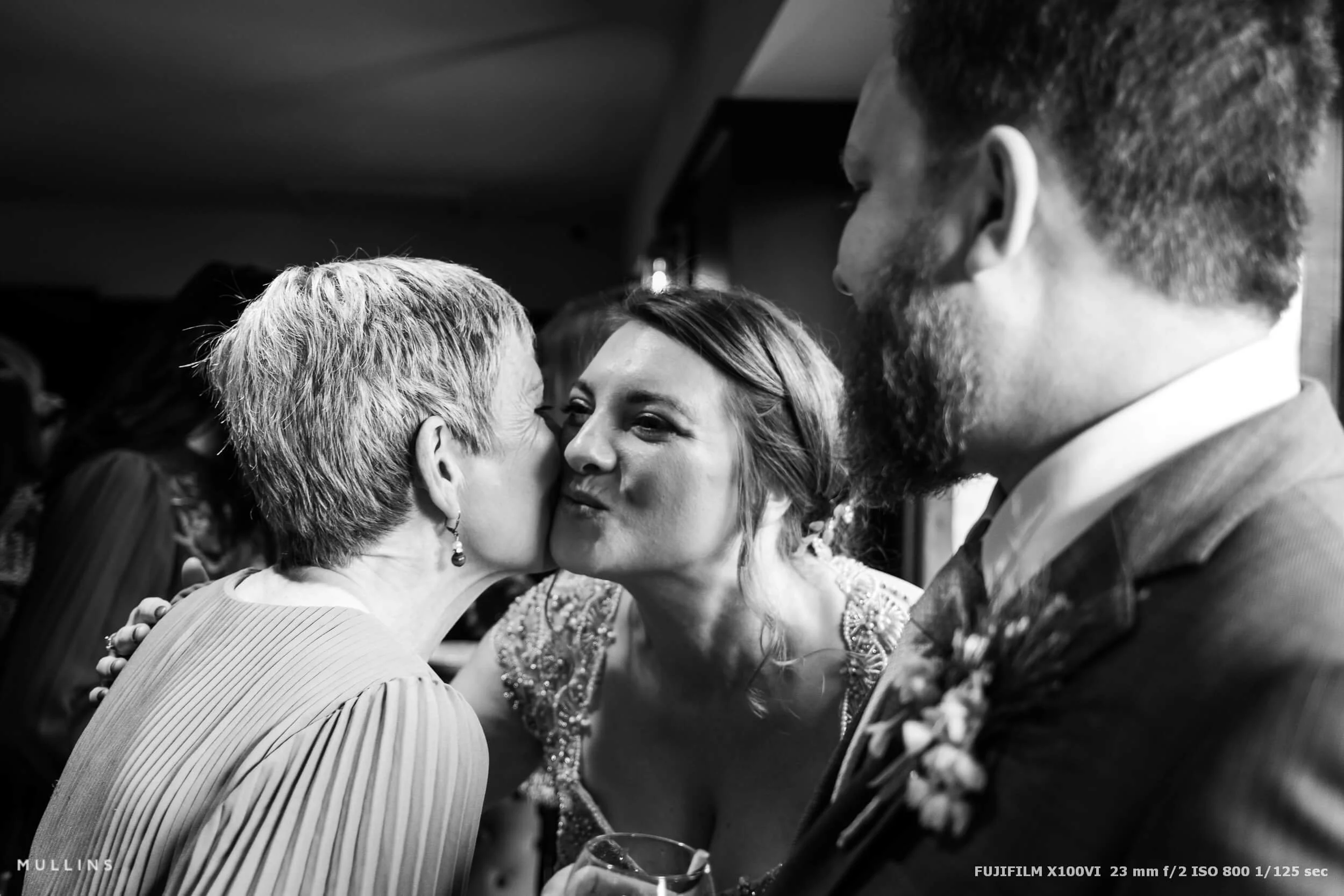
The Fujifilm X100VI: The Jacket Pocket Camera
The X100VI comes with me to most weddings, too.
This is not a camera that hangs around my neck all day. More often than not, it lives in a jacket pocket or sits in the bag until the right moment comes along. But when that moment does come, it is incredibly useful.
I tend to bring it out more in the evening, especially once the formal parts of the day are over and the dance floor has taken over.
It comes into its own when I want something even smaller, quieter and less conspicuous than the X-T5.
Guests who might notice a larger camera barely register the X100VI at all, which makes it very useful in the later parts of a wedding.
The fixed 35mm-equivalent lens keeps things simple. There is no decision-making around focal length, which can actually be quite cathartic. You just work with what is in front of you.
It’s not my main wedding camera. But it is a very good extra camera to have with me, and one that earns its keep.
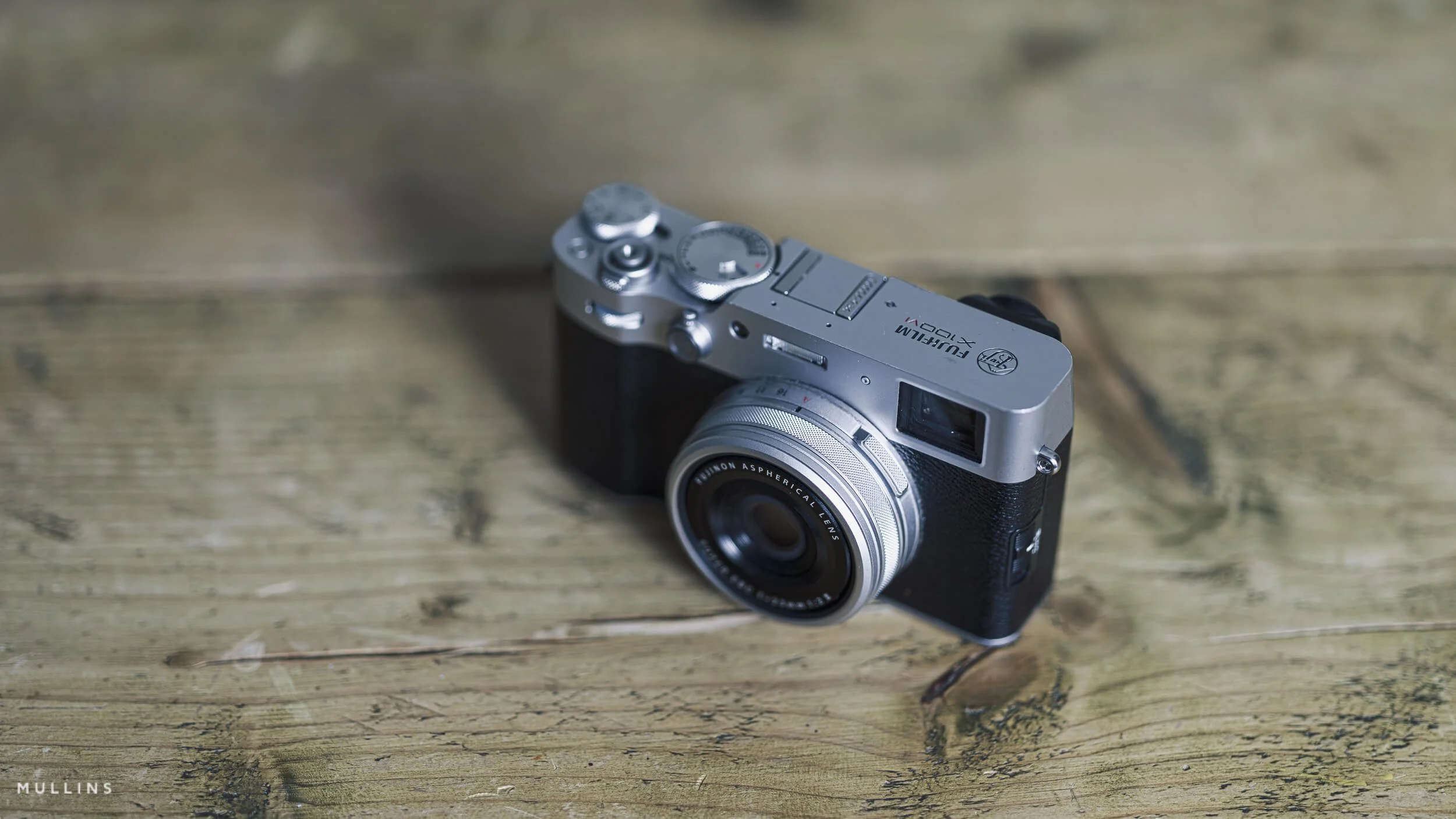
The Limited Edition Fujifilm X100VI
The X-Pro3: Still in the Bag, Still Loved
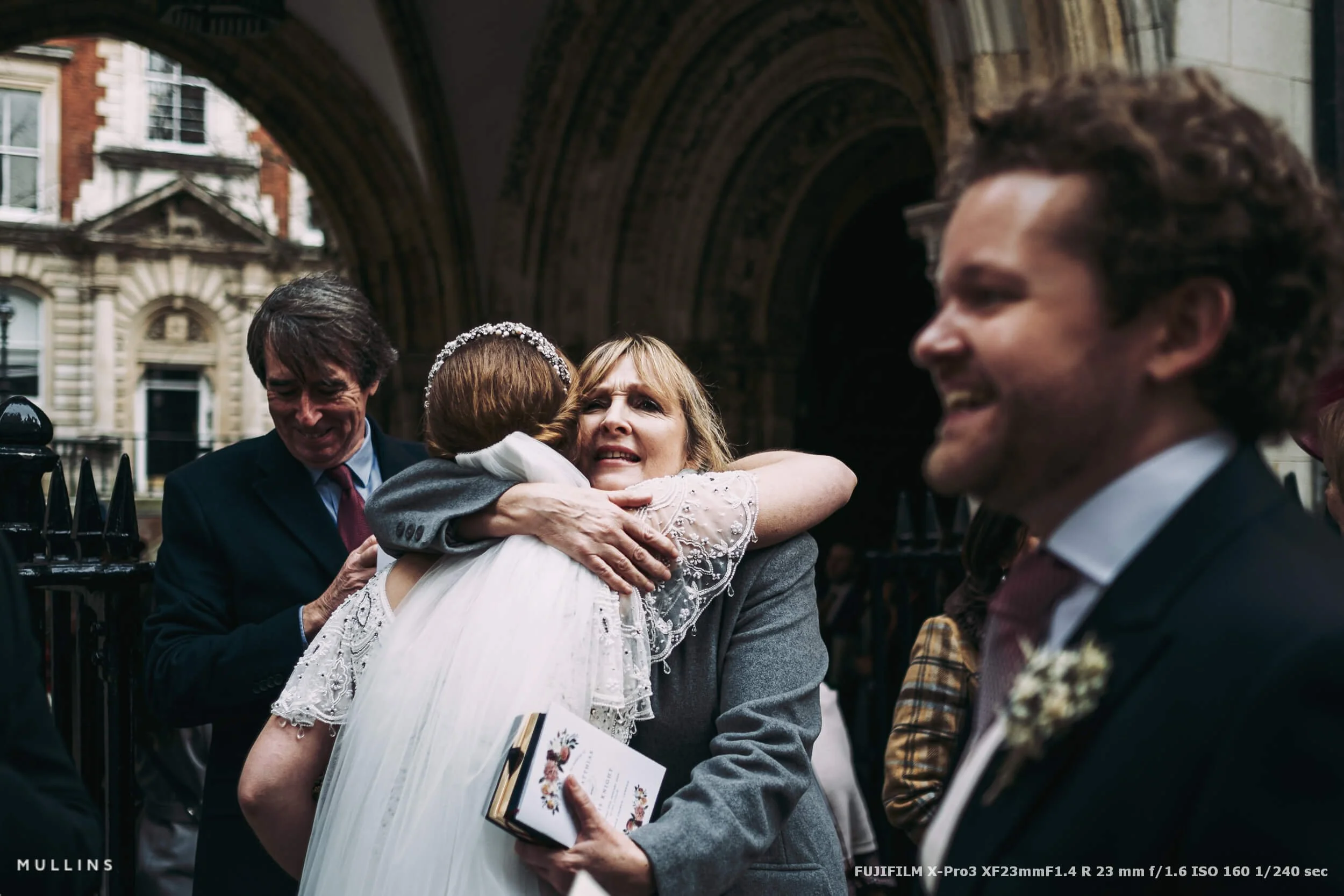
I do still carry my beloved Fujifilm X-Pro3.
These days, it sits firmly in the backup category rather than being part of my main working setup, and that is less an indictment of the X-Pro3 than a reflection of how strong the X-T5 has become.
In practical terms, the X-T5 is simply the more capable camera for the way I work at weddings now. It is faster, more flexible and easier to trust in every situation.
But the X-Pro3 still has something the X-T5 does not. Or perhaps not something better, exactly, but something different.
The rangefinder-style body, the optical viewfinder, the hidden rear screen, the whole design philosophy of it, really, I enjoy using it far more than my X-T5’s.
So while it no longer competes with the X-T5 as a primary body, it is still in the kit, still capable of wonderful results, and still the camera that keeps me hopeful that Fujifilm might one day give us an X-Pro4.
The Full Kit at a Glance
| Item | Role |
|---|---|
| Fujifilm X-T5 + XF 56mm f/1.2 R WR | Primary body one — portraits, ceremony, speeches |
| Fujifilm X-T5 + XF 18mm f/1.4 R LM WR | Primary body two — wide, environmental, documentary |
| Fujifilm X100VI | Supplementary — jacket pocket camera, evening use |
| Viltrox AF 27mm f/1.2 | Supplementary — normal focal length, bridal prep and quieter moments |
| Viltrox AF 75mm f/1.2 | Supplementary — reach and compression, large venues and speeches |
| Manfrotto Lumimuse LED | Lighting — first dance only, held in hand |
| UpStrap (Kevlar) | Carry system — shoulder body, non-slip |
| Spider Black Widow holster | Carry system — hip body, instant access |
| Spare Fujifilm X-T5 + X-Pro3 | Backup bodies |
| XF 33mm f/1.4 + XF 23mm f/1.4 | Backup lenses |
| 6+ spare batteries | Power backup — minimum carried at every wedding |
Want to go deeper into my approach to documentary wedding photography?
My online course, The Art of Documentary Wedding Photography, explores far more than just cameras and lenses. It covers observation, storytelling, light, composition, timing, and the practical realities of photographing a wedding day in a candid and unobtrusive way.
This post explains the kit I use. The course goes much further into the thinking behind it, and how I approach documentary wedding photography more broadly.
The Supporting Lenses
The 18mm and 56mm do the lion’s share of the work. If those were the only two lenses I carried, I could still photograph a wedding perfectly happily.
That said, there are two additional lenses in the bag for situations where I want something a little different.
Viltrox AF 27mm f/1.2: The Middle Ground
The Viltrox 27mm f/1.2 gives me that useful middle ground between the width of the 18mm and the tighter, more selective look of the 56mm. In full-frame terms, it sits at roughly 40mm, which is close to the way we naturally perceive a scene and feels very balanced on my cameras.
I tend to use it during quieter parts of the day. Bridal prep can be a good example. So, I can have more observational moments when I want a frame to feel intimate without being either obviously wide or obviously long.
The other strength of this lens, of course, is the aperture. f/1.2 on a lens like this gives you plenty to work with in poor light, and the overall image quality is genuinely excellent.
Viltrox have done a remarkable job with some of these lenses. For the money, it's hard to argue with what they produce.
Viltrox AF 75mm f/1.2: The Reach Option
The Viltrox 75mm is the longest lens I carry, and it is definitely more of a specialist tool than an everyday one.
It doesn’t come out at every wedding, and some days it stays entirely in the bag. But there are times when it is exactly what I want.
Large venues. Ceremonies where I need to work from the back. Speeches where I want to isolate a reaction across the room. Moments where stepping closer would either be intrusive or simply impossible.
At that focal length, and with that aperture, the separation is lovely. It allows me to compress a scene and pull a subject out in a very clean, very controlled way. It is not a lens for all situations, but when the situation suits it, it performs beautifully.
Lighting: Available Light First, Always
I have always been an available light photographer, except for my Studio Portraits.
That is partly a practical preference and partly a philosophical one.
Flash can be useful, of course (for those who know what they are doing). But for the way I photograph weddings, I generally don’t want to impose a new atmosphere on a room when there is already one there waiting to be used.
I’d rather find the window, use the doorway, work with the practical lights that already exist, and let the photographs reflect the day as it actually felt.
Atmosphere matters a great deal to me.
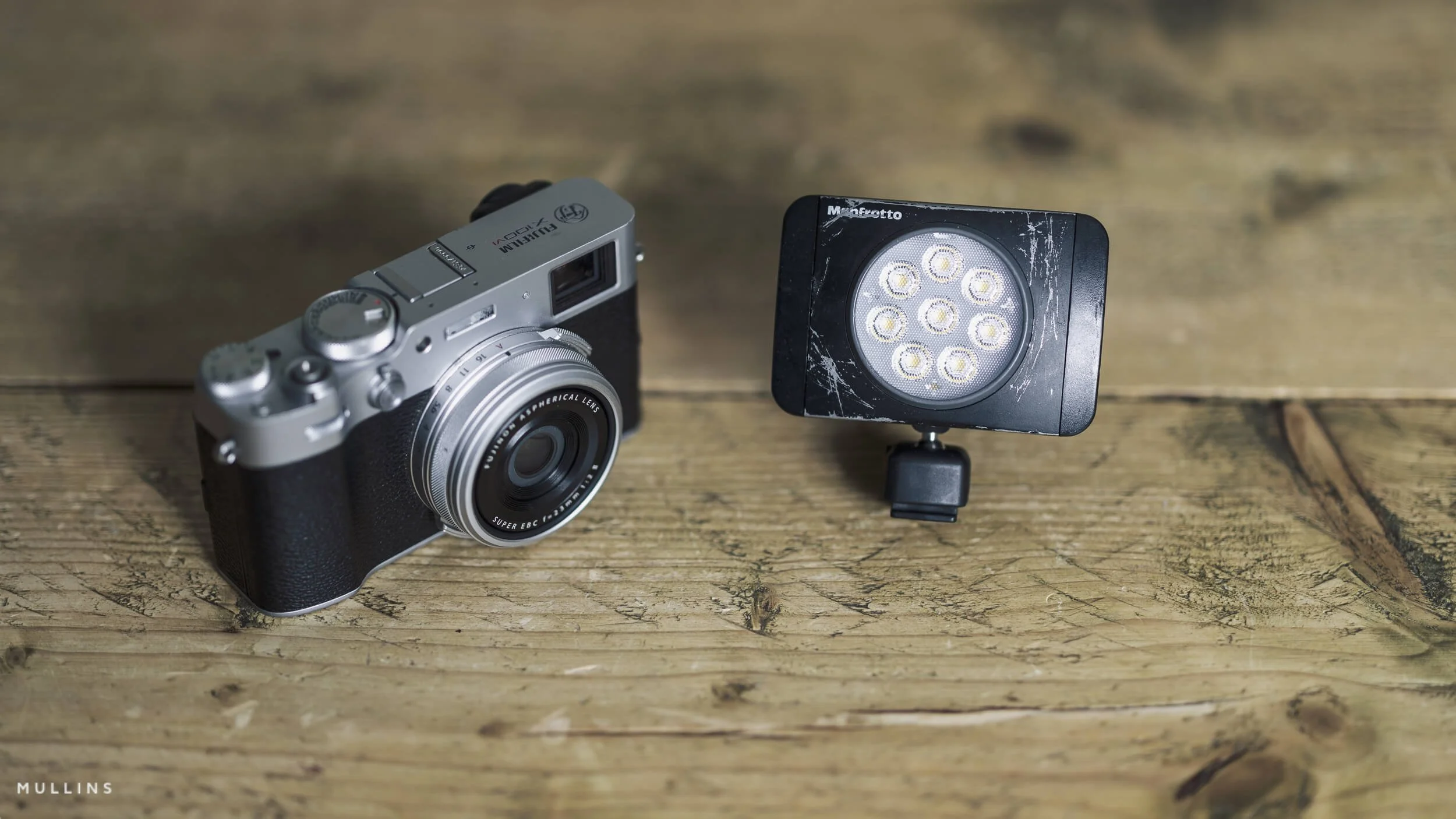
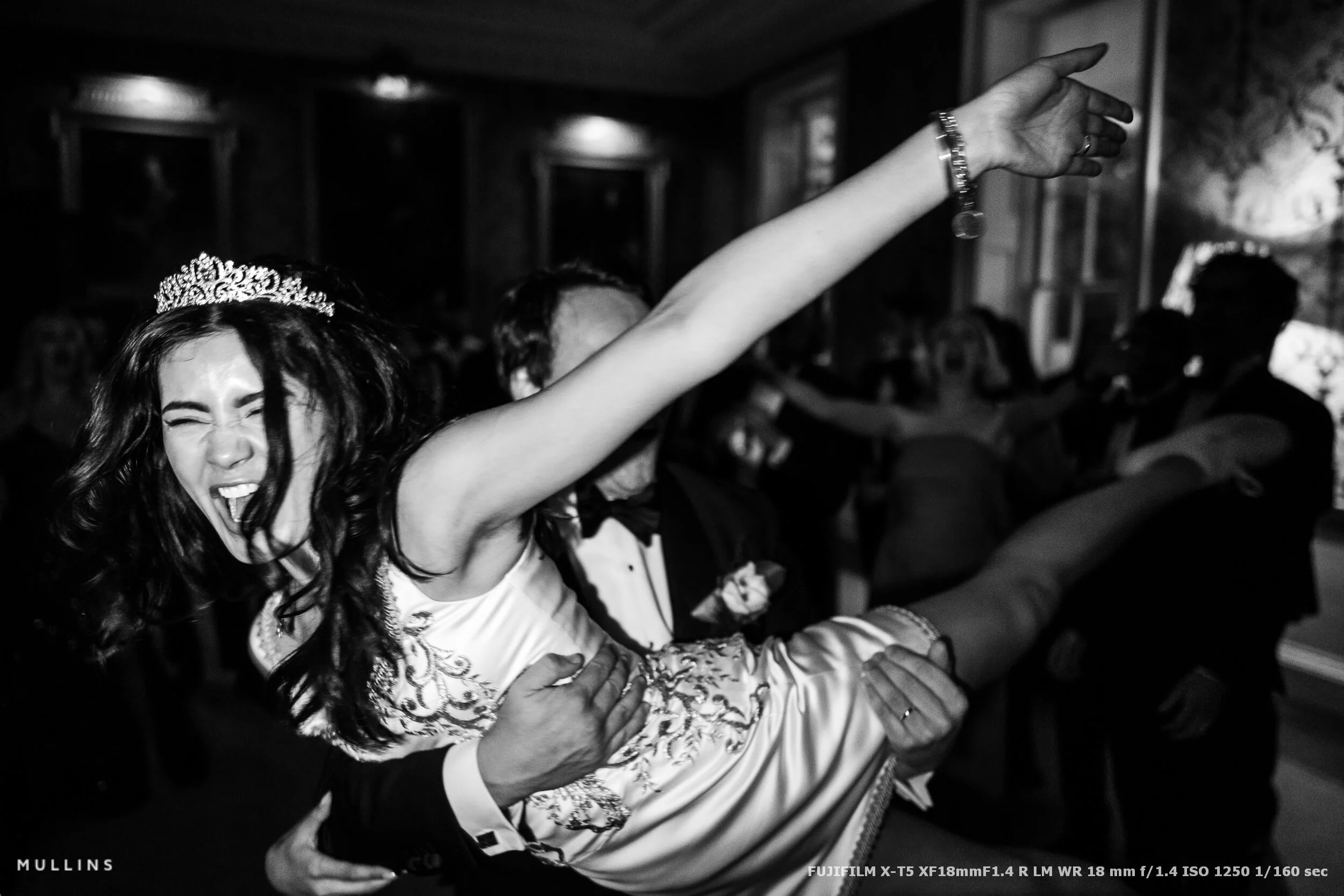
The one area where I do add light is during the first dance and the dancing later on. For that, I use a Manfrotto Lumimuse. It is small, portable and easy to work with one hand while I shoot with the other.
It gives me just enough extra light to freeze movement in darker conditions without flattening the mood, as a more obvious flash setup often does.
I want the evening pictures to feel like they belong to the same day as everything that came before, not as if they suddenly belong to a completely different photographer.
The Manfrotto Lumimuse LED Light
Wedding Photo taken using the Manfrotto Lumimuse LED Light
What I Don’t Carry
I don’t carry zoom lenses to weddings. That is not because Zooms are wrong or inferior. They are obviously practical, and many photographers use them brilliantly.
But for me, primes keep me more engaged. They encourage movement. They make me think more deliberately about where I stand and, crucially, add cohesion to the look of all my photographs.
I also don’t carry a flash system. Again, that is a personal choice rather than “the right way”. I simply prefer to work with the available light whenever I can.
And I don’t fill the bag with endless options. I used to be more tempted by that than I am now. The idea that one more lens, one more accessory, one more just-in-case item might somehow make me safer. In practice, I think it often does the opposite.
These days, I would far rather carry a small number of items I trust completely than a large number I only use occasionally.
Memory Cards: Redundancy Is Not Optional
Every camera body in my wedding kit has dual card slots (except for the sparsely used X100VI), and I record every frame to both cards simultaneously. Every image exists in two places the moment it is made.
That is simply how I work, without exception.
I have never lost wedding photographs because of a memory card failure, and one reason I haven't had that nightmare is that I’ve always taken redundancy seriously.
Weddings are once-in-a-lifetime events. There is no re-shoot. No second chance. So this is one area where I don’t think it makes sense to compromise.
Batteries: Carry More Than You Think You Need
Battery life is one of those things that people worry about a lot, often for good reason, but I find my own usage is fairly efficient because of the way I shoot.
I work in a documentary style, which means the cameras are not left switched on constantly between moments, and I’m not someone who spends the day repeatedly reviewing images on the back screen. That helps battery life a lot.
In practice, I can often get through a full wedding day on a single battery in each of the main cameras.
Even so, I still carry at least six spare batteries in the bag. Every wedding. Every time. I also keep a charger with my backup equipment.
That is just common sense. There is certainly no excuse for battery anxiety at a paid wedding when the solution is as simple as carrying a few more spares.
The Backup Kit
My reserve kit travels with me to every wedding, whether I expect to use it or not. In practice, it almost never comes out. I hope it never needs to. But it is there because it has to be there.
My backup kit is straightforward:
A spare Fujifilm X-T5 body.
The Fujifilm X-Pro3, which doubles as both a genuine backup body and an occasional third camera if I feel like using it.
An XF 33mm f/1.4.
An XF 23mm f/1.4.
That gives me enough redundancy to deal with a camera failure or lens problem without any real issues. I’ve never had to call on the backup kit in anger at a wedding, but I would not dream of attending one without it.
If I Were Building a Fujifilm Wedding Kit From Scratch Today
People sometimes read posts like this and think they need all of it. You don’t.
If I were starting from scratch now and building a Fujifilm wedding kit today, I would keep it very simple. Two reliable bodies, then two lenses that do very different jobs. Something wide enough to tell the broader story, and something longer that allows for quieter, more selective coverage.
For me, that would still probably mean starting with something like an 18mm or 23mm, paired with a 56mm.
Learn those properly. Use them enough that you stop thinking about them. Build your confidence in them. Work out how you naturally see. Only then would I start adding anything else.
Is This the Right Kit for You?
It is the right kit for me. That is really the only statement I’m making here.
It has taken years to arrive at this setup, and it reflects not just what I like, but the way I photograph.
Your own setup may look quite different. You may prefer Zooms. You may love Flash. You may feel more comfortable working with one body rather than two. You may want a 23mm, whereas I want an 18mm. None of that is wrong.
But if you are building a documentary wedding photography kit around Fujifilm, I do think this system is incredibly hard to beat. It is compact, dependable, discreet, beautifully capable in low light, and, perhaps most importantly, it gets out of the way.
And really, that’s what I want from my wedding kit now.
“I have no concerns at all about the autofocus in modern Fujifilm cameras for wedding photography. In many cases, when people say otherwise, I think the real issue is not the camera, but simply not having spent enough time learning how to use it properly.”
How I Edited These Images
All of the images in this post were edited using my Film Edition 5 Presets. They’re the presets and profiles I use when I want a finish that feels filmic, natural and consistent without pushing the photographs too far away from how the day actually looked.
For me, editing should support the picture rather than steal the show, and that’s very much the thinking behind Film Edition 5. If you’d like to explore them for yourself, you can find Film Edition 5 here.
More Wedding Photographs with This Fujifilm Kit
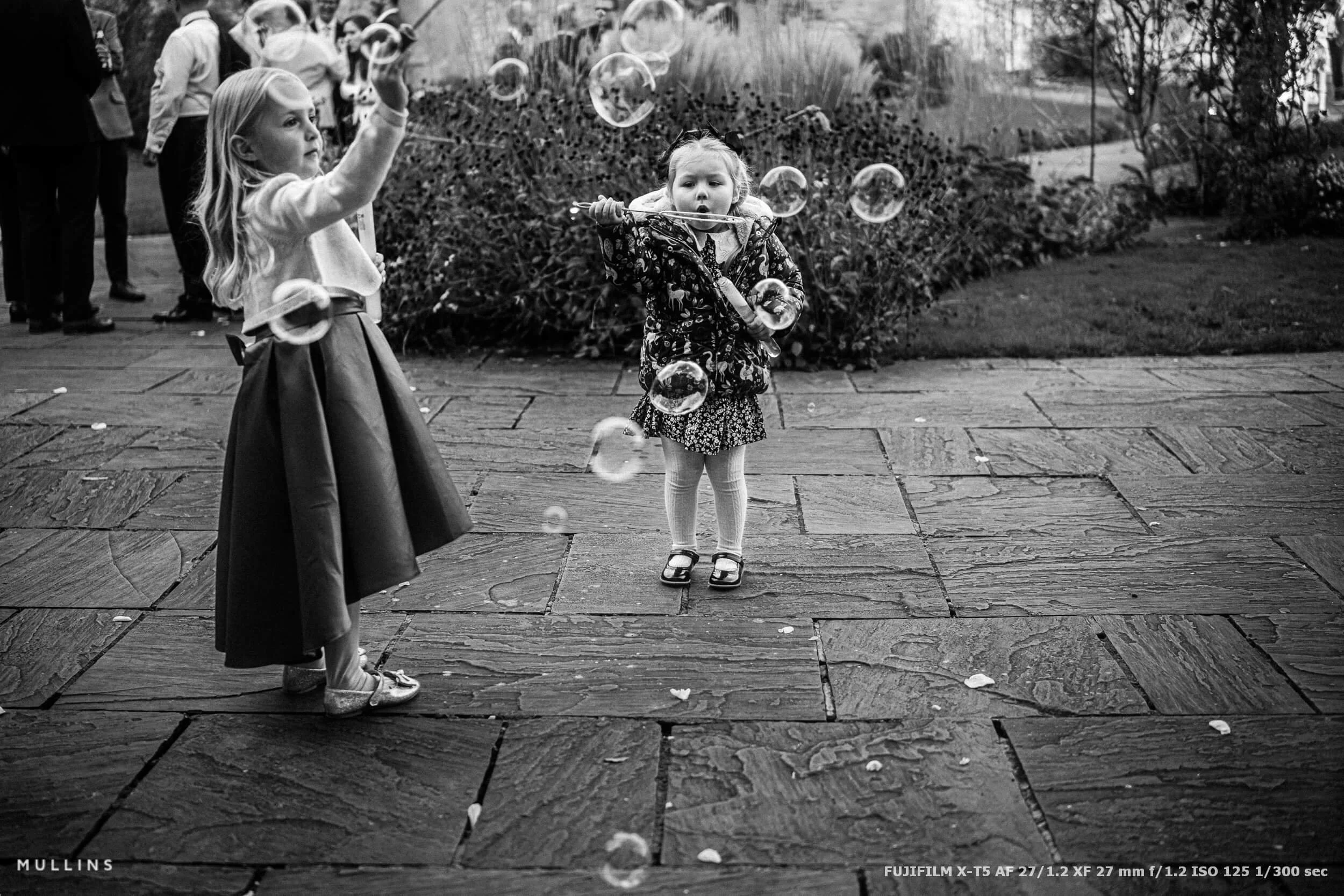
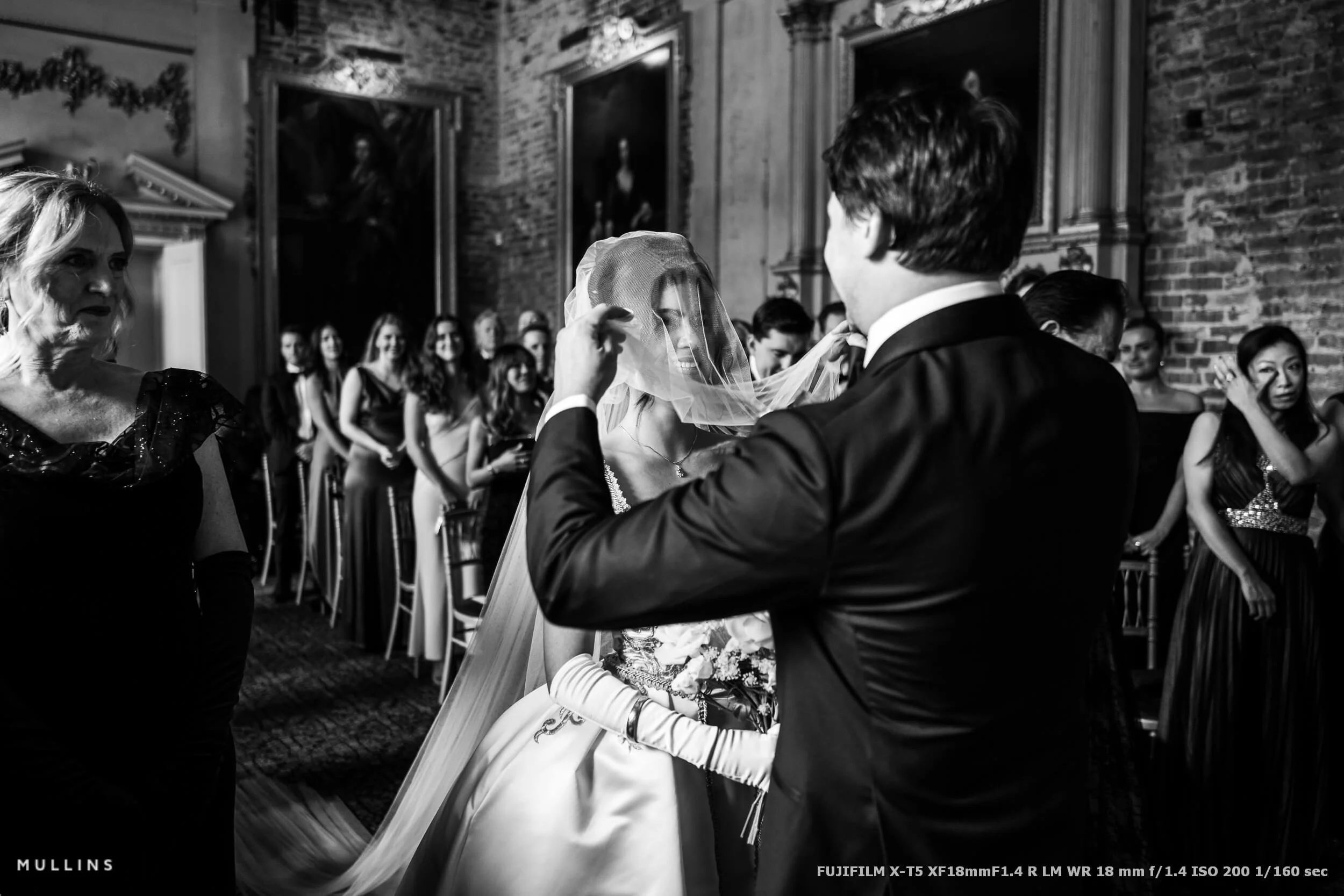
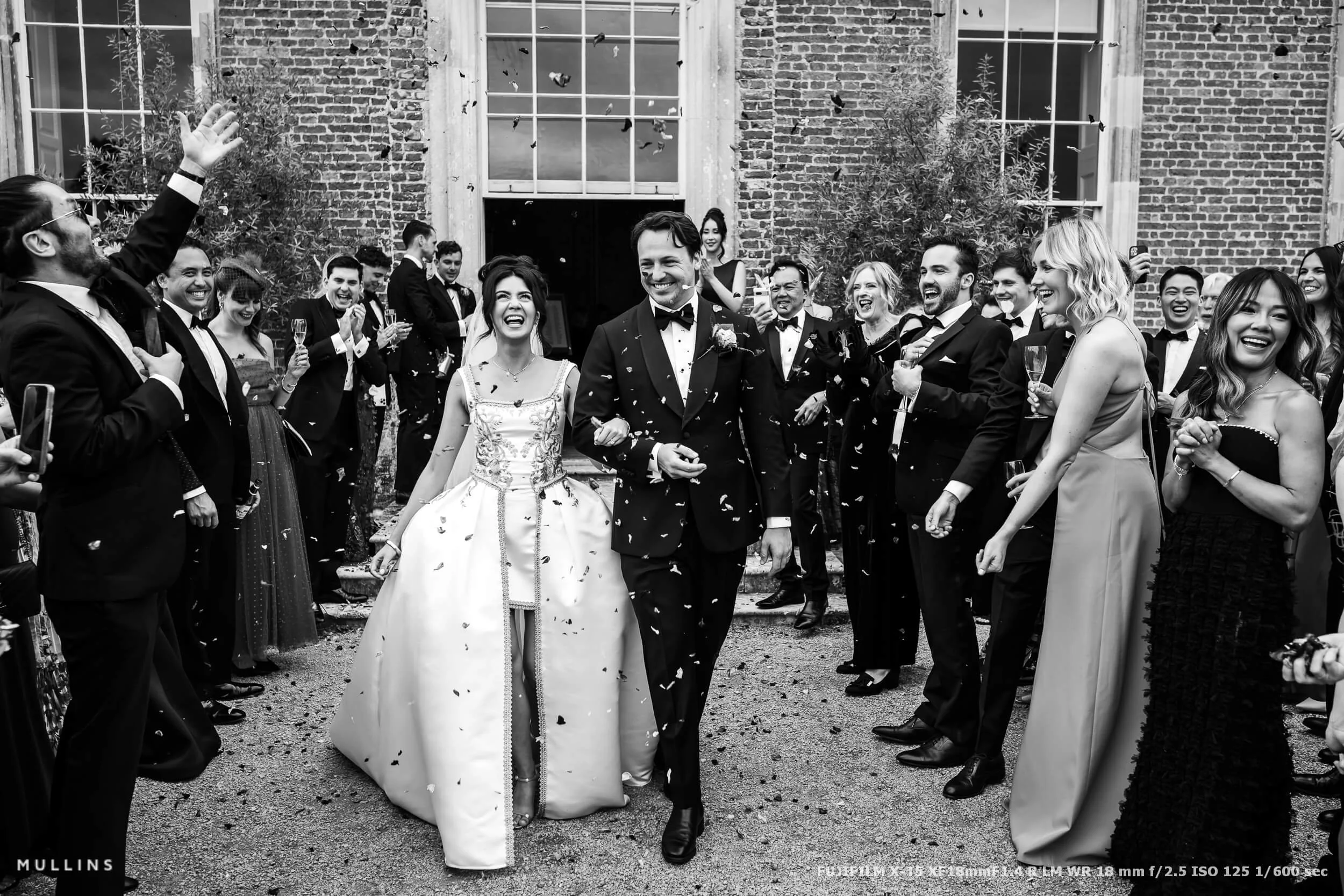
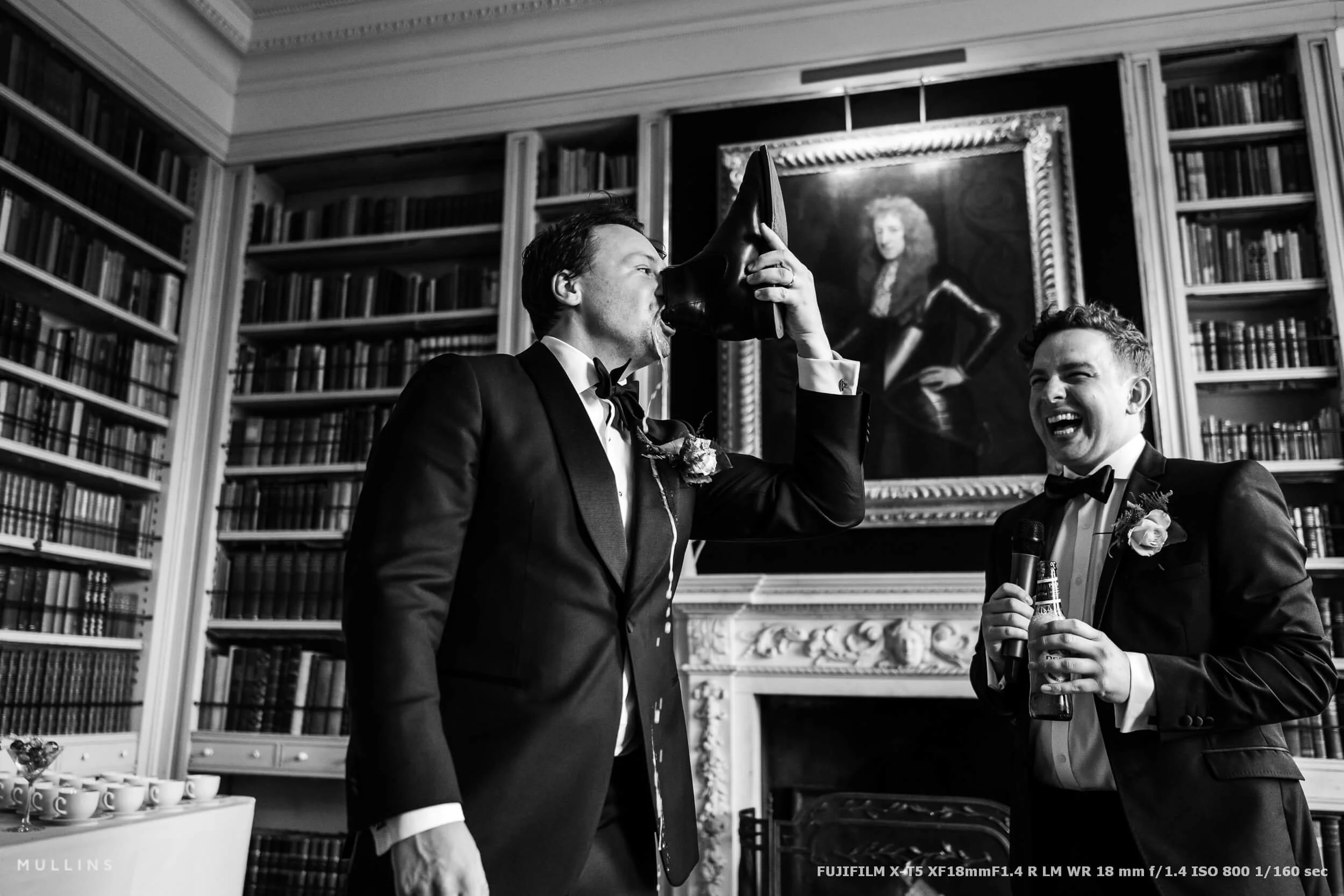
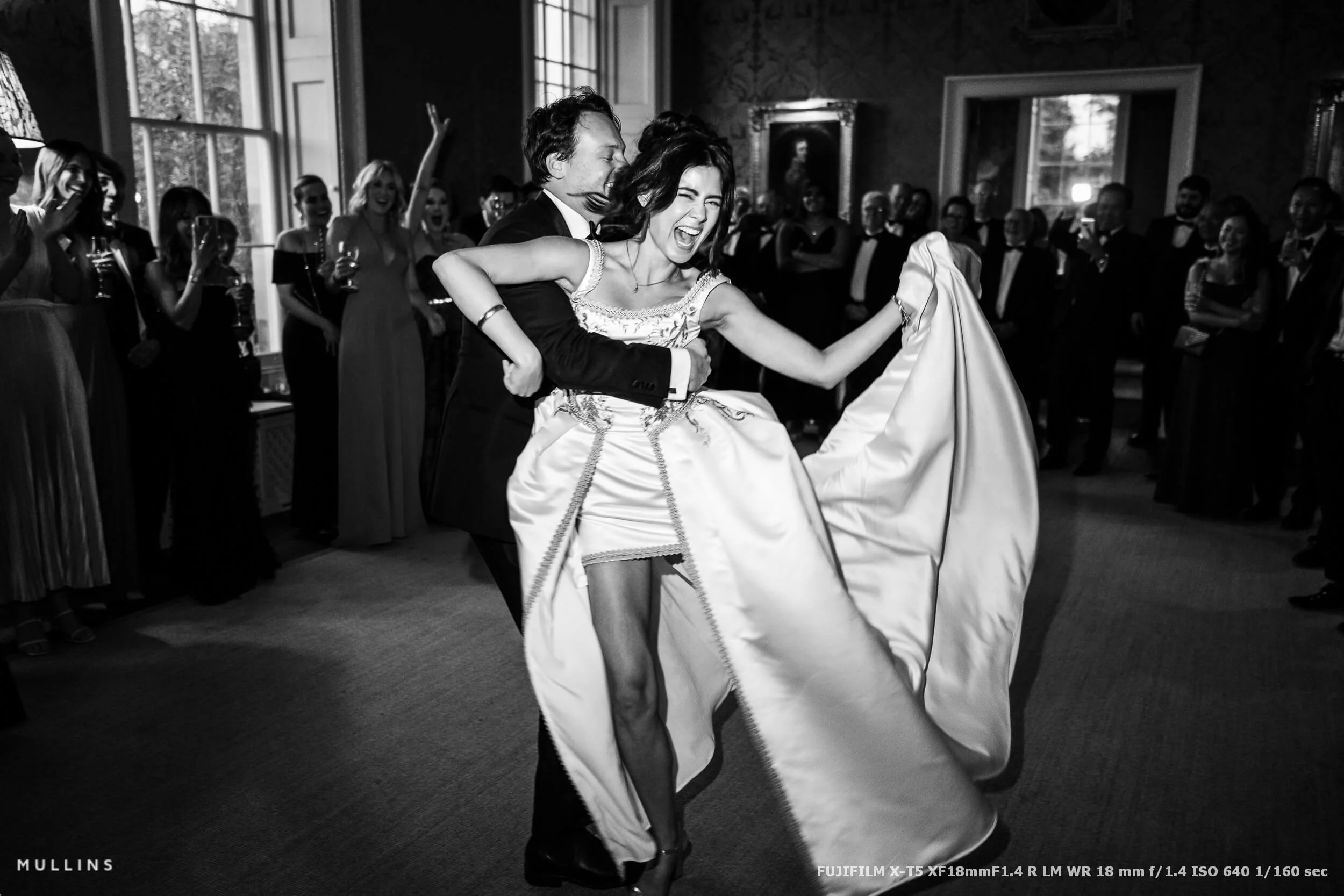
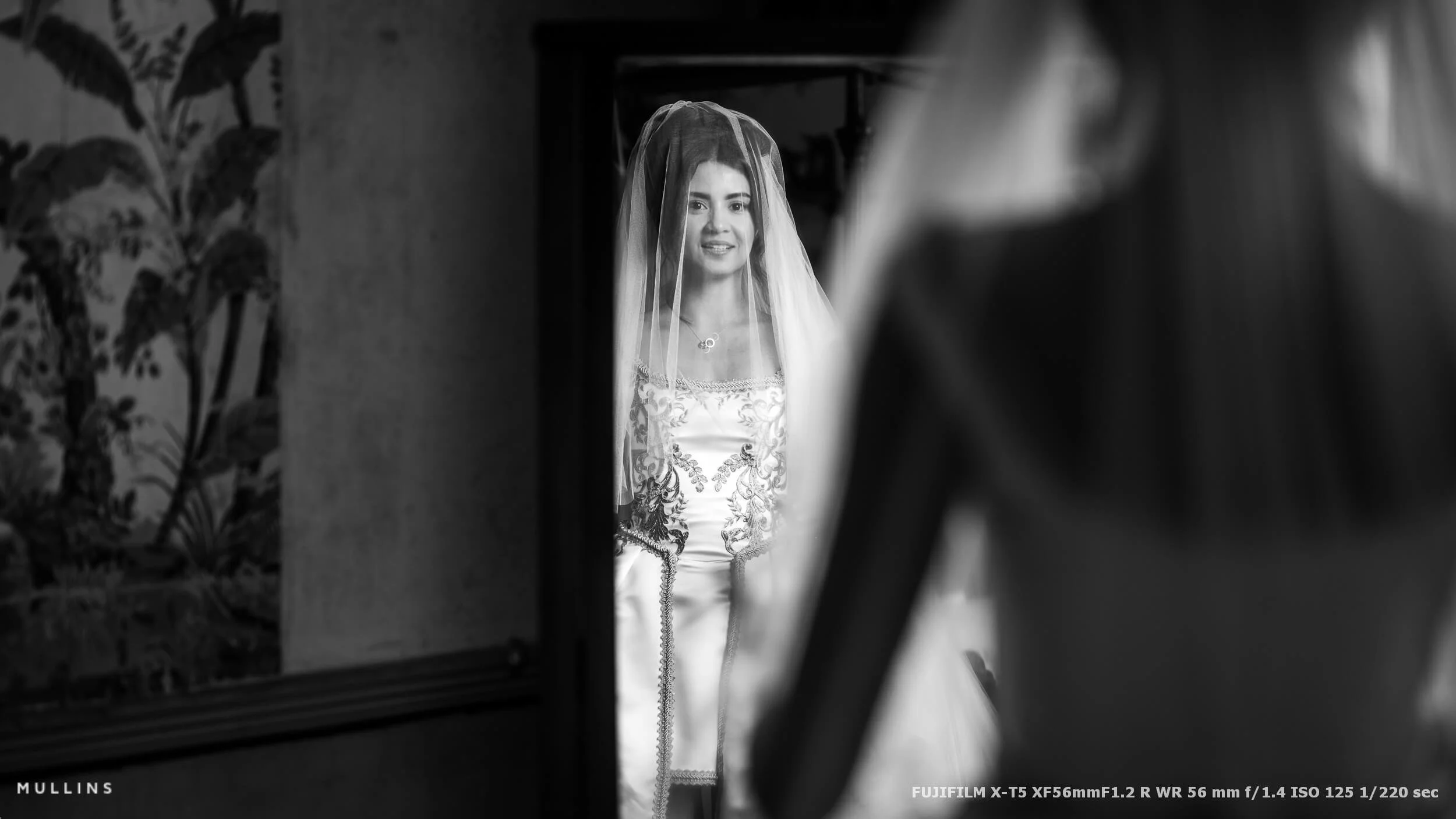
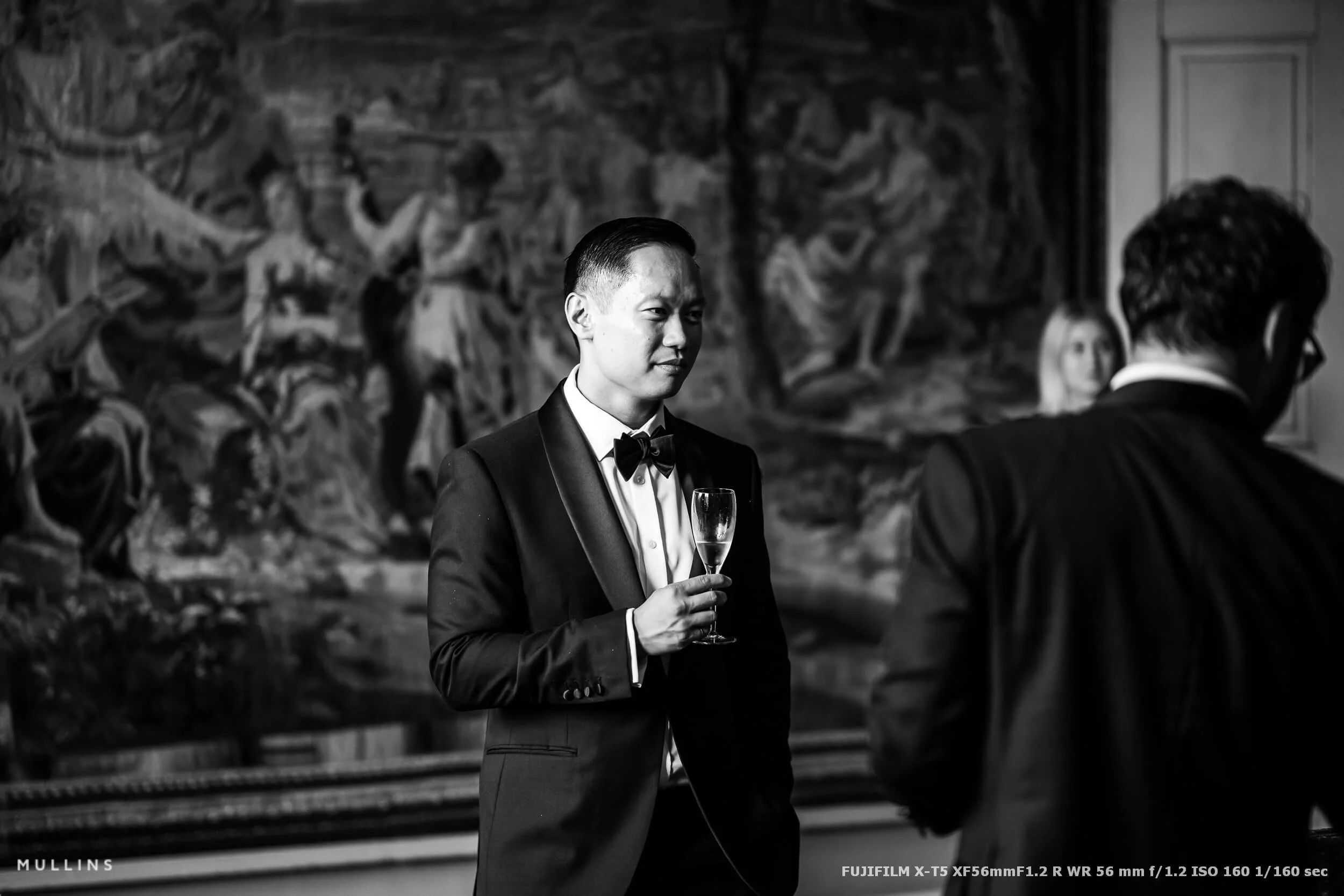
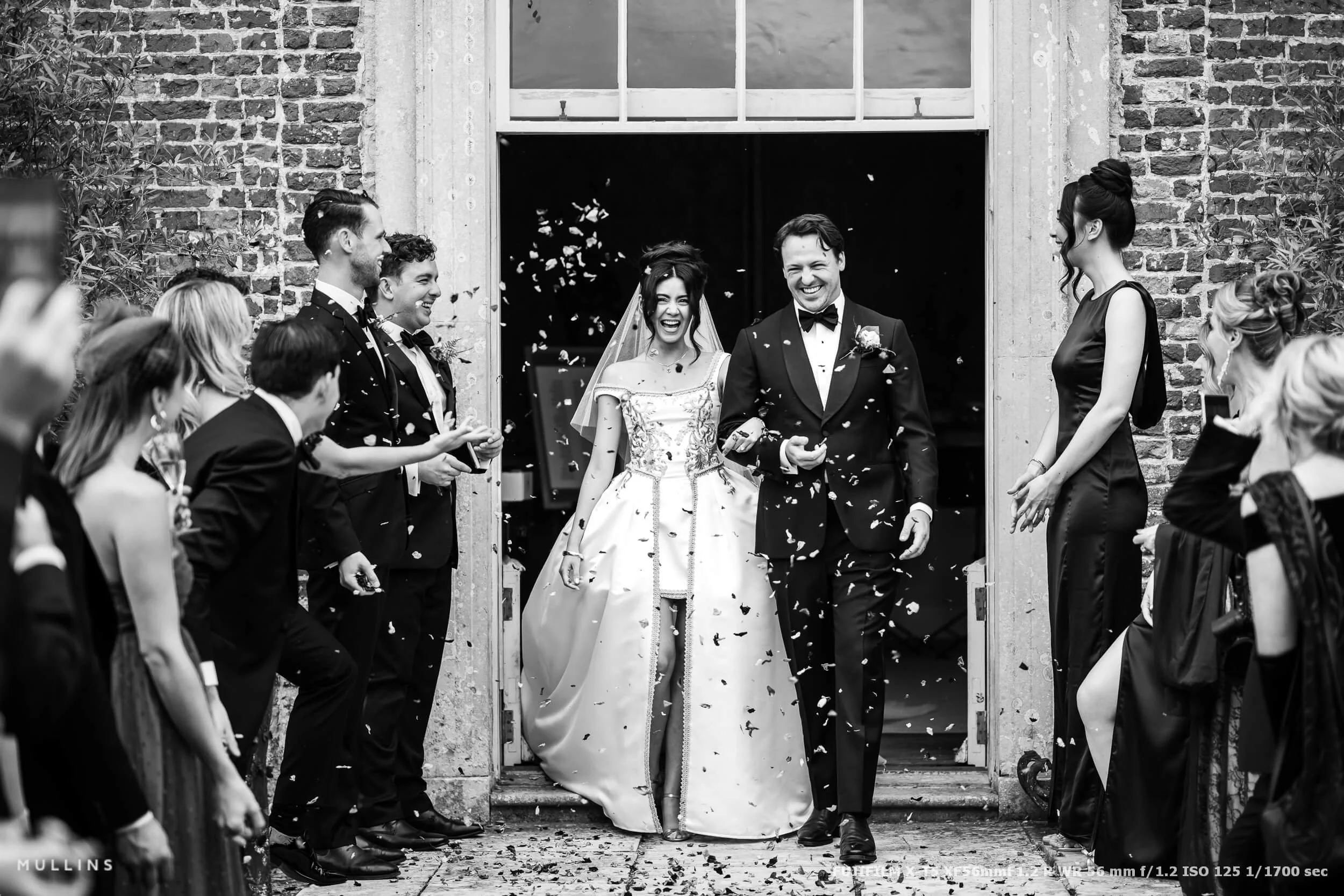
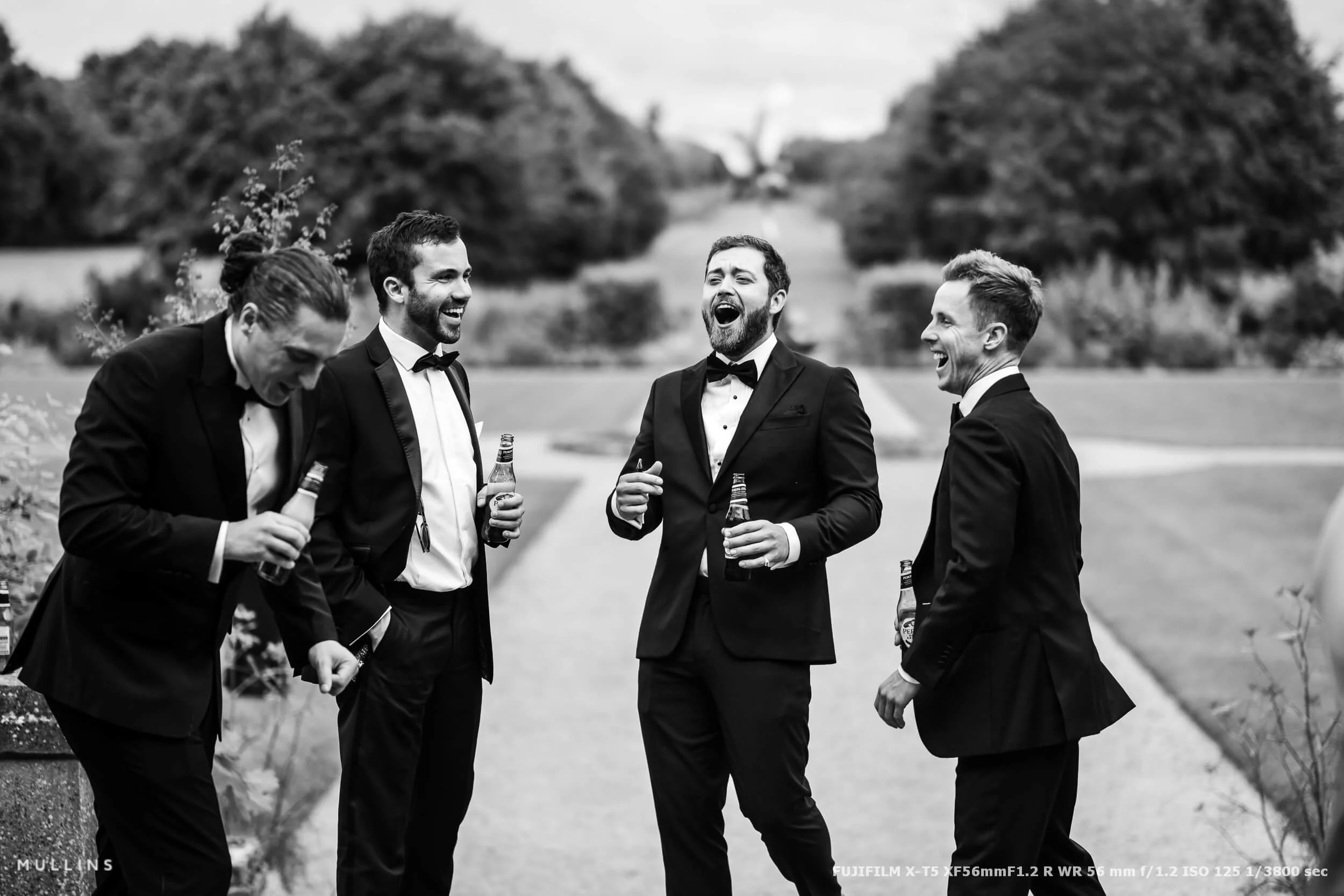
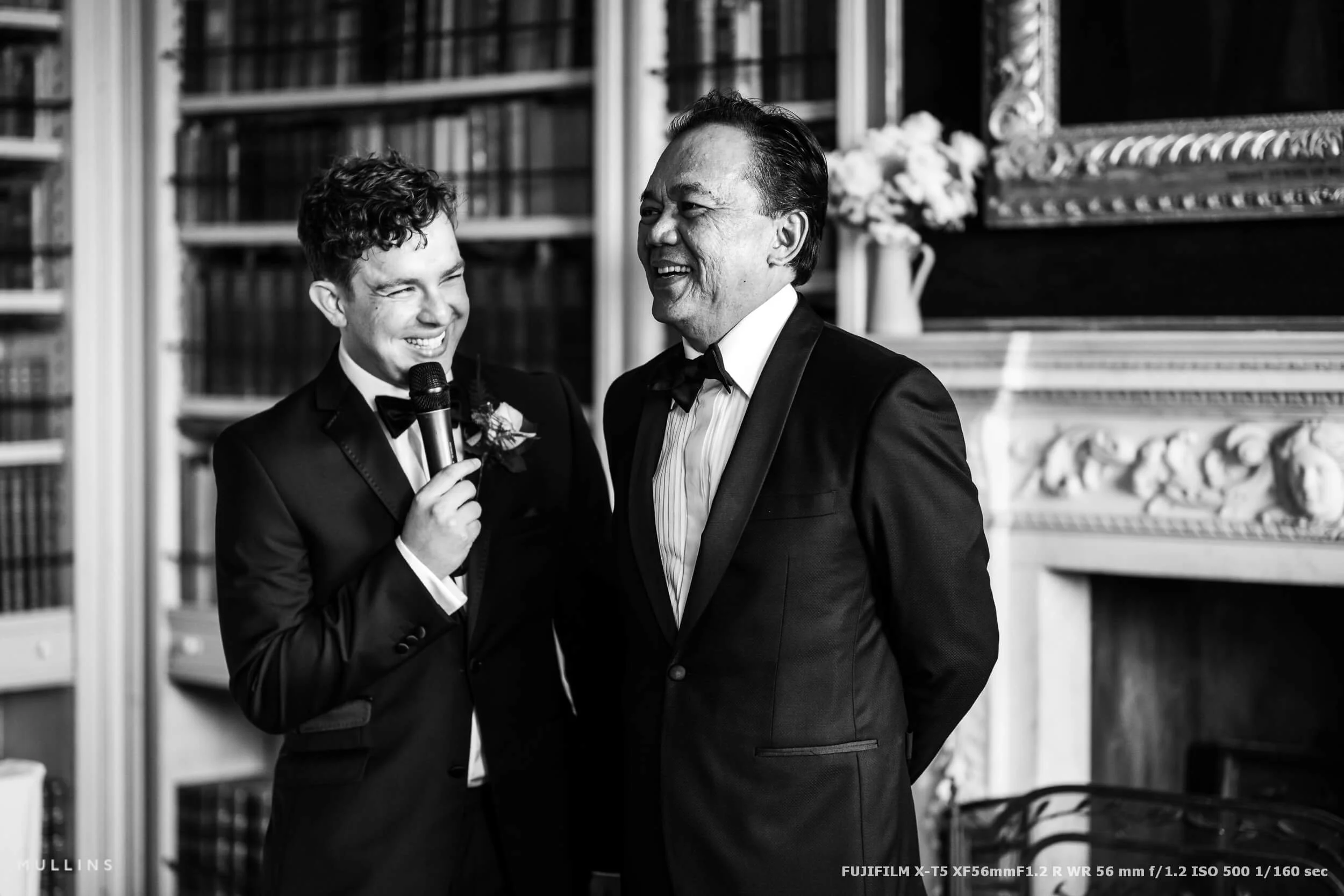
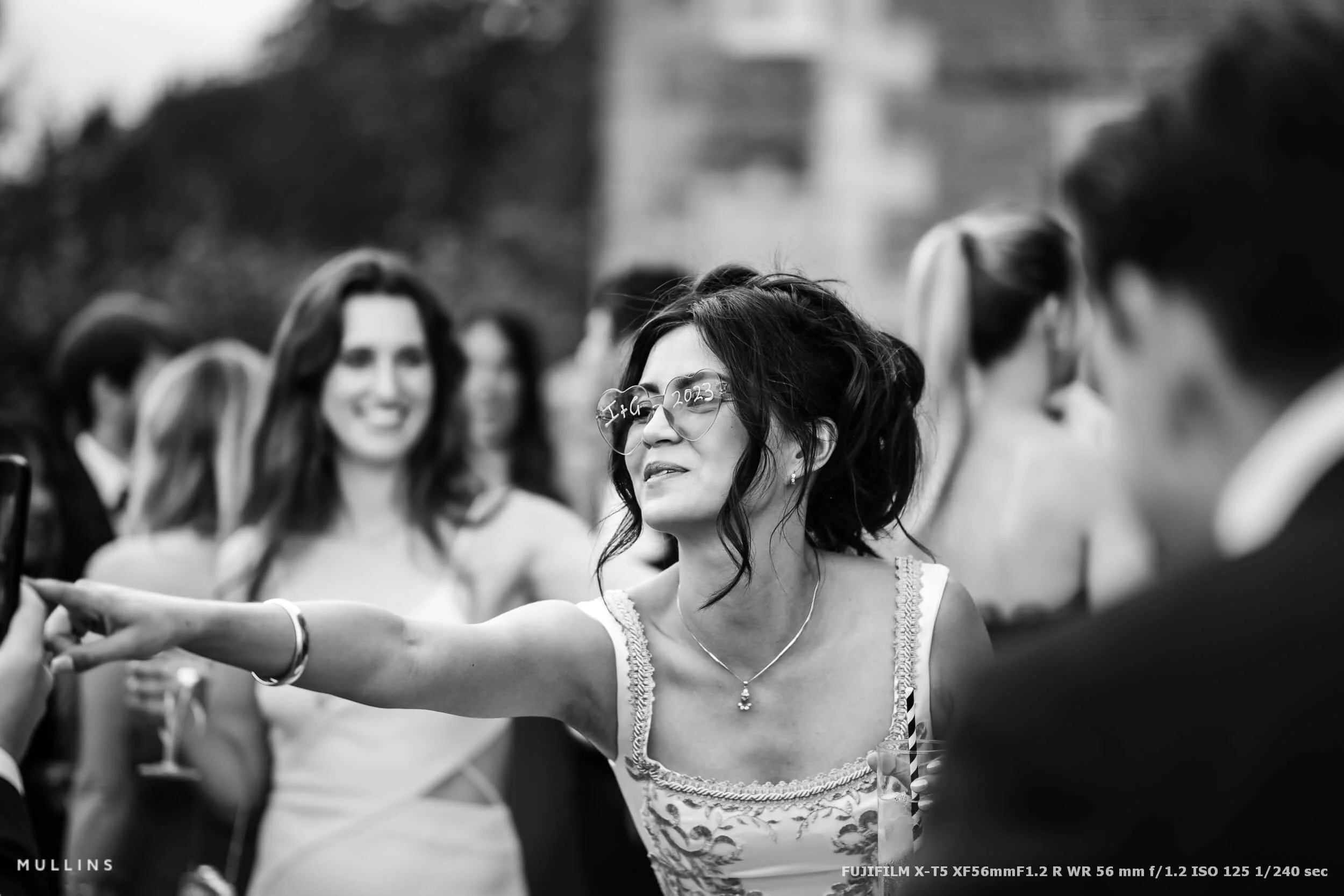
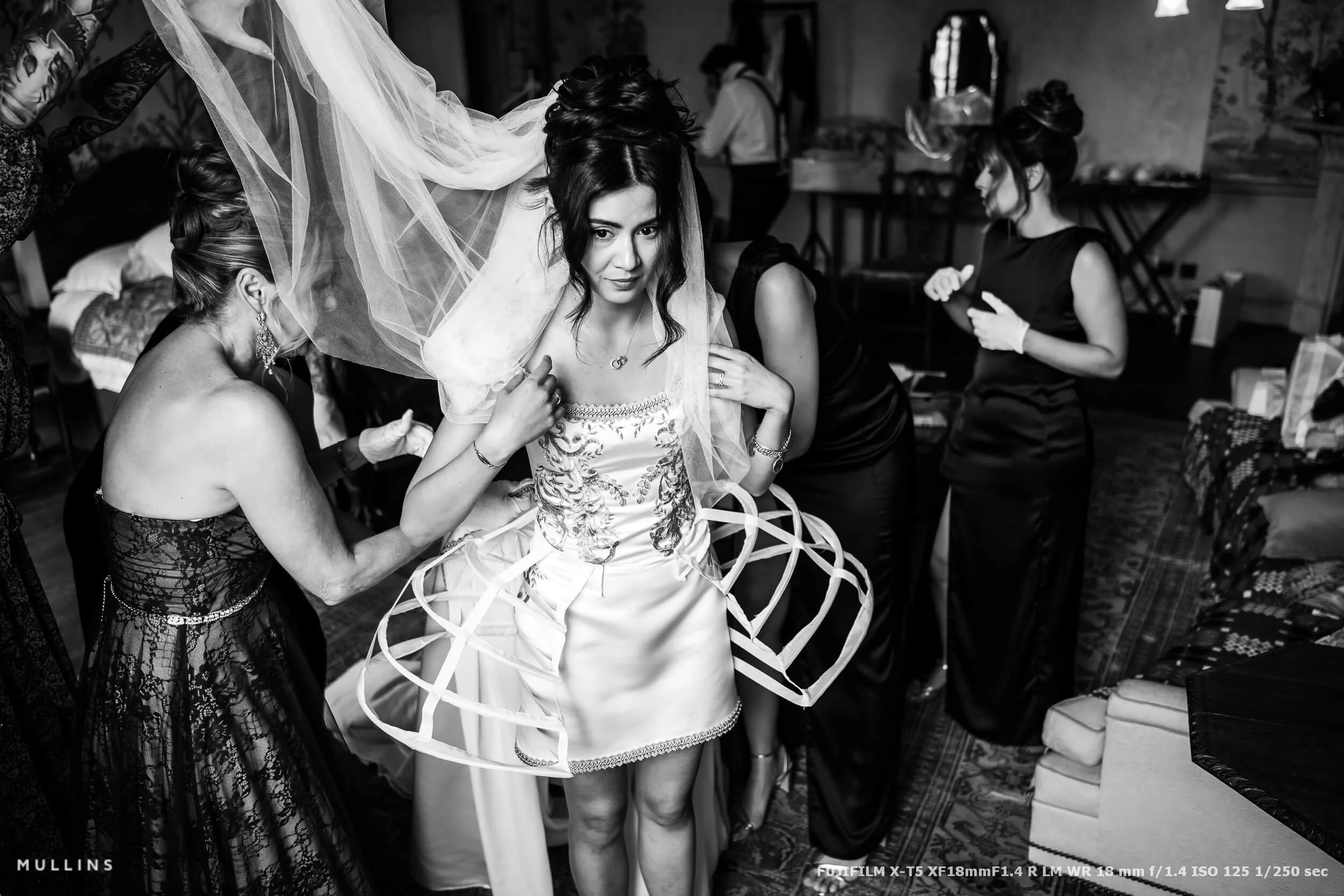
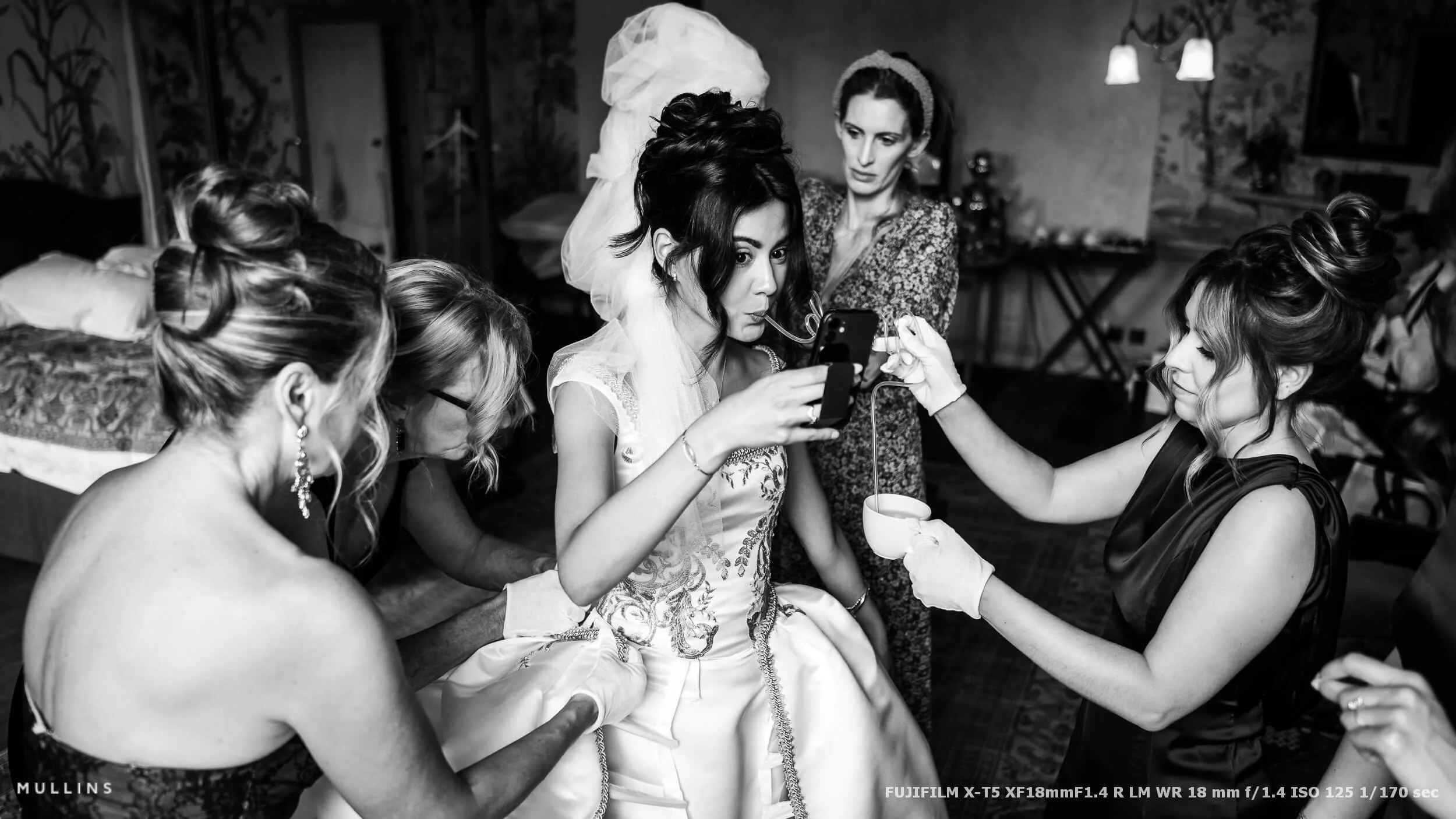
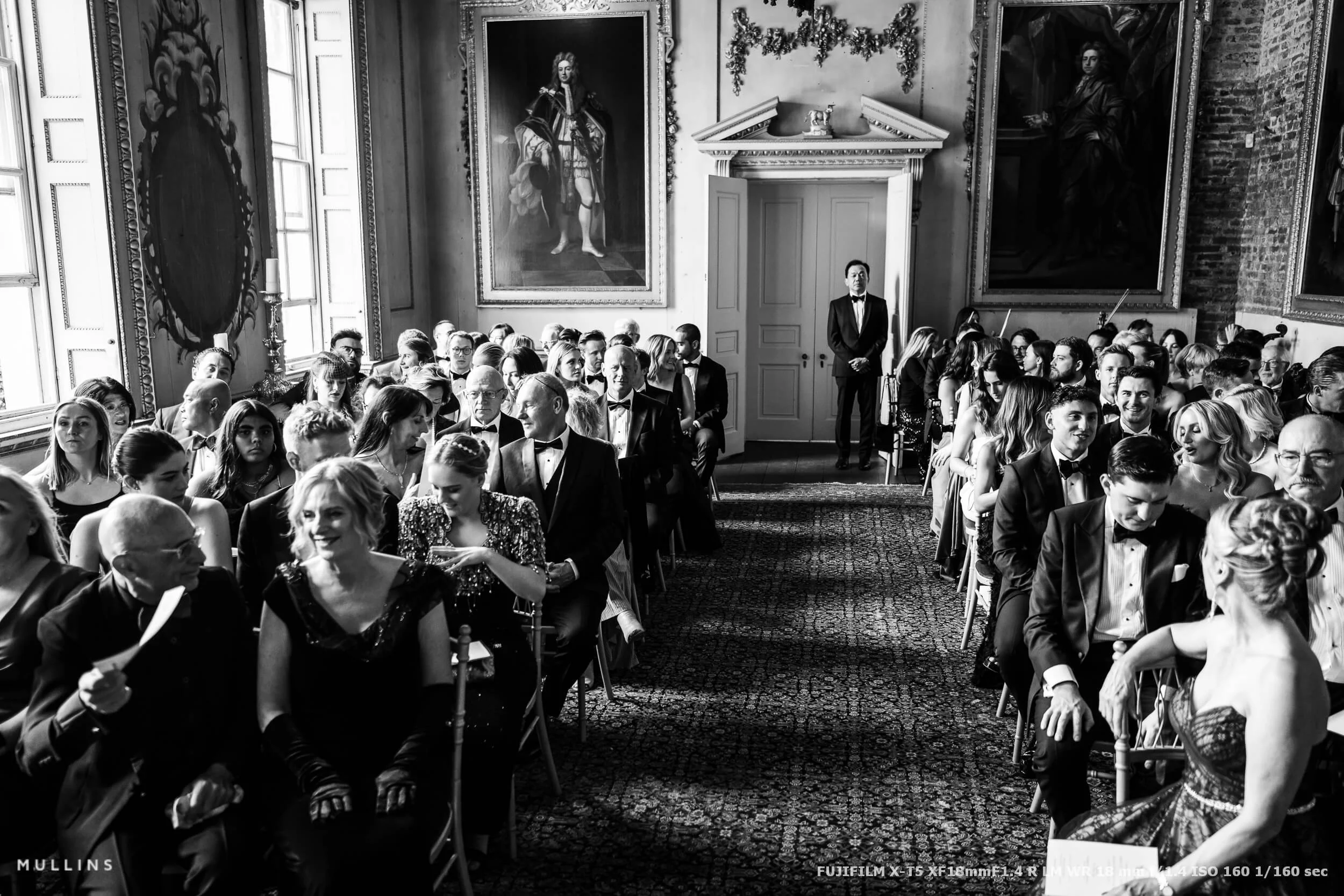
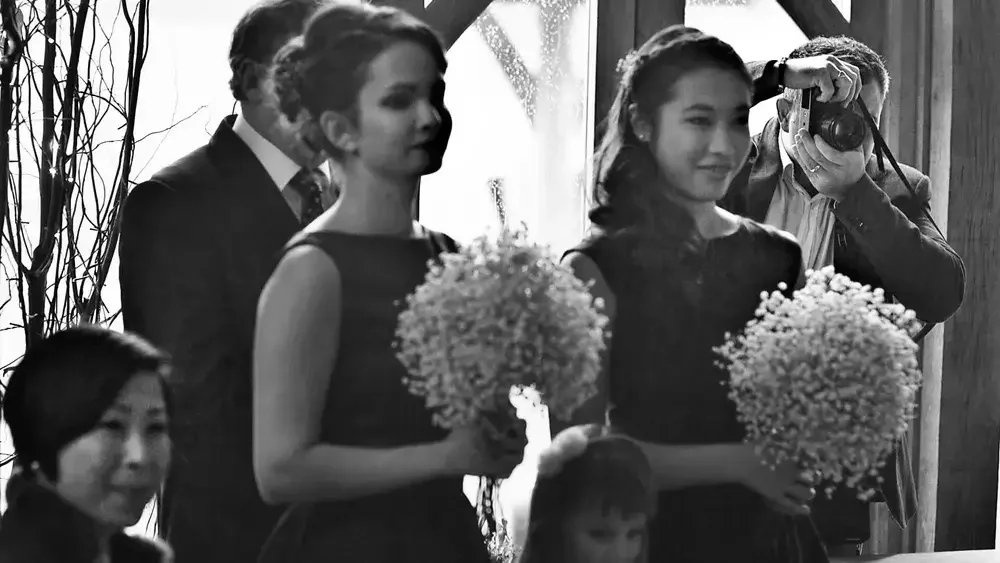
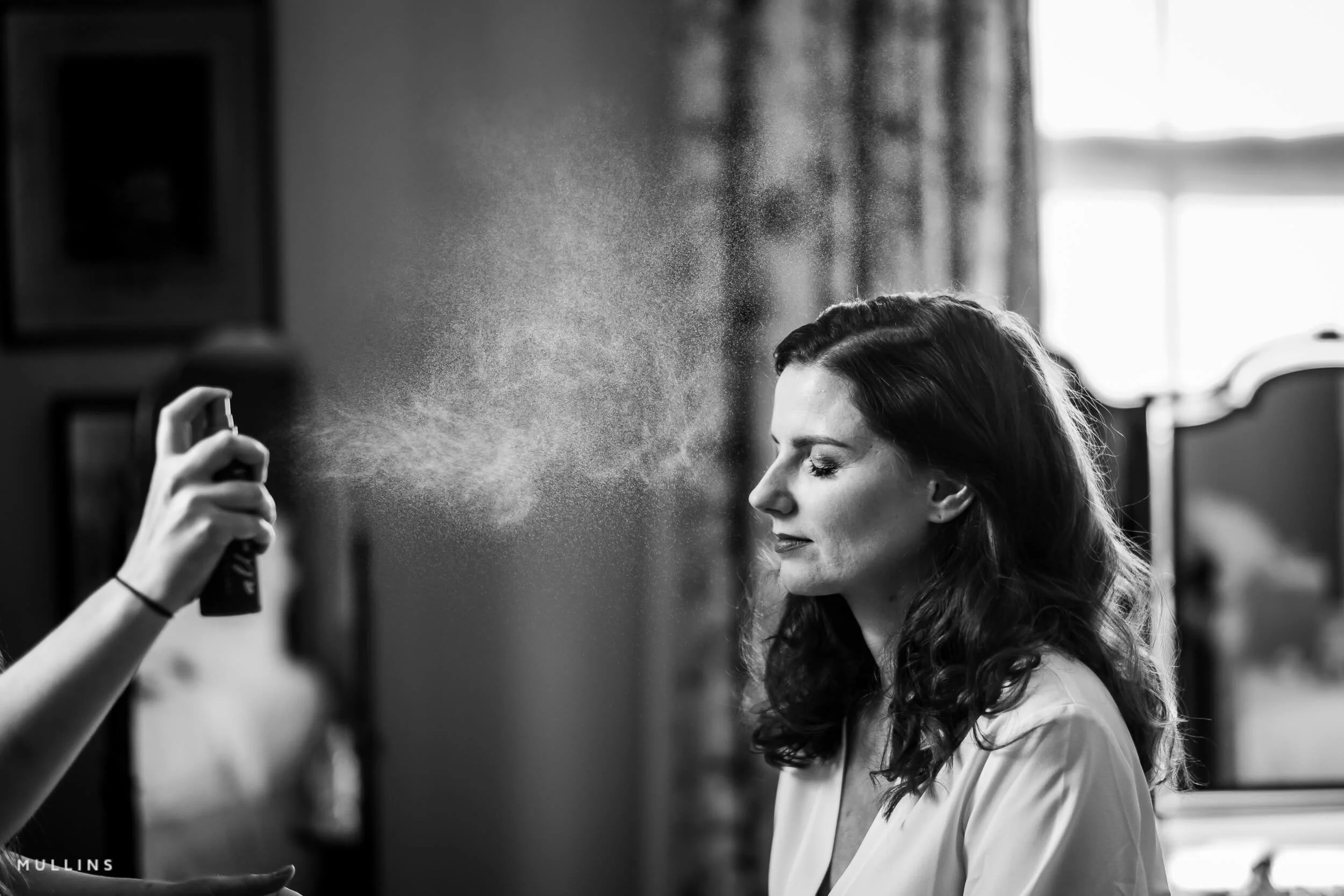
The photographs below are additional examples of this kit in use at a real wedding. These images were taken at the wedding of Isobel and Geordie at St. Giles House, which was a wonderful day to photograph and a good example of how this setup works in practice across very different moments, spaces and light.
If you’d like to see the full wedding, you can also take a look at my post about Isobel and Geordie’s wedding at St. Giles House.
Frequently Asked Questions
-
For documentary-style wedding photography, the X-T5 is the standout choice. The 40MP sensor produces exceptional files, the traditional control layout suits an observational shooting style, and the compact body is discreet enough not to intimidate guests.
-
Not necessarily. I shoot available light for the vast majority of every wedding — the only exception being the first dance, where I use a small Manfrotto Lumimuse LED held in hand. For everything else, available light is both sufficient and preferable.
-
Fewer than most people think. My two primary lenses — the XF 18mm f/1.4 and the XF 56mm f/1.2 — cover the majority of a full wedding day. The Viltrox 27mm and 75mm come out for specific situations.
-
Two bodies means two dedicated focal lengths instantly accessible without changing lenses. At a wedding, moments happen fast and don't repeat. Having both the wide and the portrait lens ready simultaneously means you never miss something because you were mid-lens-swap.
-
As a supplementary camera it's brilliant — discreet, characterful, and genuinely enjoyable to use. It lives in my jacket pocket and comes out at specific moments, particularly in the evening. As a standalone primary camera for a full wedding day, the fixed lens is a limitation worth considering.
-
More than you think you'll need. I carry a minimum of six spares in addition to the batteries in each camera. Even with careful power management, there's no excuse for running out on a wedding day.
Further Reading
If this post has been useful, you may also enjoy some of my other articles on wedding photography. I’ve written quite a lot over the years about documentary coverage, real weddings, light, timing, storytelling and the cameras and lenses I use, so there is plenty more to explore if you’d like to go further.
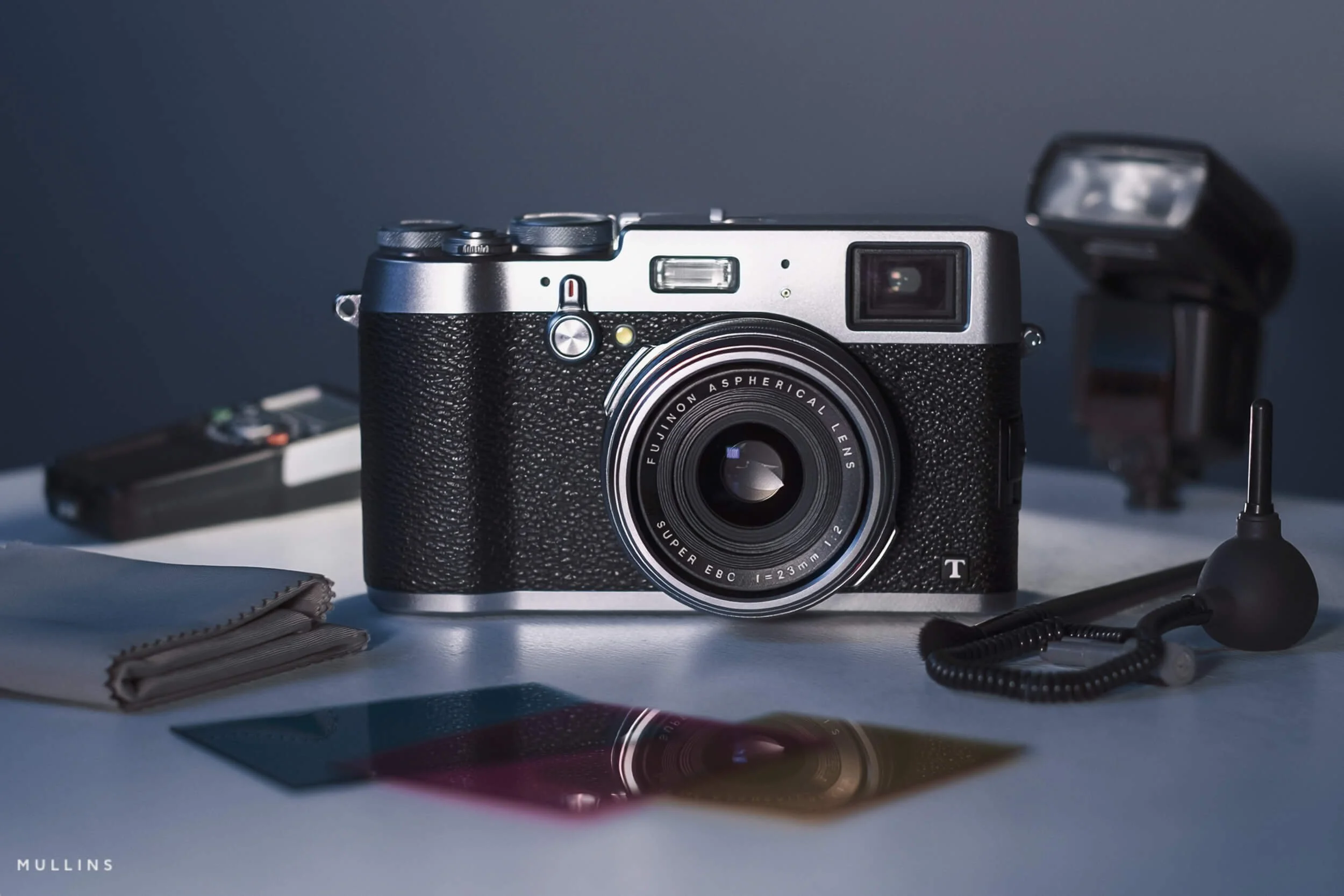
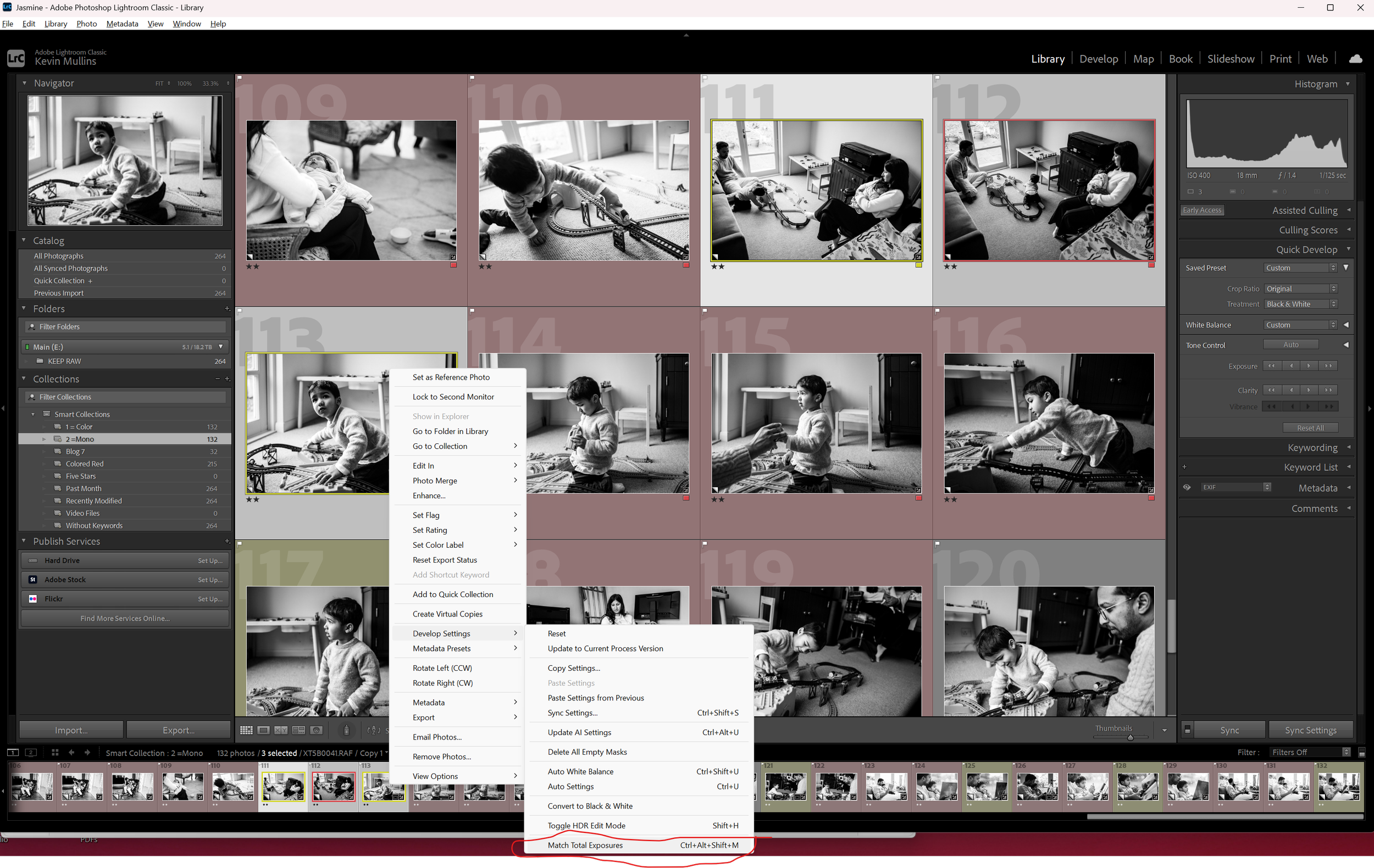



A complete black and white Profile, Preset & Workflow Pack for Lightroom
Film Edition 5 - Workflow Series (Monochrome) is a structured set of Lightroom profiles and presets designed to help you achieve a finished monochrome look quickly and consistently.
This is not a random “pick a look and hope” pack. It’s designed as a repeatable workflow you can run on a full set of images, with fixes and finishing tools when you need them.
If you edit regularly in Lightroom, you already know the problem. You want a strong black-and-white style, but you also need it to behave consistently across different scenes, lighting conditions, and subjects. This pack is designed to help you move fast without the work looking rushed.
You start with one of the custom monochrome profiles to establish the tonal foundation, then shape the image with workflow presets that are designed to work with that profile rather than fight against it. From there, you can use the included Toolkit for things like AI masking, grain, curves, highlight control, sharpening, finishing touches, and everyday problem-solving inside Lightroom. The product page positions the pack exactly this way, with the profile first, workflow second, then utilities and finishers to refine only when needed.
Built for speed and consistency
If you edit your photos in Lightroom, you already know the problem: you want a strong monochrome style, but you also need it to work across different scenes without constant fighting.
This pack helps you move fast without the work looking rushed.
Fast workflow: fewer decisions, clearer steps.
Consistent results: the set hangs together as a series.
Film-inspired tonality: depth, shape, and texture without the “preset look”.
Useful fixes included: real-world Lightroom problems, solved quickly.
What’s included
11 custom monochrome profiles
20 one-click presets
128 Mullins Lightroom Toolkit presets, including AI masks, fixes, utilities, grain, tone curves, colour helpers, sharpening and finishers
Compatibility
Works with Lightroom Classic and Lightroom Desktop. AI Mask presets require Lightroom Classic 11.0+ or Lightroom Desktop 5.0+.
Three for Two Offer
All preset packs are included in the 3-for-2 offer. Add any three preset packs to your basket, and the cheapest one is free at checkout.