

Bridal Prep Photography: Using Window Light for Storytelling
Key takeaways
Find the main window first: and commit to it. One good light source beats three mediocre ones.
Expose for the story:, not the room. Faces, hands and interaction matter more than perfectly held highlights.
Use shadow to clean the frame:. Let the clutter fall into darkness and keep the important bits readable.
Look for frames within frames: like mirrors, doorways and curtains. They simplify busy spaces fast.
Stop trying to “fix” the light: and ask what it makes possible. Shape, separation, silhouettes and atmosphere.
I was rummaging through my archive the other day and came across a little run of bridal prep photographs from a wedding I shot back in 2017. Nothing staged. Nothing arranged. Just a normal morning that, at the time, probably felt slightly chaotic for everyone involved.
It reminded me of something I like to talk about a lot on this website.
Bridal prep is often the hardest part of the day for pure documentary wedding photographers like me.
Not because it’s unimportant. Quite the opposite. It’s hard because it’s real. It’s unpredictable. The light is rarely “nice”.
Rooms are often cramped, people are everywhere, and there’s usually at least one window trying to nuke the scene while the rest of the room sits in shadow.
When I first started shooting weddings, that kind of light scared me. Properly. I wanted everything evenly lit, clean, safe, and predictable.
Bridal prep can be all of those things or none of them.
“Over time, I realised something that changed everything: that contrasty, messy, awkward light is the story. It’s not the enemy. It’s the atmosphere.”
For me, documentary wedding photography always comes back to the same three things: light, composition and moment. Bridal prep is where you learn to juggle all three at once.
So, let me walk you through these images in order, and I’ll explain what I’m seeing in each one. Not just technically, but story-wise, because that can be even more important.
Why bridal prep light feels difficult
A lot of bridal prep happens in rooms that were never designed for photography.
You’ll often get:
One strong window and everything else dark
Mixed light sources (window light plus lamps plus ceiling lights)
Mirrors and reflective bits everywhere
Clutter, bags, food, dresses, people half dressed, kids, nerves
No space to step back
If you’re trying to make bridal prep look like a styled shoot, you’ll be stressed all morning. If you accept it for what it is, you start to relax. And once you relax, you start noticing moments.
The goal isn’t to make the room look perfect. It’s to tell the truth of the morning in a way that feels real.
The change that helped me most
At some point I stopped thinking, “How do I fix this light?” and started thinking, “What does this light make possible?”
That was a tiny mental change, but it’s massive in practice.
Harsh window light gives you shape. It gives you separation. It gives you silhouettes, reflections, and pockets of attention. It lets you hide messy backgrounds in shadow while keeping the important bits clear.
And importantly, it’s honest. Bridal prep is often a bit moody, a bit nervous, a bit quiet, then suddenly loud. Contrast suits it.
Explore The Art of Documentary Wedding Photography
If bridal prep is the part of the day that sometimes throws you, I go into this in much more depth in the course - not just light, but how to keep it candid while still creating a coherent story.
Real examples from this 2017 bridal prep
A calm start in imperfect light
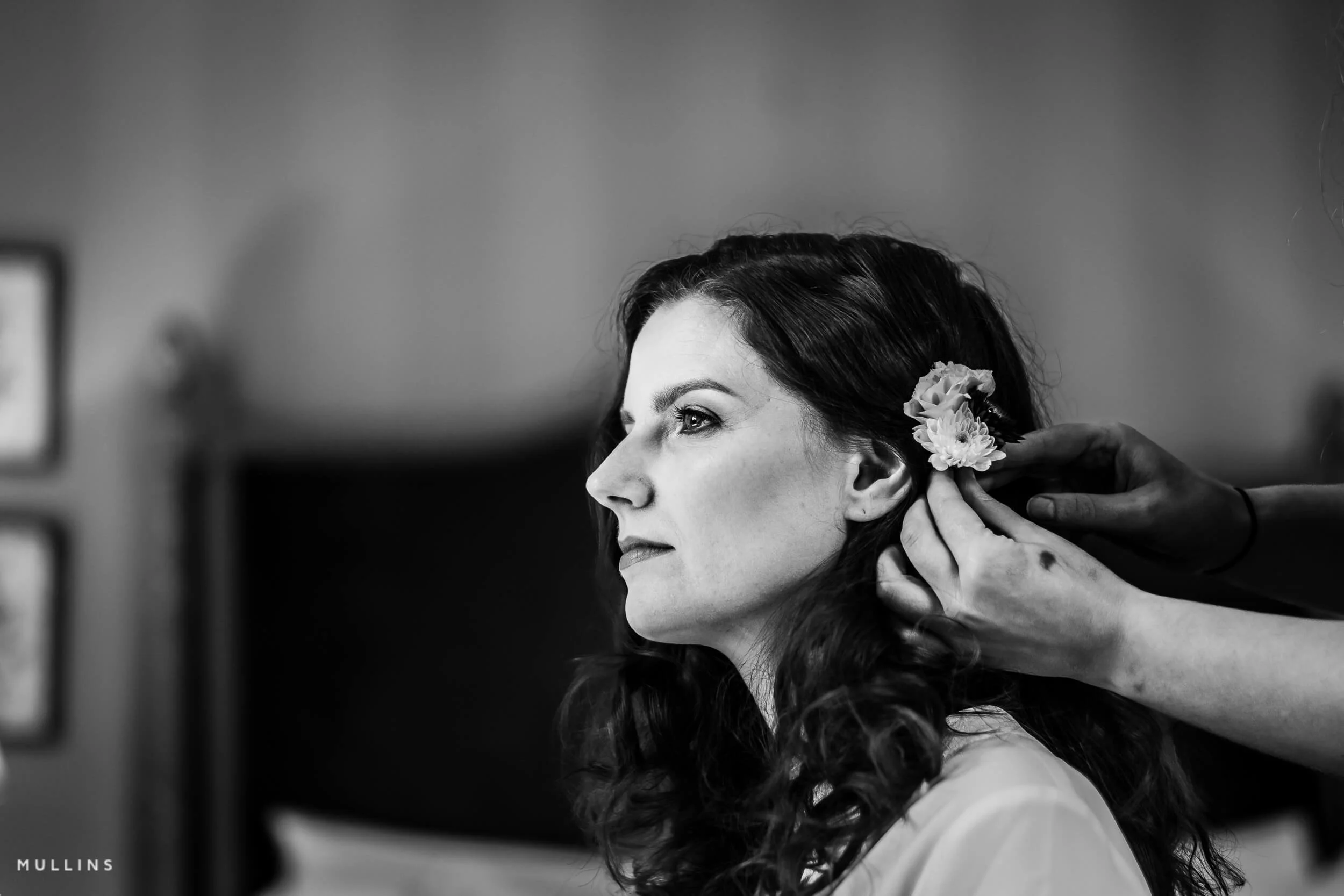
This is a simple moment: hands placing a flower in the bride’s hair. What makes it work is that it’s not about the room. It’s about the profile, the hands, and the stillness.
The light is doing most of the storytelling. It’s coming from one side, wrapping around her face, and letting the background fall away. If you’re new to this, you might be tempted to brighten the shadows and “open it up”. I wouldn’t. The shadow is what gives this photograph its weight.
What I like here is the restraint. It’s a quiet start to the sequence, and bridal prep needs that sometimes.
Let the room be busy
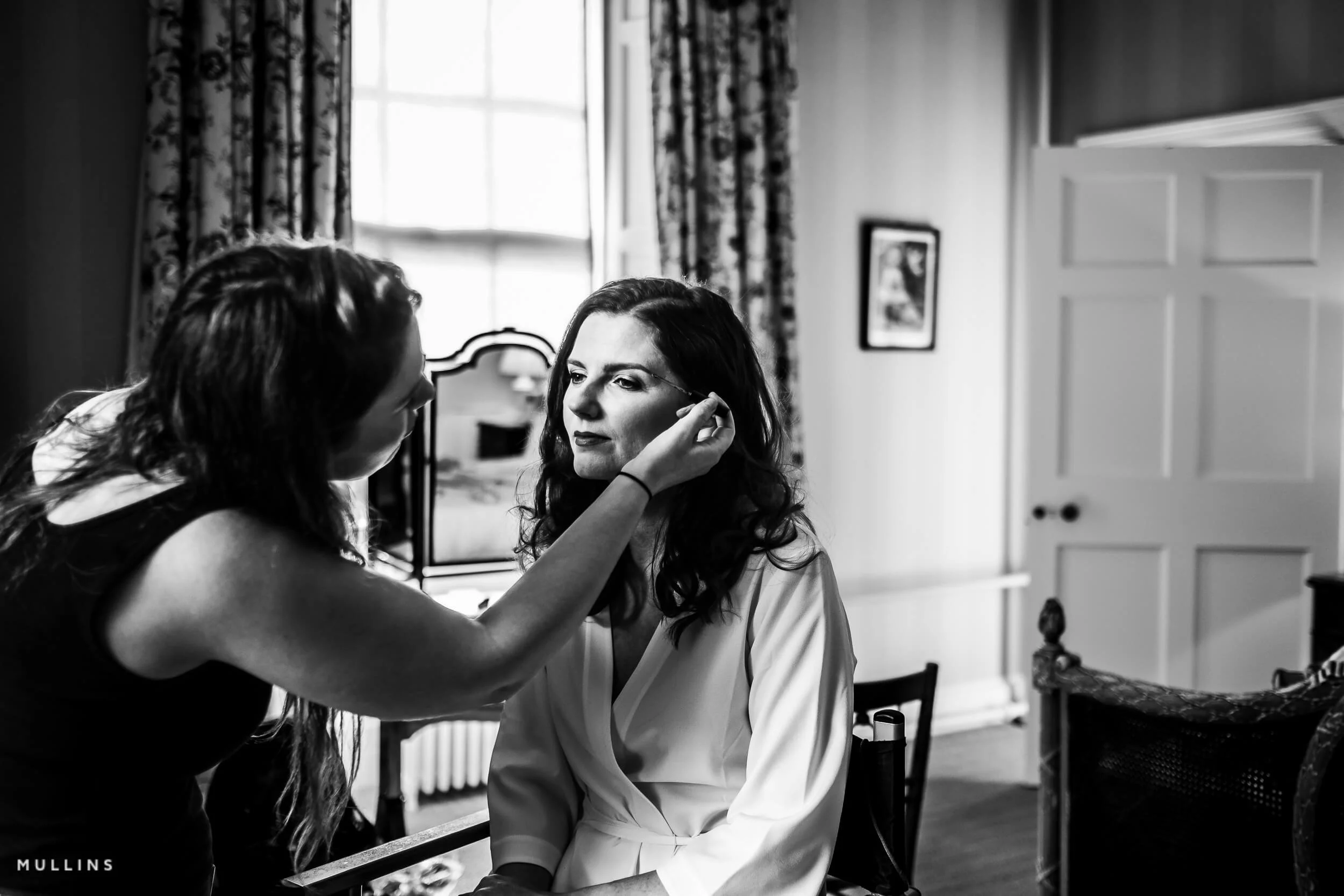
Now we widen out and show the context: makeup being applied, the bride sitting in the room, the sense of process.
Bridal prep is basically a series of people leaning in and out of your frame. That’s not a problem. If you fight it, you’ll miss everything.
This is where composition becomes your anchor. You’re looking for a clean relationship between subjects and background. A window or curtain gives structure. A doorframe gives boundaries. A mirror can give you an extra layer if you want it.
Also, notice how the photograph doesn’t need everything to be bright. It only needs the important bits to be readable.
The pause between the noise
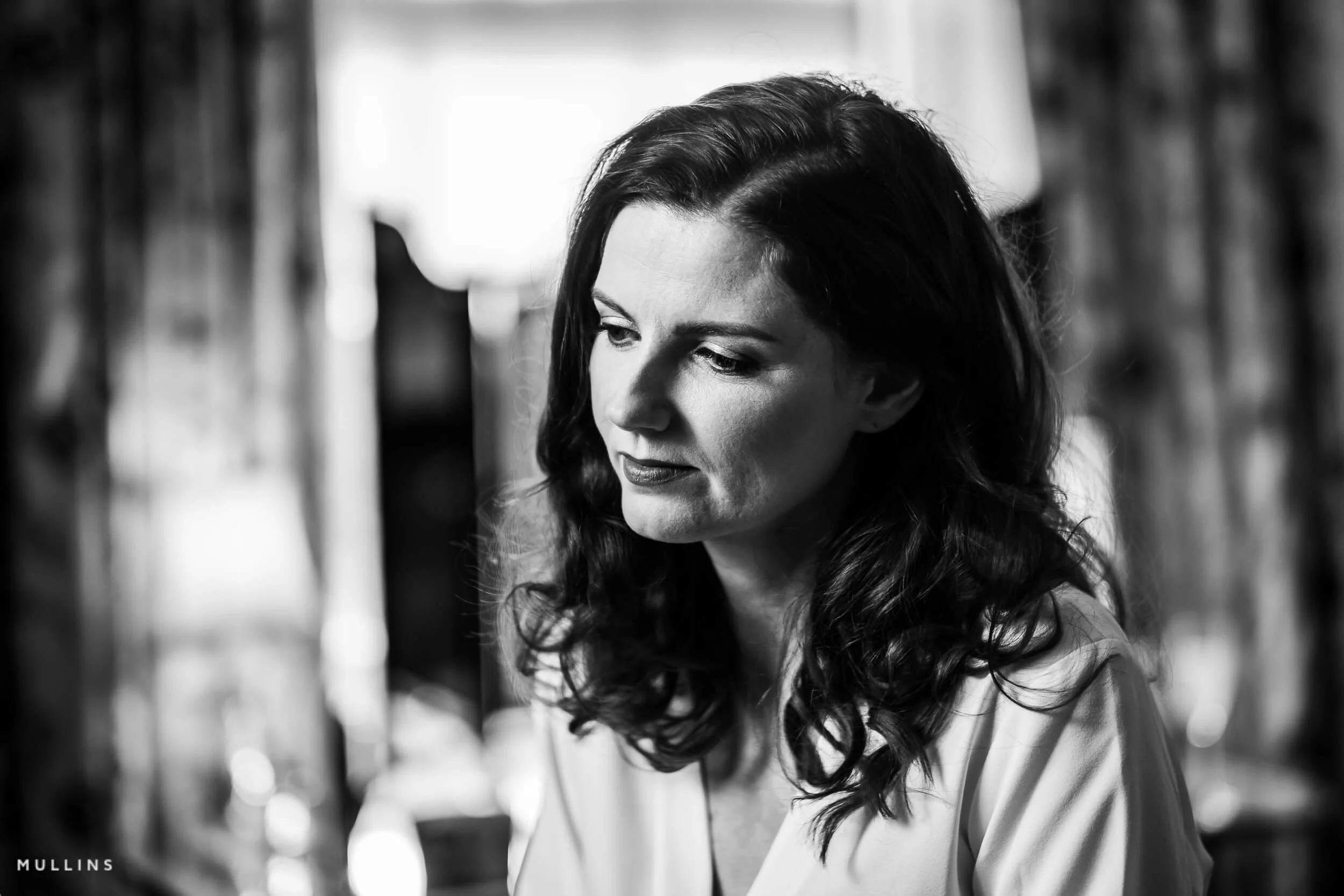
This one is a pause. A little breath in between activities.
Many photographers overlook these moments because nothing obvious is happening. But bridal prep is full of them. That’s where the emotion sits, if you’re paying attention.
The light here is gentle but directional. It’s shaping her face, giving dimension, and again letting the background soften away. There’s a reflective, inward feel to it. You could call it a portrait, but it isn’t posed. It’s just an observation.
If you’re struggling in prep, look for these moments. They’re often the easiest to photograph because people aren’t moving much. You can settle yourself, find your angle, and wait.
When the light shows you something you cannot normally see
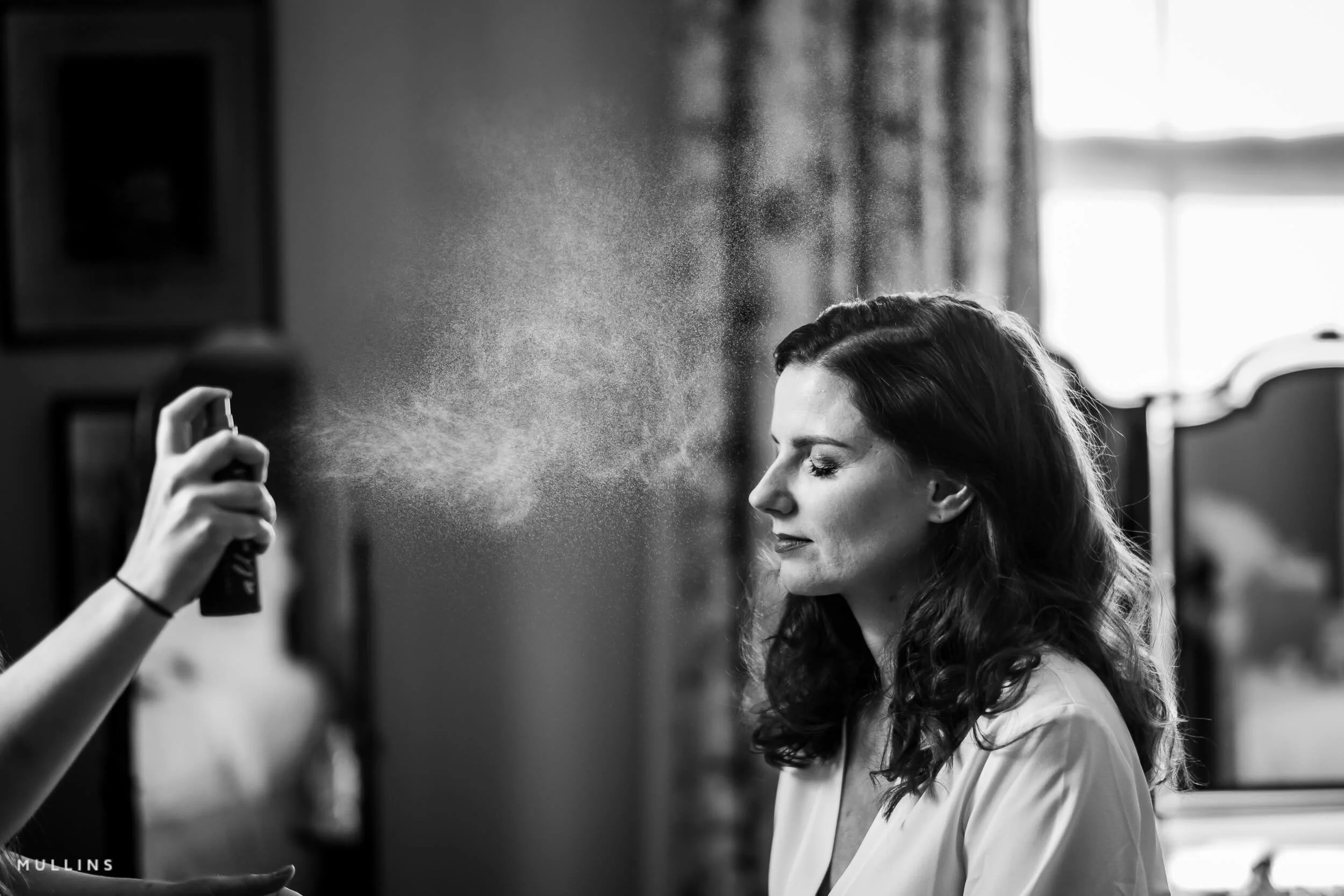
This is one of those “the light did me a favour” frames.
Hairspray in backlight is basically a gift. That mist becomes visible only because the light is cutting through it from behind or from the side.
If you’re new to this, you might not even notice it happening until later. What helps is learning to anticipate. When you see hairspray, you already know what’s about to happen. You pick your spot, you pre-focus, you watch the hand, and you wait for the moment the spray hits the light.
It’s documentary, but it still involves decision making. You’re not directing the scene, you’re predicting it.
Negative space is not empty, it’s control
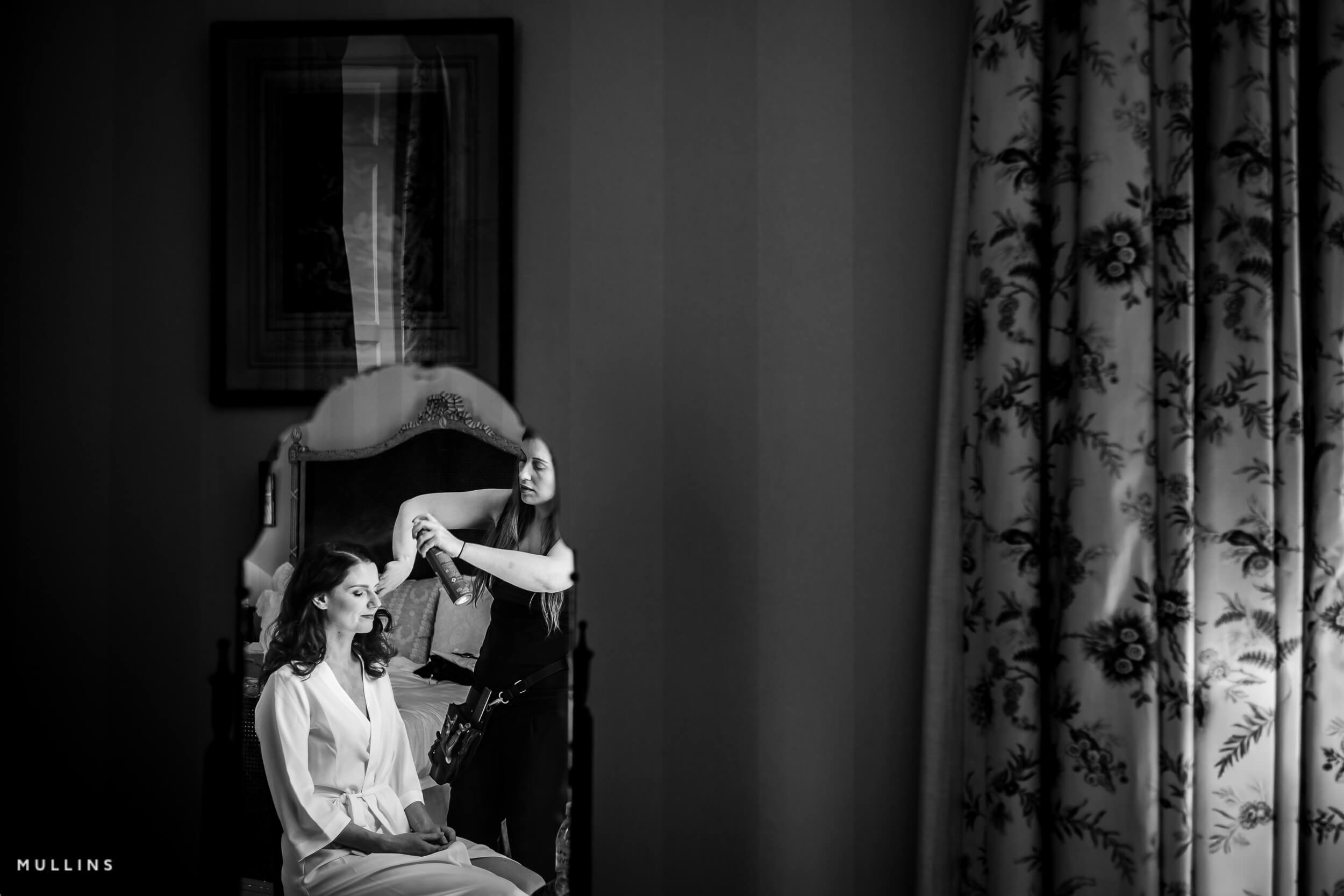
This is where a lot of photographers panic, because it’s not “pretty” light and it’s not a clean room.
But look at what’s happening: the story is contained in the mirror. The rest of the frame is negative space, which gives the moment room to breathe.
This is such an important bridal prep skill: you don’t always have to stand in front of the action. Sometimes the best version of the story is reflected, framed, partial, slightly hidden. That feels more real anyway.
Also, big empty areas are not wasted space if they’re doing something. Here, the empty wall and the curtain act like a guide. Your eye goes straight to the mirror, because there’s nowhere else to go.
Use layers when you cannot get a clean view
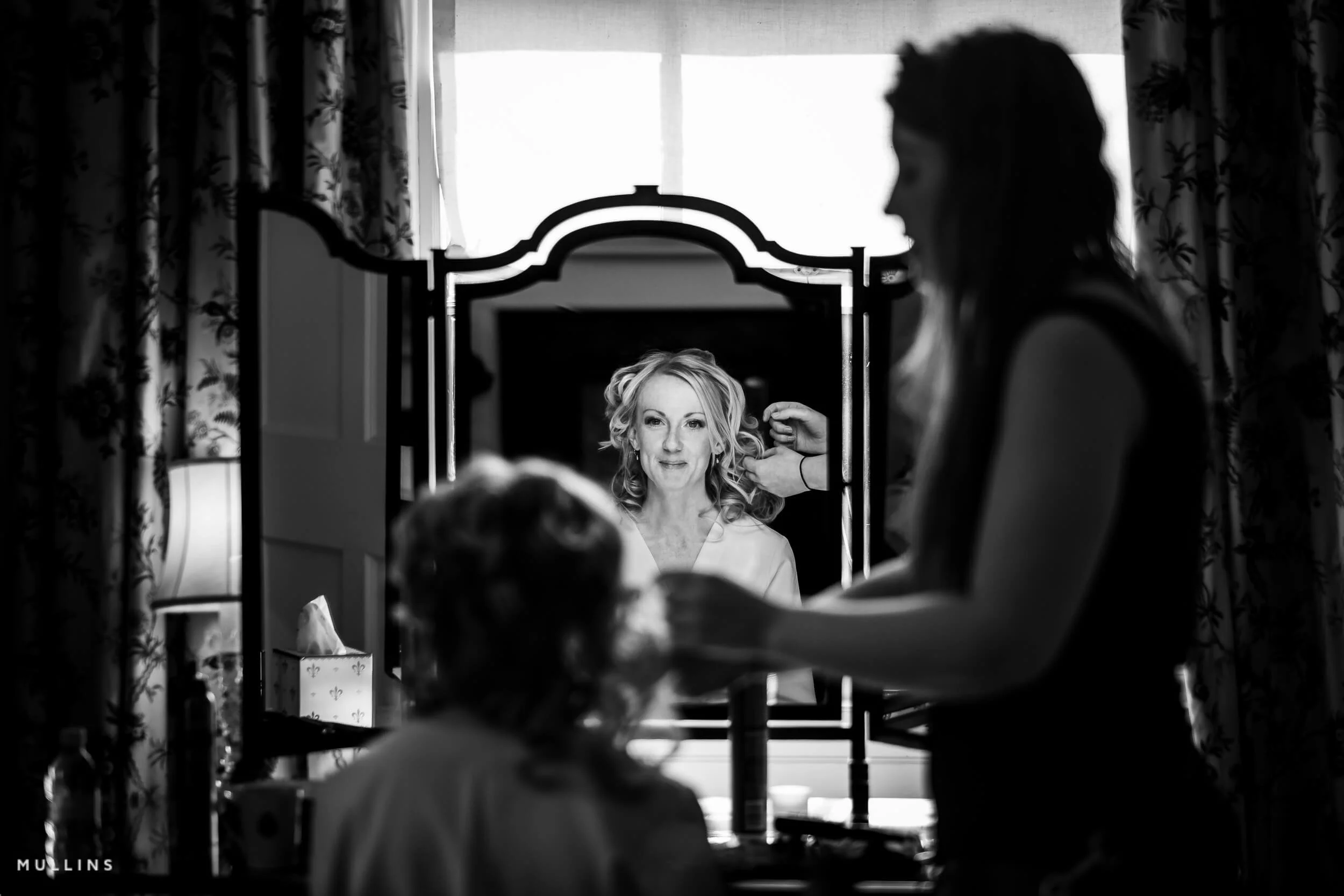
Another mirror, but this time the scene is layered.
You’ve got foreground shapes out of focus, you’ve got hands working, and the bridesmaid’s face is sitting neatly in the reflection. The window light is strong, and that’s fine. You don’t need to “fix” it.
This is one of the most useful approaches in cramped rooms: build depth by letting things overlap. Don’t feel you need a perfect, clean view of everything. Real rooms aren’t like that.
If you can get one clear subject and a sense of activity around it, you’ve got the story.
Let movement add atmosphere
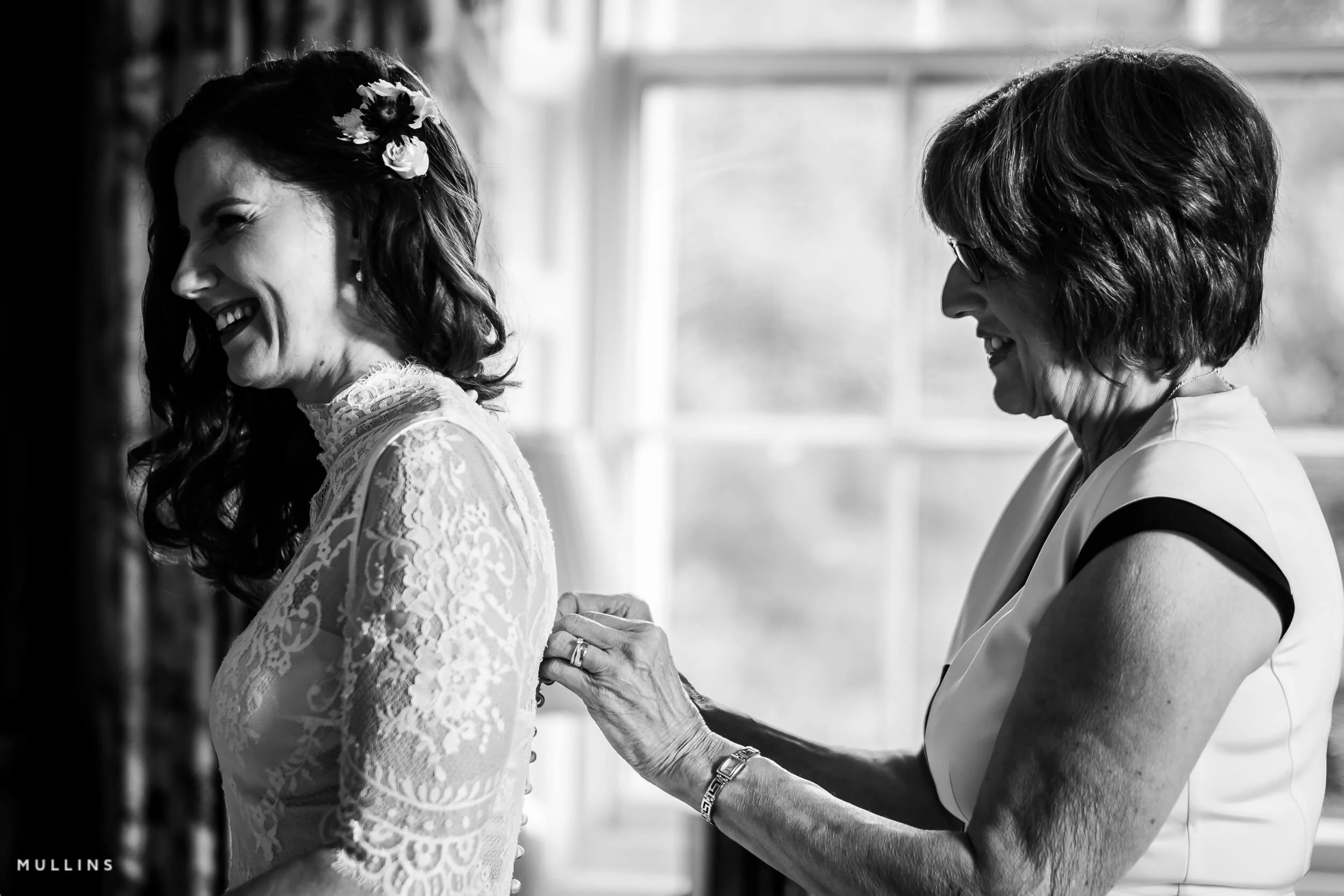
This is the heart of bridal prep for me: connection.
The bride laughing, mum helping her into the dress, and that window light behind them. The light is punchy, but it suits the moment. It adds energy.
If you expose “perfectly” for the window, they’ll go too dark. If you expose “perfectly” for their faces, the window blows. So you decide what matters.
I’d always rather keep the expression and the hands readable and let the window be bright.
“People do not get married inside a histogram. They get married in real rooms with bright windows.”
Light as a spotlight
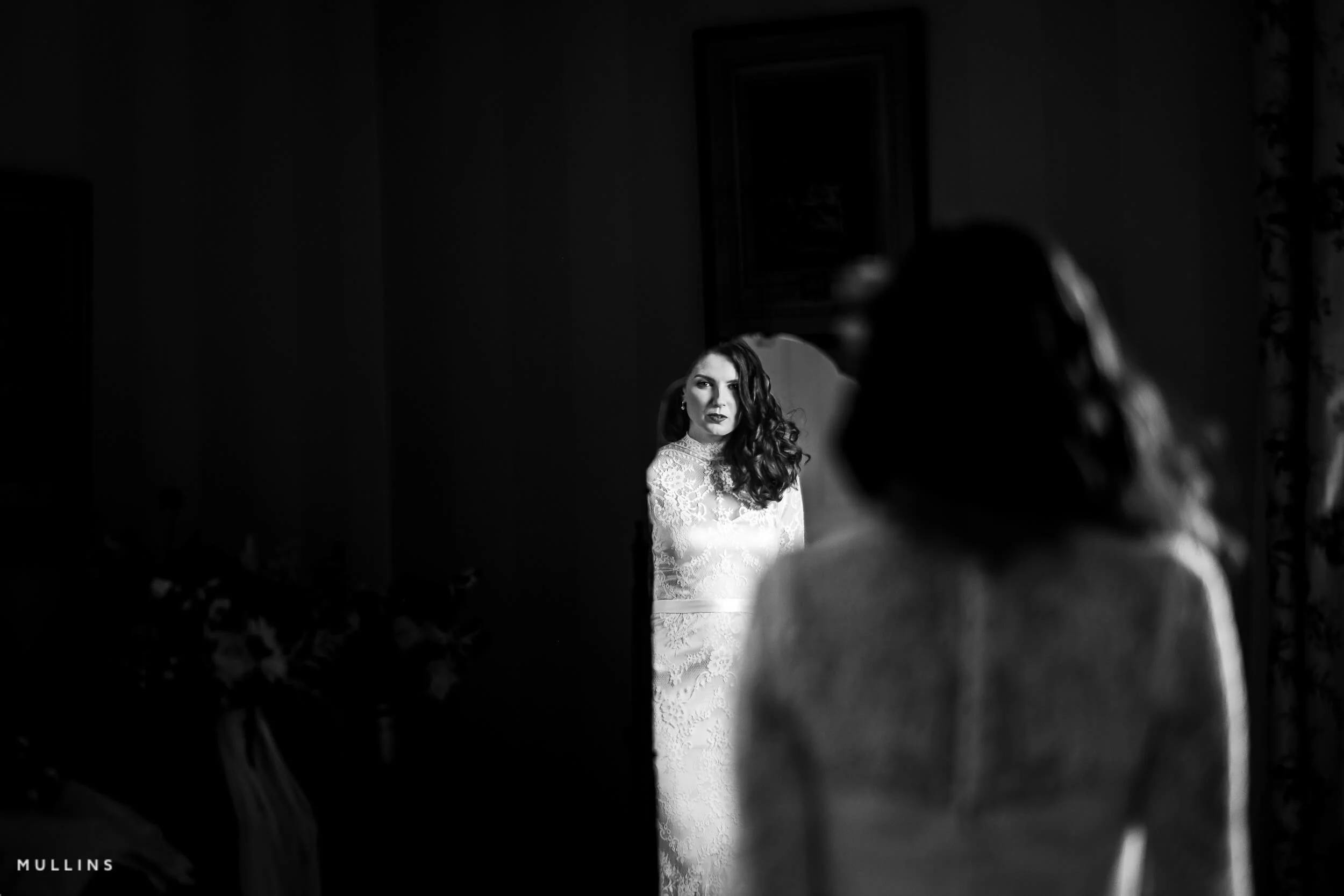
This is the one I probably would not have made early on in my career, because I would have assumed it was “too dark” and therefore “wrong”.
But it’s not wrong. It’s done on purpose.
The mirror becomes a spotlight. Everything else falls away. The foreground figure is just shape and context. The darkness is doing a job: it’s isolating the bride and making her feel like the centre of the story.
This is where that earlier fear comes in. When you’re starting out, you’re taught to avoid deep shadow. But deep shadow is one of the strongest storytelling tools we have.
Darkness is not a mistake. It’s an artistic choice, as long as the moment is still clear.
Details under your feet
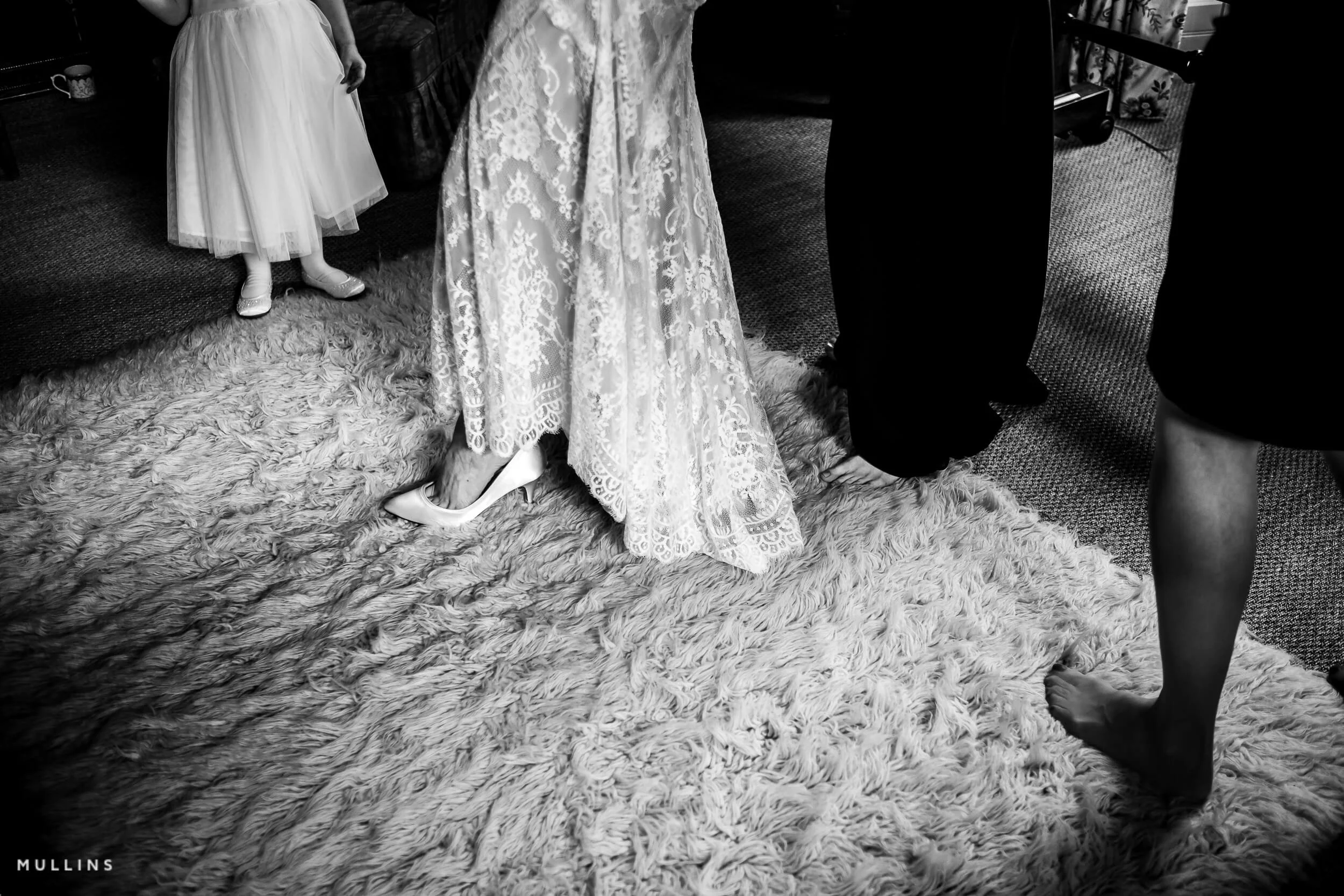
Details, but not the usual “wedding magazine” details.
This isn’t rings on a windowsill. It’s real life: feet, shoes, dress hem, textures, a child nearby, someone barefoot. It’s messy, but in a good way.
These frames help you connect scenes together. They act like little conduits in the visual story. They give your final set a sense of rhythm.
Also, shooting low during prep is underrated. Everyone else is standing up. The floor-level view often shows you things people aren’t noticing.
About the editing of these photos
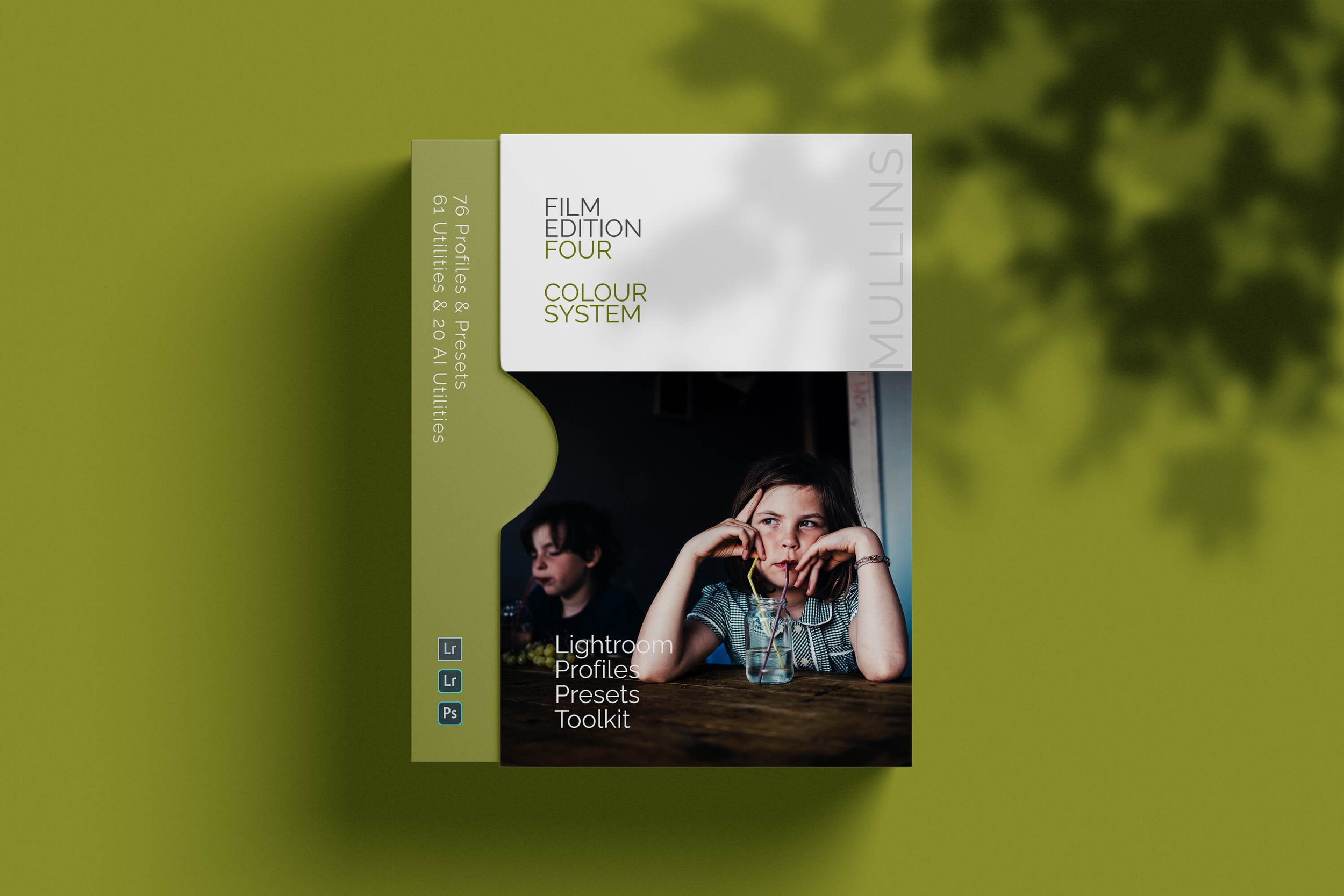
All these photographs were edited with my own Lightroom Presets for a rich, filmic tone. My presets and professional profiles work with any camera brand.

Two stories at once
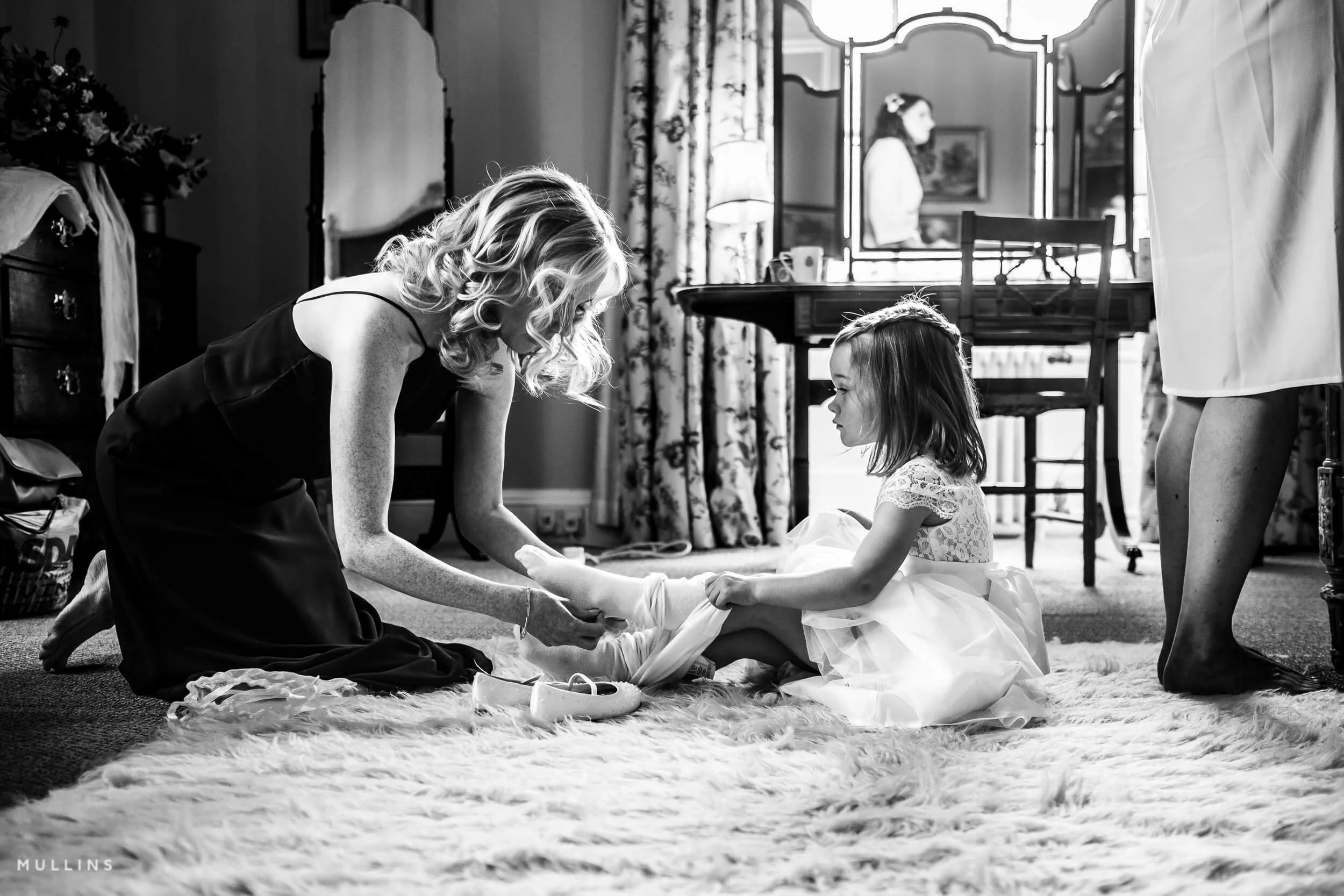
This one ties a few themes together: family, preparation, reflection, and the sense of a morning unfolding.
The older bridesmaid helping a younger one with her shoes, the bride visible in the mirror behind (just), and all of it held together by the room’s natural light.
It’s documentary wedding photography in a nutshell. Multiple stories are happening at once, and you don’t need to interfere with any of them. You just need to see it and place yourself in the right spot.
When I was new, I’d have been so focused on the bride that I might have missed the child entirely. Now, that child is part of the story. It’s part of the atmosphere of the morning.
Practical ways to handle “scary” prep light
If bridal prep still makes you tense, here are a few approaches that might calm it down.
Find the main window first. Don’t shoot immediately. Give yourself 20 seconds to work out where the best light is.
Let the window blow if you need to. Protect the moment, not the highlights.
Use doorways and mirrors as frames. They tidy up a messy room without you touching anything.
Embrace shadow. Shadow is where clutter can be hidden, which is very helpful in a small room.
Look for layers. Foreground shapes make scenes feel real and three-dimensional.
Wait for hands. Hands tell you what’s happening. Hair, makeup, buttons, zips, shoes, hugs. Hands are the story.
Why this matters for storytelling
Bridal prep is not just “getting ready”. It’s the transition from normal life into the wedding day. It’s nerves, excitement, distraction, family dynamics, little quiet moments, and sudden bursts of laughter.
The light in those rooms often mirrors the mood. Patches of brightness, pockets of shadow, people moving in and out.
Once you stop fighting it, it starts helping you.
And that’s really the point of documentary work. You’re not manufacturing beauty, you’re observing it and capturing it.
If you want to go deeper
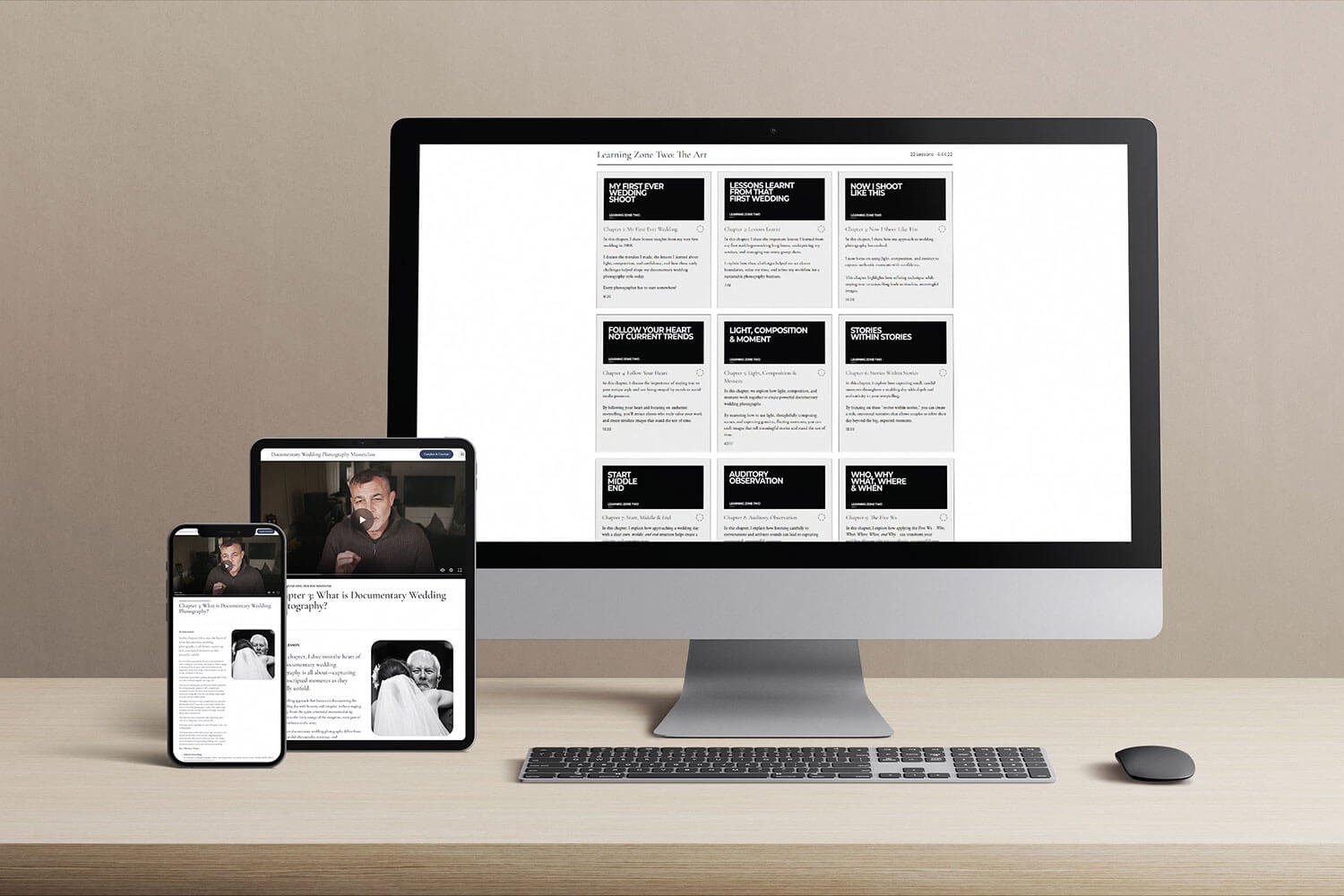
I cover bridal prep in far more depth in my online course, The Art of Documentary Wedding Photography.
Not just the technical side, but how to see these moments quickly, how to work in tight spaces without getting in the way, and how to build a coherent story from what looks like chaos at first glance.
If bridal prep is the part of the day you secretly dread, you’re not alone. I did too. Then it became one of my favourite parts.
Bridal prep window light: FAQs
How do you expose for harsh window light during bridal prep?
I expose for the moment and the expression first. If the window blows a bit, I can live with that. What matters is that the hands, faces, and interaction are readable.
Do you use flash during bridal prep?
I don’t. I’d rather work with what the room gives me and use shadow to hide clutter. Flash can clean things up, but it can also flatten the mood and pull you out of the story.
What if the room has mixed light (window plus lamps plus ceiling lights)?
If it’s ugly, I simplify. I’ll usually commit to the window light, move my angle, and let the other light sources fall where they fall. Black and white can also be a very honest solution if the colour mix is fighting you.
What’s the quickest way to find good compositions in a cramped prep room?
Look for frames within frames. Doorways, mirrors, curtains, and gaps between people. They give you structure fast, and they let you stay candid while still controlling the scene.
A complete black and white Profile, Preset & Workflow Pack for Lightroom
Film Edition 5 - Workflow Series (Monochrome) is a structured set of Lightroom profiles and presets designed to help you achieve a finished monochrome look quickly and consistently.
This is not a random “pick a look and hope” pack. It’s designed as a repeatable workflow you can run on a full set of images, with fixes and finishing tools when you need them.
If you edit regularly in Lightroom, you already know the problem. You want a strong black-and-white style, but you also need it to behave consistently across different scenes, lighting conditions, and subjects. This pack is designed to help you move fast without the work looking rushed.
You start with one of the custom monochrome profiles to establish the tonal foundation, then shape the image with workflow presets that are designed to work with that profile rather than fight against it. From there, you can use the included Toolkit for things like AI masking, grain, curves, highlight control, sharpening, finishing touches, and everyday problem-solving inside Lightroom. The product page positions the pack exactly this way, with the profile first, workflow second, then utilities and finishers to refine only when needed.
Built for speed and consistency
If you edit your photos in Lightroom, you already know the problem: you want a strong monochrome style, but you also need it to work across different scenes without constant fighting.
This pack helps you move fast without the work looking rushed.
Fast workflow: fewer decisions, clearer steps.
Consistent results: the set hangs together as a series.
Film-inspired tonality: depth, shape, and texture without the “preset look”.
Useful fixes included: real-world Lightroom problems, solved quickly.
What’s included
11 custom monochrome profiles
20 one-click presets
128 Mullins Lightroom Toolkit presets, including AI masks, fixes, utilities, grain, tone curves, colour helpers, sharpening and finishers
Compatibility
Works with Lightroom Classic and Lightroom Desktop. AI Mask presets require Lightroom Classic 11.0+ or Lightroom Desktop 5.0+.
Three for Two Offer
All preset packs are included in the 3-for-2 offer. Add any three preset packs to your basket, and the cheapest one is free at checkout.