This Is the Fujifilm Camera I Wish They’d Make
In Summary
My ideal Fujifilm would be a stills-first, rangefinder-style camera built for documentary and reportage photographers rather than spec chasers.
It would take the spirit of the X-Pro line, add modern autofocus and reliability, keep the controls simple, and avoid turning into another everything-for-everyone hybrid body.
I would pair it with a compact 18mm f/2 WR lens, keep dual card slots, leave out internal memory, and give photographers a cleaner home menu built around the essentials.
More than anything, I would want Fujifilm to make a camera with a clear point of view - one designed for people who care about timing, observation and real-world photography.
Estimated Reading Time: 9 MinutesFujifilm makes some lovely cameras. But I keep coming back to the same thought: there is still a gap in the line-up for photographers like me.
Not for people chasing specs. I mean for photographers who work in a more observational way. Documentary, reportage, candid work. The sort of photography where the camera needs to get out of the way, respond quickly, and feel like a proper tool rather than a piece of jewellery.
That is why I keep thinking about the Fujifilm camera that has not quite been made yet. Not because the current range is weak, it clearly is not, but because Fujifilm already has high-resolution bodies, hybrid lifestyle cameras, and video-leaning options.
What it does not really have, at least not in a fully modern form, is a stills-first camera built around the needs of photographers who value speed, discretion, and a very direct way of working.
The X-Pro line still has a loyal following, Fujifilm has publicly said it has not abandoned that series, and the company has also been careful to suggest that any future successor would need to be more than a routine update. That, I think, is the bit that intrigues me the most.
I wrote earlier in the year about my wider Fujifilm wishlist for 2026, touching on the X-Pro question, the idea of an X80, and the need for Fujifilm to think a little more carefully about what photographers actually need rather than simply adding the next obvious specification.
If Fujifilm made one mythical camera for the way I shoot, this would be it.

My Fujifilm X-Pro2
“The camera Fujifilm should make next is not the most powerful one it can make. It is the most usable one for photographers working in real life.”
Why Fujifilm still hasn’t built the ideal documentary camera
The frustrating thing is that Fujifilm has already made several cameras that get very close. The X100VI has the lovely hybrid viewfinder, the compact body, 40.2MP sensor, IBIS, and that general idea that it was made for people who actually enjoy taking photographs.
The X-E5 takes some of that modern technology and puts it into a small interchangeable-lens body. And the X-Pro3, despite its age now, still has some of the things serious working photographers really care about, like the hybrid finder and dual UHS-II card slots.
But none of them quite lands in the middle.
The X100VI is brilliant, of course, and I use it a lot, even though it is a fixed-lens camera. If you like one focal length and are happy to live within it, perfect. But for documentary work across weddings, travel, family life, street photography, or just general real-world shooting, I still want the freedom to move between an 18mm, 23mm, 27mm or 35mm, depending on what the day looks like.
The X-E5 gives you that flexibility, of course, but it is not an X-Pro style experience. It is a different camera philosophy. Nicely done, small, compact, yes, but different.
And then there is the X-Pro3. For me, it still feels like the closest thing Fujifilm has made to a true documentary camera. Not because it was perfect, because it definitely was not, but because it was seemingly built as a photography-first camera.
It felt like a camera for photographers who wanted to work hard and fast.
The problem now is that it belongs to an earlier generation. Sensor, processing, autofocus confidence, all of that has moved on.
So we are left in this slightly odd place where Fujifilm has newer cameras with better internals, and older cameras with a more interesting shooting experience.
That, I think, is the gap.
I do not think Fujifilm is blind to this either. The company has openly acknowledged that people want another X-Pro, but has also said it does not want to release a dull, incremental update. I actually think that is the right decision.
If Fujifilm is going to bring that line back, it should not be a routine refresh with a few extra megapixels and a new processor badge. It should be a camera with a clear identity. A modern rangefinder-style body for photographers who still care about observation, timing and a quiet way of working.
And that is why this post is not really a moan about what Fujifilm has done already. Not exactly. It is more that the ingredients already exist. They are just scattered across three or four different cameras.
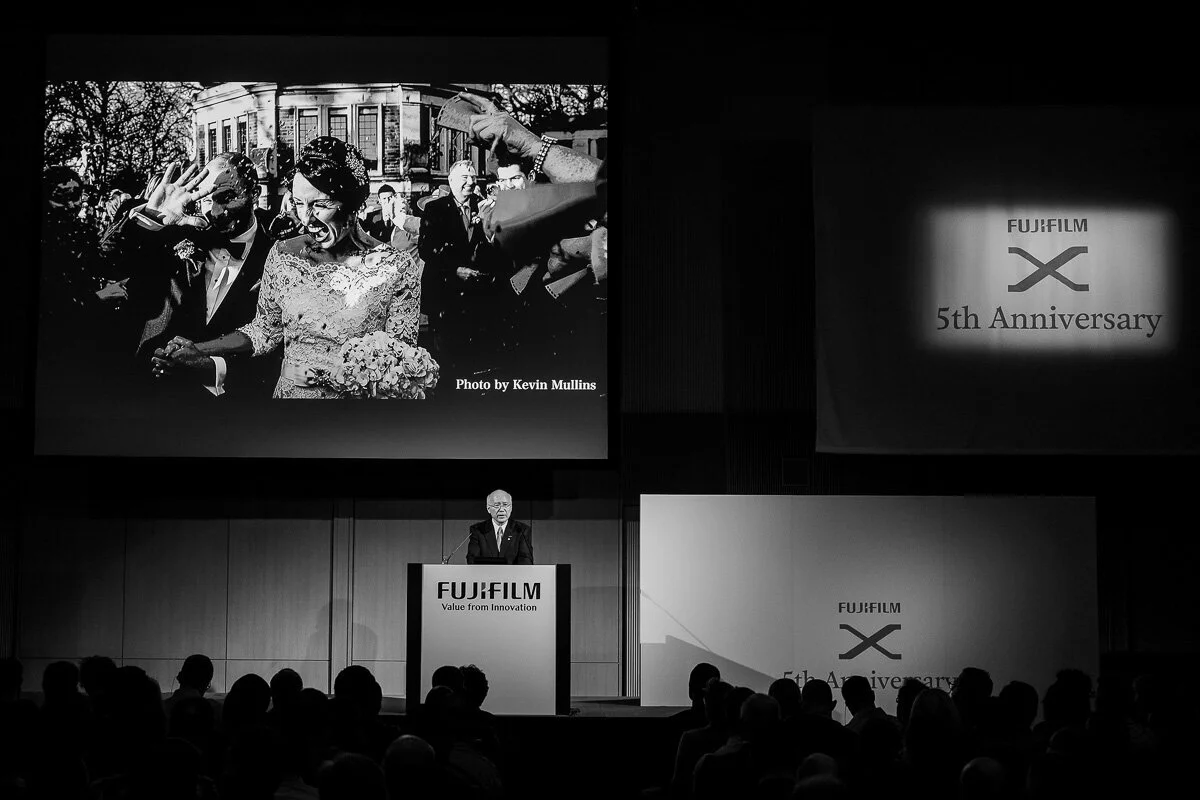
A Fujifilm Manager discusses one of my photos taken on the X-Pro1 Camera
So what would my ideal Fujifilm actually look like?
If I were drawing this camera up from scratch, I would make it feel like a photographer’s camera first, and a marketing spec sheet second.
That probably sounds obvious. A lot of camera discussion online ends up being about numbers. More megapixels. More video modes. More cleverness. More of everything, really.
What I want is something a bit more focused than that. A camera built around the way documentary and reportage photographers like me actually work in the real world.
For me, that means small enough to carry all day, sturdy enough to trust in tricky situations, quick enough, and easy enough that I am thinking about people rather than menus.
I suppose what I am describing is a modern X-Pro in spirit, but not just an X-Pro3 with newer internals bolted in. That would be too easy, and not quite enough (which is the dilemma I think Fujifilm are having right now).
My mythical Fujifilm camera spec
| Feature | What I’d want | Why it matters to me |
|---|---|---|
| Sensor | Something around 26MP to 30MP, with fast readout rather than headline-chasing resolution | I do not need enormous files just so I can say I have them. I would much rather have speed, responsiveness and a camera that feels ready straight away. |
| Processor | Whatever Fujifilm’s latest processor happens to be at the time | Not because I care about the badge. I just want the camera to feel current in use, especially with autofocus and general operation. |
| Body style | A proper rangefinder-style body in the spirit of the X-Pro line | That shape just suits the way I work. It feels discreet, balanced and made for photographers who like to observe rather than dominate a scene. |
| Viewfinder | A genuine hybrid OVF/EVF, and a good one | If Fujifilm brings back the X-Pro idea, this is non-negotiable. It is part of what makes the camera different in the first place. |
| Screen | A simple tilt screen, not a fully articulating side-hinged one | I want something practical for awkward angles, but I do not want the camera to start feeling like it has been designed mainly for video. |
| Card slots | Dual card slots | For any serious documentary work, especially weddings, that is just common sense. I would not want to lose it. |
| Storage | No internal memory, just reliable removable cards and proper backup behaviour | I do not want files trapped inside a camera if it fails or needs repair. Removable media fits a serious working workflow far better. |
| Weather sealing | Yes, absolutely | If it is supposed to be a real working camera, it should be built like one. |
| Stabilisation | IBIS, but only if Fujifilm can keep the size sensible | I like stabilisation. I just do not want the body to become a brick in order to get it. |
| Battery | The larger current Fujifilm battery | I would happily take better battery life over some other minor spec improvement I will barely notice in real life. |
| Controls | Direct physical controls and a stills-first layout | I want the important things under my fingers. The camera should feel like a camera, not a small computer pretending to be one. |
| Menus | A simple photography-first home menu, with the deeper menu system still available underneath | I do not mind complexity if it is there when I need it. I just do not want everyday settings buried in a maze of tabs and submenus. |
| JPEG recipe tools | Something closer to simple HSL-style colour control, with better saving and sharing of custom looks | This would open up Fujifilm’s JPEG recipe system properly and let photographers create genuinely personal looks rather than small variations on the same themes. |
| Settings backup | Full backup and restore of menus, buttons, recipes and custom setups | If I build a camera around the way I work, I want to be able to save that setup properly and move it between bodies without starting from scratch. |
| Video | Perfectly decent, but not the main event | I am not against video at all. I just do not want this sort of camera to lose its identity trying to please everybody. |
That, more or less, is what I’d like to see.
You will notice I have not gone straight to 40 megapixels. I know that sounds slightly backwards when everyone seems to think more resolution is automatically better, but for the sort of work I do, I am not convinced it is the most important thing.
I would rather have a sensor with quick readout, good dynamic range and sensible file sizes. That's more important to me than being able to crop into next week.
The same goes for video. I am not anti-video. Far from it. I just do not think every stills camera has to bend itself around it. I do, however, understand that for manufacturers, it's often cheaper to keep the current sensor's video technology in each camera than to remove it.
This mythical Fujifilm camera, at least in my head, is built for photographers who care most about timing, framing, composition and observation. Video can be there, fine. It just should not dominate the design.
And yes, I would want it weather-sealed. I would want dual slots. I would want a proper hybrid finder.
The best cameras for real work are often defined less by gimmicks and more by what you really need.
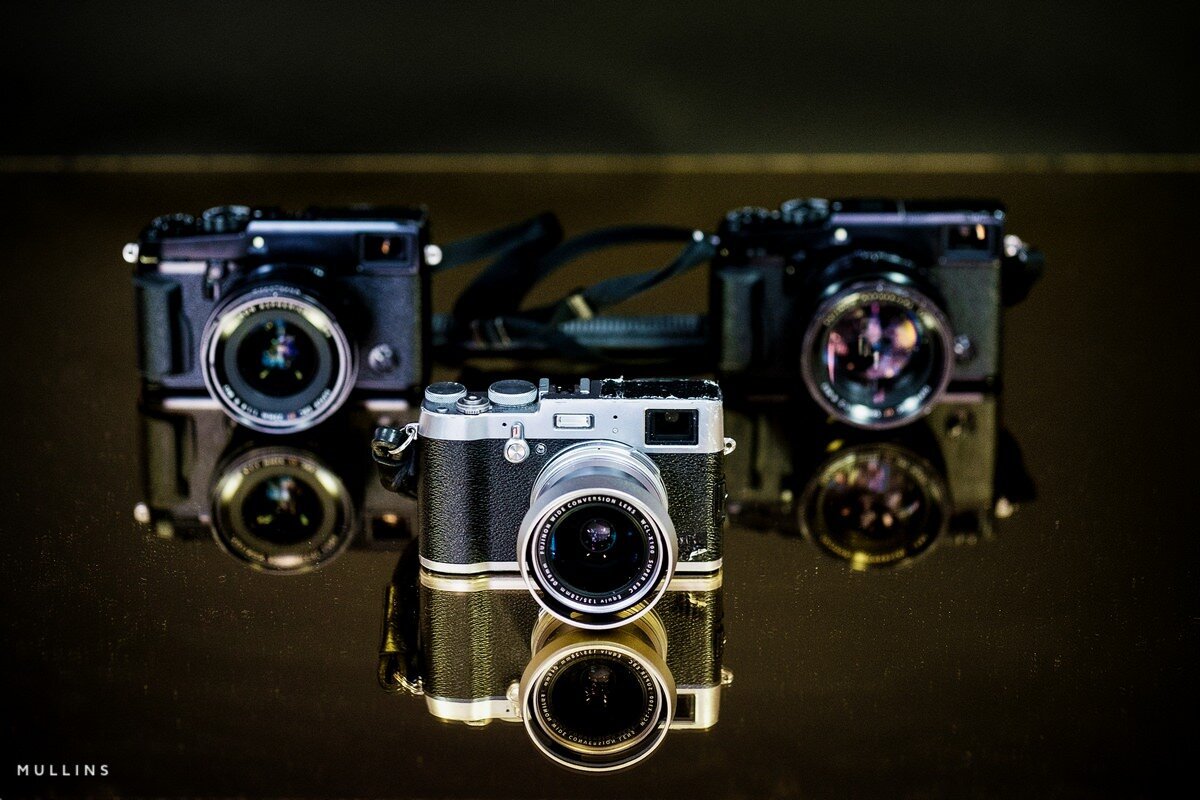
A Selection of some of my older Fujifilm Cameras
“This is not my dream camera because it would do everything. It is my dream camera because it would do the right things properly.”
The features I would use from other Fujifilm cameras
Fujifilm has already built most of this camera. Just not in one body.
Fujifilm doesn’t really need to invent something from nowhere. It's just that the good ideas are scattered across half a dozen models, I guess.
Fujifilm itself has basically admitted that a future X-Pro needs to be more than a routine refresh, and I think that is exactly right.
From the X-Pro3, I’d keep the philosophy
The X-Pro3 is the obvious starting point here. The X-Pro3 is still a great camera because of what it is, not just what it’s capable of.
The hybrid viewfinder is important, and that rangefinder-style layout still makes a lot of sense for street, documentary, and reportage work.
I think it encourages a more observational way of shooting. At least I think it does. The official Fujifilm material even leans into that idea, describing the X-Pro3 as especially suited to street and documentary photographers who care about process, while the camera’s own specs and guides underline the OVF/EVF switching system as a core part of its identity.
So yes, I would start with that body concept. Not the hidden rear screen exactly. I never thought that was overly successful. But the soul and heart behind the camera, absolutely.
From the X100VI, I’d borrow the ambition
What the X100VI proved is that Fujifilm can make a compact, beautiful, photography-led camera that still includes modern hardware.
It has the Advanced Hybrid Viewfinder, a 40.2MP sensor, and in-body stabilisation, all in a body that still feels true to the original idea of the FinePix X100. It also keeps a flat tilting LCD rather than going down the fully articulating route, which helps the camera stay true to itself.
Now, I am not saying I want my dream X-Pro to simply become an interchangeable-lens X100VI. That would be too easy, and probably too obvious.
But I do want Fujifilm to take the lesson from it: photographers will respond very well when modern performance is added without losing the camera's essence.
From the X-T5, I’d steal the practical bits
The X-T5 has the sort of useful, modern features that make a camera easier to trust on real jobs.
Dual UHS-II SD card slots, for one, and the excellent three-way tilting rear screen for another. That screen design is still, for my money, one of Fujifilm’s best ideas. It works brilliantly for stills photography and does not drag the camera into feeling like a mini video camera.
That is exactly the kind of practicality I would want in this mythical camera. Just genuinely useful, day in and day out.
From the X-E5, I’d take the newer autofocus thinking
The X-E5 is interesting because it shows Fujifilm continuing to refine autofocus and subject detection in a smaller interchangeable-lens body.
Fujifilm says it uses an improved autofocus prediction algorithm and subject detection AF capable of recognising a wide range of subjects. I do not need every camera to detect trains, insects, and birds, if I am honest, but I do want the underlying autofocus technology that comes with the newer generation of processors.
That is the sort of improvement I care about more than “more megapixels”. Better responsiveness. Better hit rate. In documentary work, that matters a lot.
What I would not borrow
I would not borrow the idea that every camera needs to be a full hybrid content machine. I would not borrow the fully articulating screen approach from the more video-led bodies. And I would not borrow the assumption that more megapixels is always better.
That is probably where my thinking is different to some other the other ideas on the internet.
“Put another way, give me the soul of the X-Pro3, some of the confidence of the X100VI, the practical common sense of the X-T5, and the newer autofocus behaviour Fujifilm is building into cameras like the X-E5.”
Mix those together properly and, I think, you get very close to the camera a lot of documentary photographers have been waiting for.
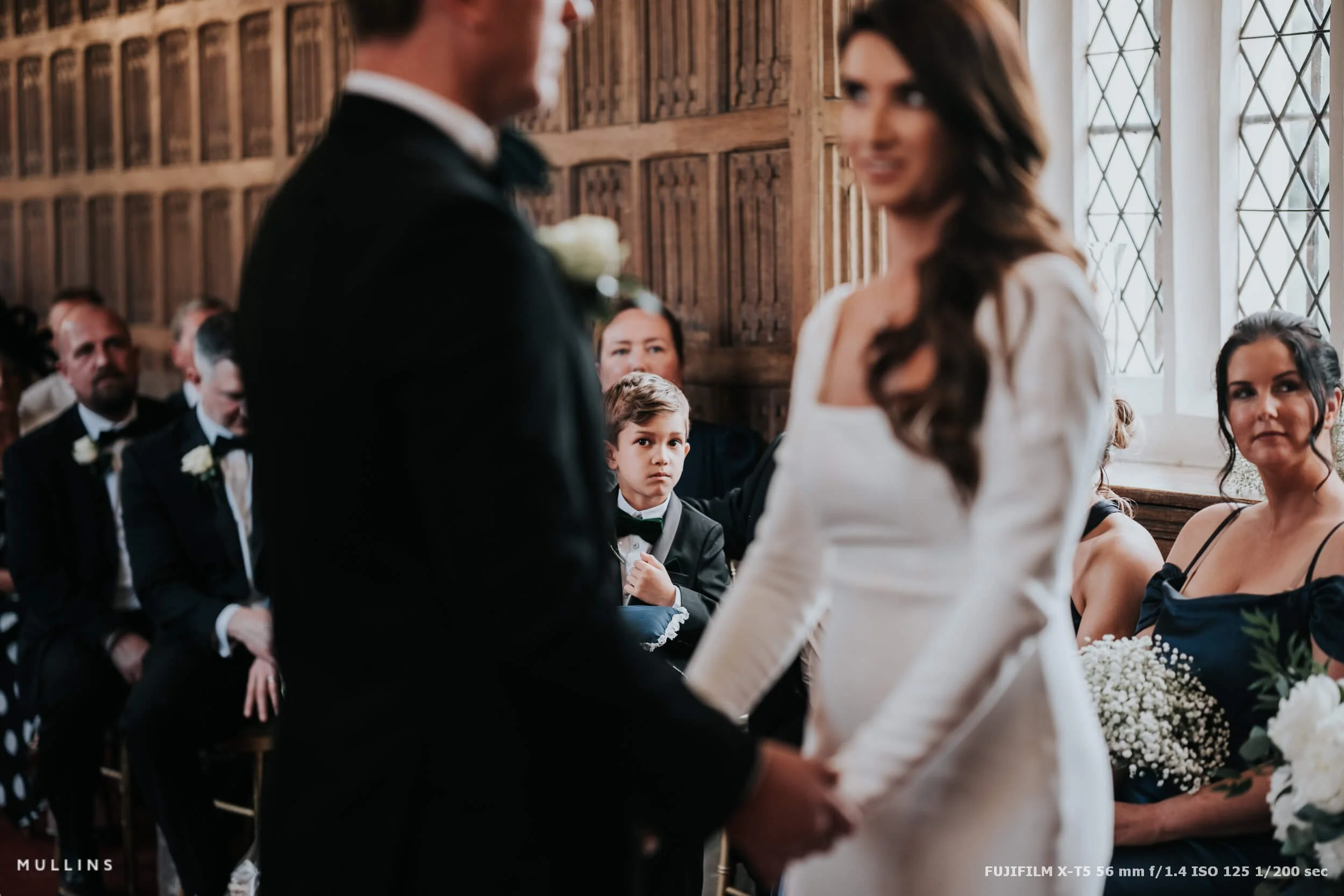
A Wedding Photograph on one of my Fuji X-T5 Cameras
The images in this post were edited with my presets
Every photograph featured here has been edited using my own Lightroom Presets. I have built them to give me a consistent, natural finish with a bit of character.
So if you like the overall look of the images in this post, have a look at the preset collection. They are the same tools I use in my own workflow.
Why this camera should be built for stills photographers first
I don’t particularly want Fujifilm to make another camera that tries to please everyone.
I do not want a camera that begins life as a photographer’s tool and then becomes a content-creation machine, because that is where the marketing is.
Fujifilm already makes cameras that cover the hybrid and video end of the market. The X-H2S, for example, has serious video capabilities, including 6.2K RAW, while bodies like the X-S20 also offer strong video features, along with stabilisation and creator-friendly usability. The X-S20 is the camera I use for my own photography training videos.
A proper documentary-first body should be based around still photographs and carrying the thing for hours. That does not mean video has to disappear completely. I am not arguing for that. It just means video should be a useful extra, not become the thing that decides the screen design, the controls, the menus, the ergonomics, etc.
That is where Fujifilm has always been so strong, I think. The cameras people tend to fall in love with are usually the ones that feel like they were designed with a clear photographic point of view in mind.
The X100VI is a good example of that because it has modern internals, including in-body stabilisation, but it still retains the Advanced Hybrid Viewfinder and a compact, photography-led design.
The X-T5 does something similar, keeping a three-way tilting rear screen that makes sense for stills without making the camera feel like a full-blown video rig.

One of my favourite photographs of my children.
The lens I’d want launched with it
If Fujifilm made this camera and asked me what lens should go with it, I would say an XF 18mm f/2 WR Mark II.
The newer XF 18mm f/1.4 is my favourite lens on the X-T5. It is incredibly quick, very sharp, and the focal length works for my documentary work.
It gives me context without feeling too wide, and it has become one of those lenses I use all the time. But it is still a relatively large lens.
If this mythical camera is meant to be small, discreet and carryable all day, I think the lens attached to it needs a slightly different approach than that f/1.4 model.
That is why I keep coming back to the old 18mm f/2. It was not perfect, and the autofocus would need to be brought up to date, but the size and usability were brilliant.
It is practically a pancake lens and a modernised version with weather sealing, better focus performance, and the same compact spirit would be a superb match for a reportage-first Fujifilm body.
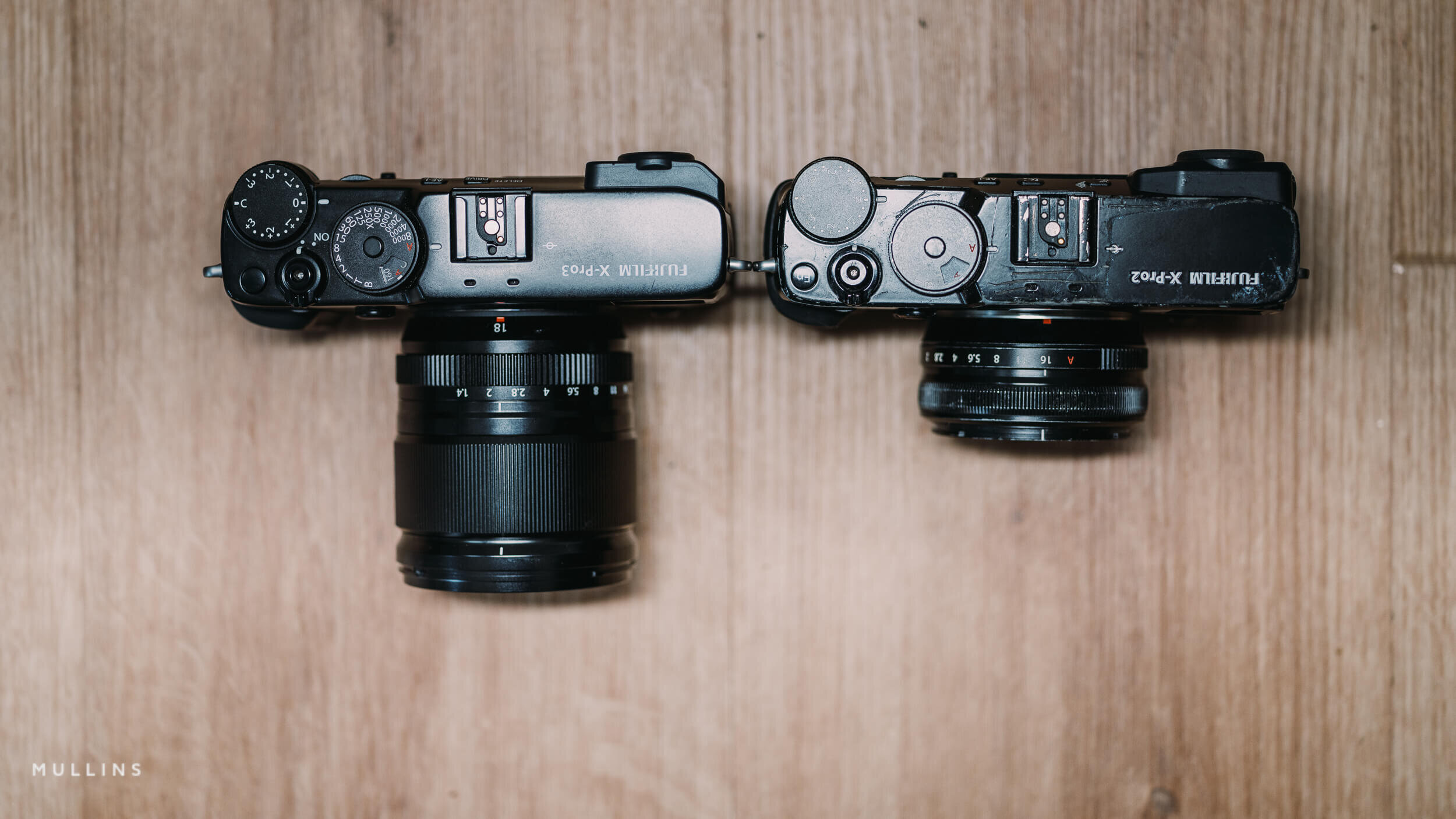
There is a notable difference in size between the newer F/1.4 Lens and the older F/2 Lens.
Fujifilm’s menus need a photography-first approach
One thing people often say about modern digital cameras is that the menus can feel a bit complicated. I do not even think that is entirely unfair.
But I also do not think the answer is to strip everything back and make the camera simplistic. There is nothing wrong with depth if the depth is there for the people who need it.
What I would want instead is a proper photography-first home menu. A clean starting point with just the essentials, most photographers actually change in real use. Focus mode, subject detection on or off, card and backup settings, viewfinder behaviour, screen behaviour, image quality, film simulation, white balance, recipe access, custom buttons, perhaps one or two exposure-related preferences. That sort of thing.
The deeper menu system can stay exactly where it is for those who want it.
That, to me, would be one of the biggest real-world improvements Fujifilm could make. You should not need to remember which obscure menu tab hides the thing you actually change every day.
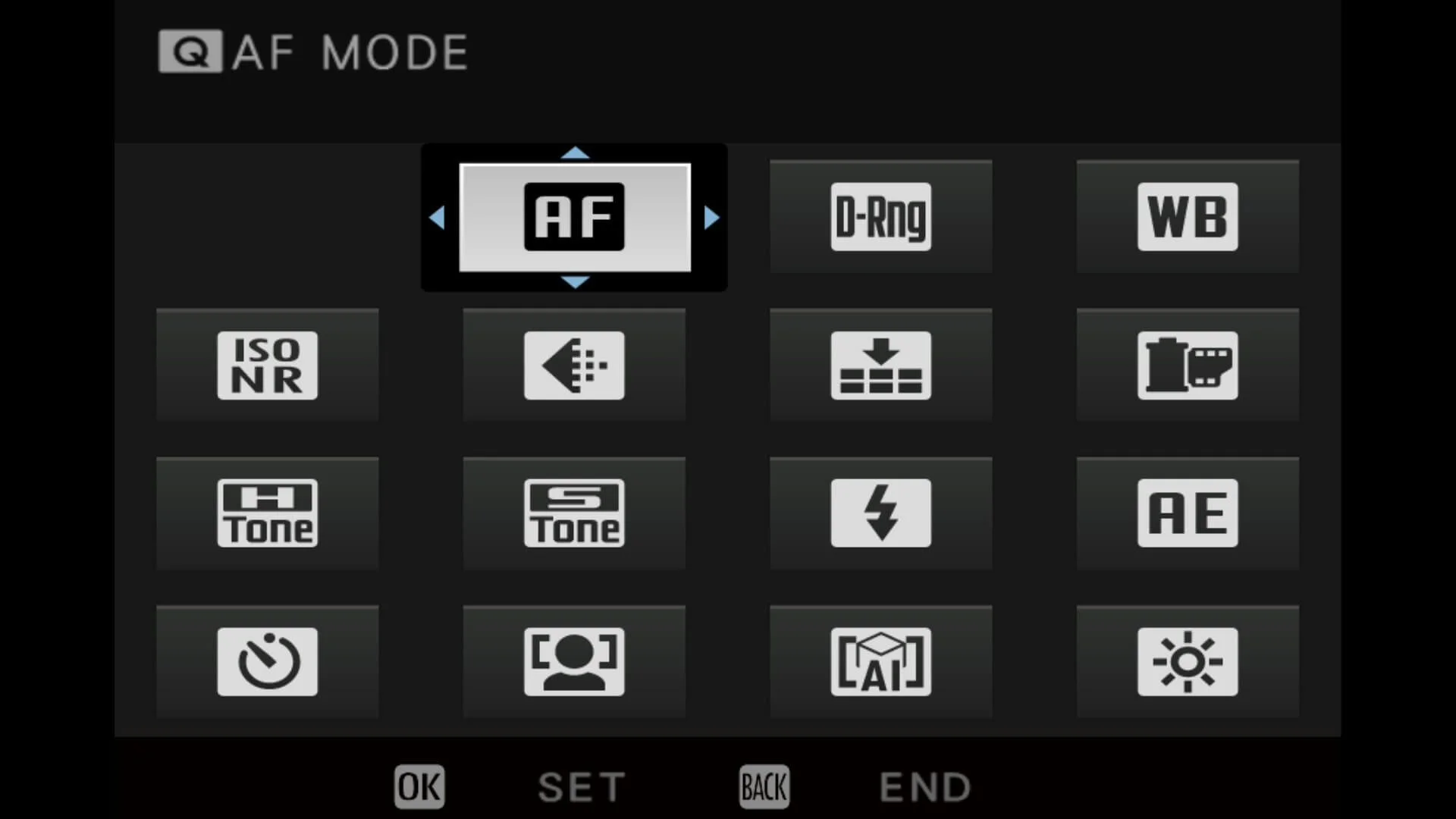
Deep menus are needed, but a simple “Home” menu would be amazing.
Why I do not want internal memory
One thing I definitely would not want on this camera is internal memory. I know some people like the idea of it as a safety net, but for the way I work, I see more problems than benefits.
The biggest one is redundancy. If I am photographing anything important, I want my files written to removable cards. That gives me options.
It fits into a proper workflow. It means I can offload, archive, duplicate and move on without the camera itself becoming part of a storage problem.
If the camera needs to go away for repair, or develops a fault, or simply becomes inaccessible for a while, I do not want images trapped inside it.
Internal memory sounds modern, but I think for a serious working camera, it is the wrong direction. Give me reliable UHS-II card slots, good backup behaviour, and perhaps better tools for managing files and settings.
JPEG recipes should go much further
If Fujifilm really wanted to open up the JPEG recipe world properly, this is where I think it could do something genuinely interesting.
The current recipe system is fun, and obviously, it has created a whole culture of its own, but it still works within fairly fixed boundaries. You can make lovely looks with it, but you are still steering a relatively limited set of controls.
What I would love to see is Fujifilm go further and give photographers something closer to a simple Lightroom-style HSL approach inside the camera. Not a huge editing suite or over-engineered. Just a sensible way to tune individual colour families with more precision, so recipes become genuinely more personal and less like variations on the same handful of starting points.
That would open the system up enormously. It would let photographers create looks that actually feel unique rather than merely tweaked.
And if Fujifilm wanted to go one step further still, let us save, name, export and share those looks properly. Not just as a list of settings scribbled down in Notes or posted in a Facebook group, but as actual recipe files or profiles that can be backed up and transferred between bodies (without the need for X-RAW Studio).
That would make the whole JPEG ecosystem far more mature, and far more useful.
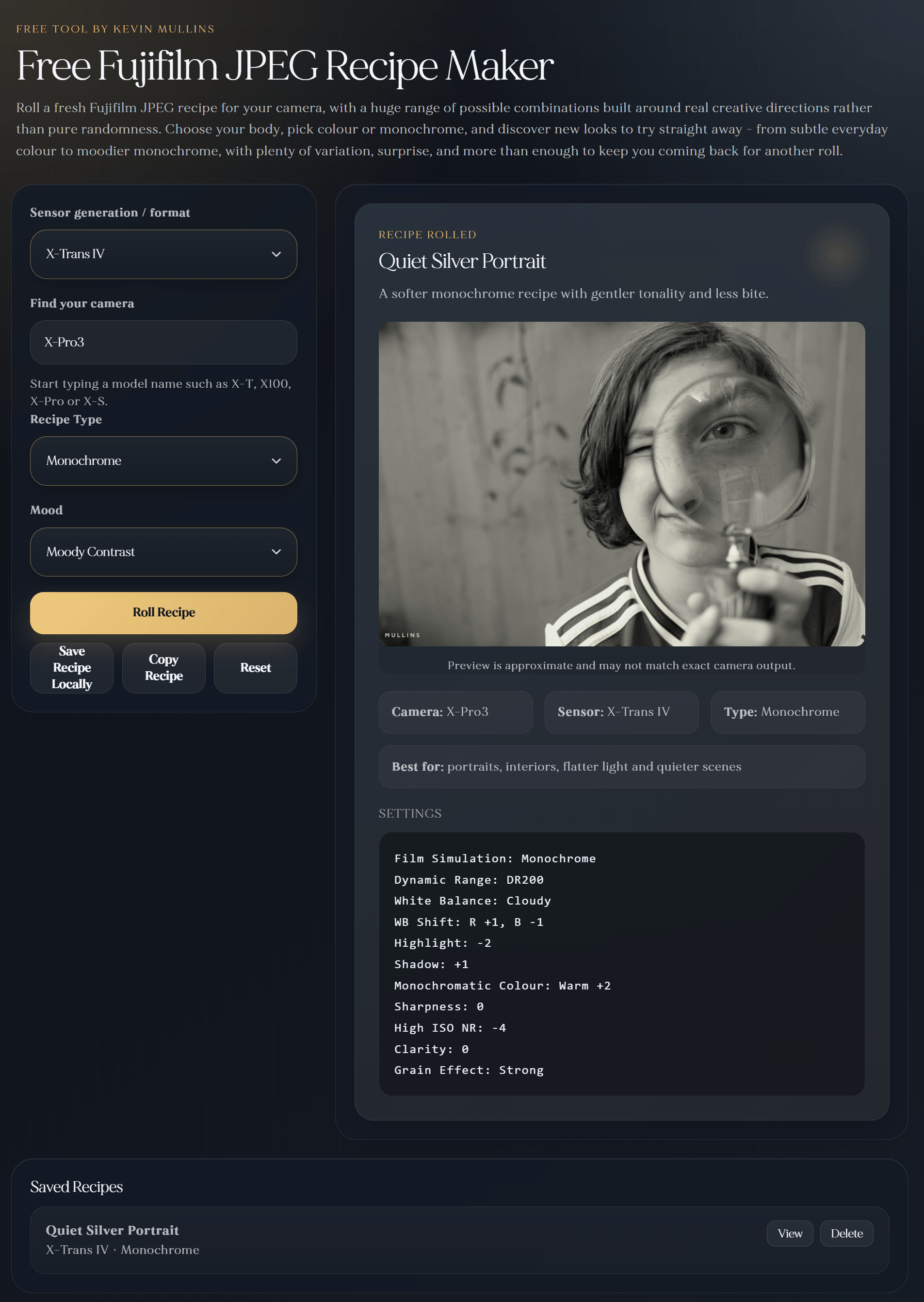
Try my free Fujifilm JPEG Recipe Maker
If you enjoy building and testing Fujifilm JPEG recipes, I have also made a free tool on my website that helps generate recipe ideas for different Fujifilm cameras.
It is designed to give you fresh starting points you can try in-camera or refine further in your own way, rather than just recycling the same settings over and over.
This is exactly why I would love Fujifilm to push the JPEG system further. The appetite is clearly there. Photographers want to create looks, not just scroll through a fixed list.
Would Fujifilm ever actually make it?
I think they might. Not exactly like this, obviously, because nobody at Fujifilm is likely to read this (and I have no input since my ambassadorial role ended), but the general shape of it feels plausible enough.
Fujifilm has already said it has not abandoned the X-Pro line and that another one will come at some point.
The harder question is when, and on that I think anyone pretending to know for certain is probably guessing. There are always rumours, of course.
Fujifilm knows the X-Pro line is still important, knows photographers are waiting for it, and knows that if it does bring it back, it needs to feel special.
Whether that happens this year, next year or never is another matter. But as an idea, I do not think this dream camera is remotely far-fetched.

Some of my favourite Wedding photos have been shot on early edition X-Pro Cameras.
Final thoughts
There is room in the line-up for a proper stills-first, rangefinder-style body with modern autofocus and durability.
Would I buy it? Immediately. Not because it would be the most advanced camera Fujifilm could make, but because it would be the one that made the most sense for the way I like to work.