

Estimated read time: 7 minutesMost wedding photographers say they like to "blend in." It's practically a cliché & you'll find it on nearly every documentary wedding photographer's website, including my own.
But here's something I established a long time ago: blending in is not a passive act. It's a skill. An art, even.
Something you build over years of shooting, failing, and learning exactly what draws attention, and, of course, what doesn't.
I've been shooting weddings documentarily for over 15 years. I also shoot a lot of street photography. The two are very connected.
Both demand the same fundamental ability: being present in a space without being noticed.
I should say, this approach is very much rooted in documentary wedding photography. Other photographers work in more directed, more editorial, or more hands-on ways, and that is absolutely fine. Weddings can be photographed beautifully in all sorts of ways. This post is simply about the way I work when I want moments to unfold naturally.
In this post, I'm going to break down exactly how I do it: the mindset, the movement, the gear choices, and the small habits that make the difference between a wedding photographer who's always being spotted and one who comes back with frames nobody knew were being taken.
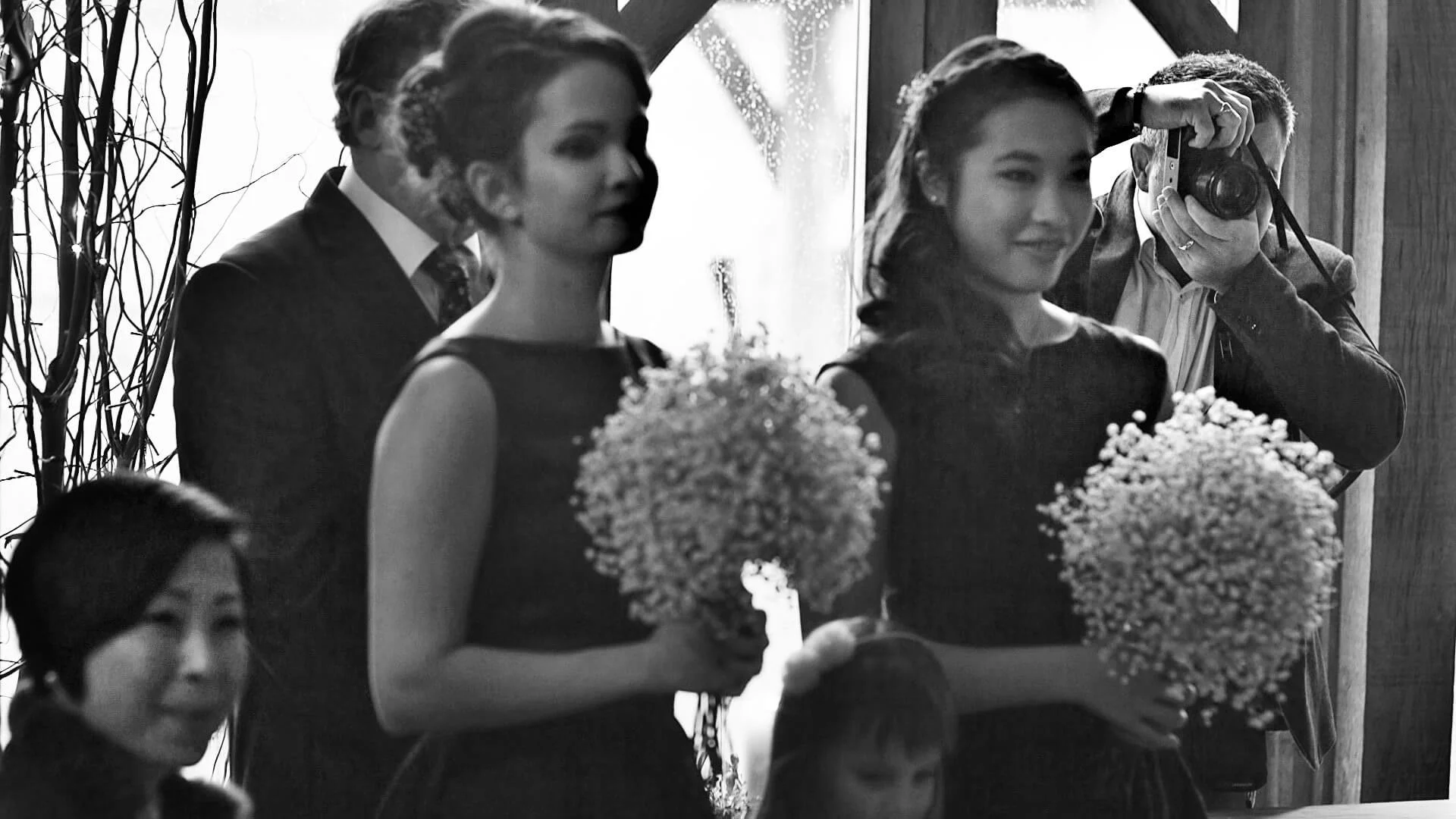
Me Photographing a wedding several years ago.
Why Invisibility Matters
Couples today don't just want candid wedding photos, they expect them. Documentary-style wedding photography has moved from a minority offering to mainstream, and with that move comes a new pressure on photographers: the room is now full of people with smartphones who are all half-watching the photographer.
If you're obvious, you become part of the event. People adjust. They perform. The groom crying at the altar straightens up when he clocks you pointing a lens at him. The mother-of-the-bride fixes her hair mid-laugh. The moment dies.
Genuine candid wedding photography, the kind that stops people in their tracks when they see the gallery, requires the subjects to have genuinely forgotten you exist.
That's the standard to try and reach.
“Wow! Not sure where to start.
We had high expectations for how these photographs would turn out, but they’ve really blown us away! We are amazed at how intimate these shots are, yet so many of our guests thought we didn’t have a professional photographer there.
You have captured our family and friends’ true characters, and yet I would imagine that to most, you barely even uttered a word.
Who said you needed words to tell a story? We are so, so impressed.”
Above is a perfect testimonial from a former client. Notice the line “many of our guests thought we didn’t have a professional photographer there”.
The Candid Wedding Photography Tips That Will Make a Difference
1. Start Before Anyone Arrives
Trying to be invisible isn't just about what you do during the day itself; it starts the moment you arrive at the wedding location.
Arrive early. Always. Scout the venue before guests appear. Understand where light falls, where people will naturally gather, and where the ceremony's key moments will unfold. When you know a space in detail, you stop moving around searching, and movement is what gets you noticed.
Walk the rooms. Identify your anchor positions. Know in advance where you'll stand for the ceremony, where you'll be for the first dance, and which doorway perhaps frames the speeches perfectly.
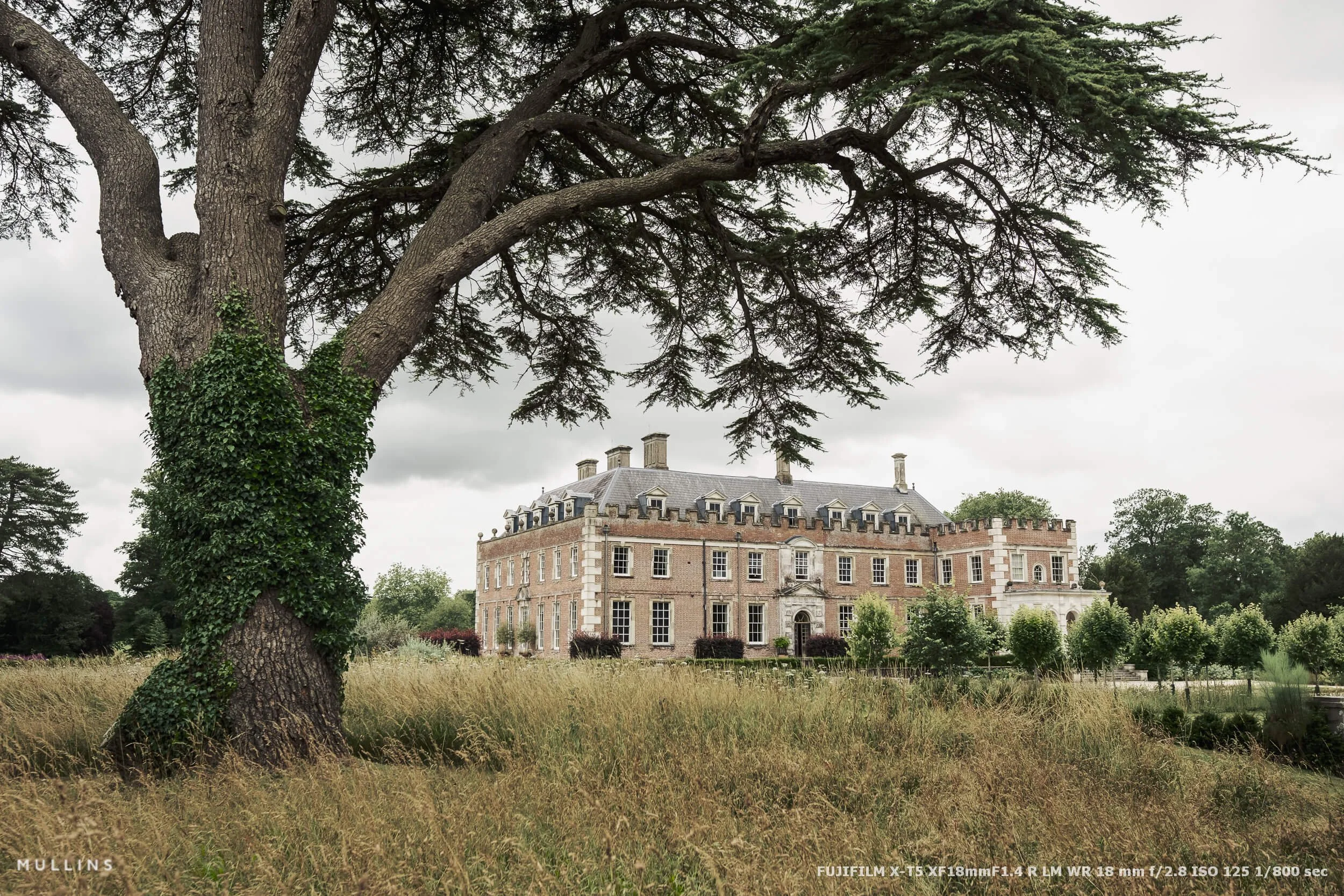
Arriving early may allow you to get venue and detail shots that are more tricky later in the day.
2. Dress Like a Guest, Not a Wedding Photographer
This sounds very old-fashioned, but it isn't.
A photographer in full near-military gear (vest, multiple cameras, straps, enormous lenses) singles out the photographer. Every guest who sees you adjusts their behaviour slightly.
Wear dark, neutral clothing that fits the attire of the other guests.
Avoid bright, large camera bags, especially those with obvious camera branding.
Use discreet camera straps.
Keep a second body close but not prominently displayed if possible.
On Fujifilm systems, this is one of the genuine advantages of the X Series and smaller mirrorless systems in general.
A Fujifilm X100VI, X-Pro3, or X-T5 reads as a "nice camera" to the guest’s eye - not a professional photography rig.
People relax around it in a way they simply don't around a full-frame DSLR with a 70-200mm attached. And that is a fact.
3. Use a Silent or Near-Silent Shutter
The sound of a shutter can tell everyone in earshot: someone just took a photo.
During quiet moments like vows, readings, and speeches, a loud shutter can break the stillness of a room. Worse, it can make your subject self-conscious at the exact moment you're trying to capture their authentic reaction.
Electronic silent shutters are transformative for documentary wedding work. Fujifilm's silent shooting mode, available across the X Series and GFX line, is one of the reasons I've shot on these systems for years. You can fire off multiple frames during the ring exchange without a single click. Silent shutters are now commonplace across almost all systems.
Practical tips:
Enable silent shutter for all ceremony and speech coverage.
Switch to mechanical only when you need it.
Be aware of banding under certain artificial lighting and always test in advance.
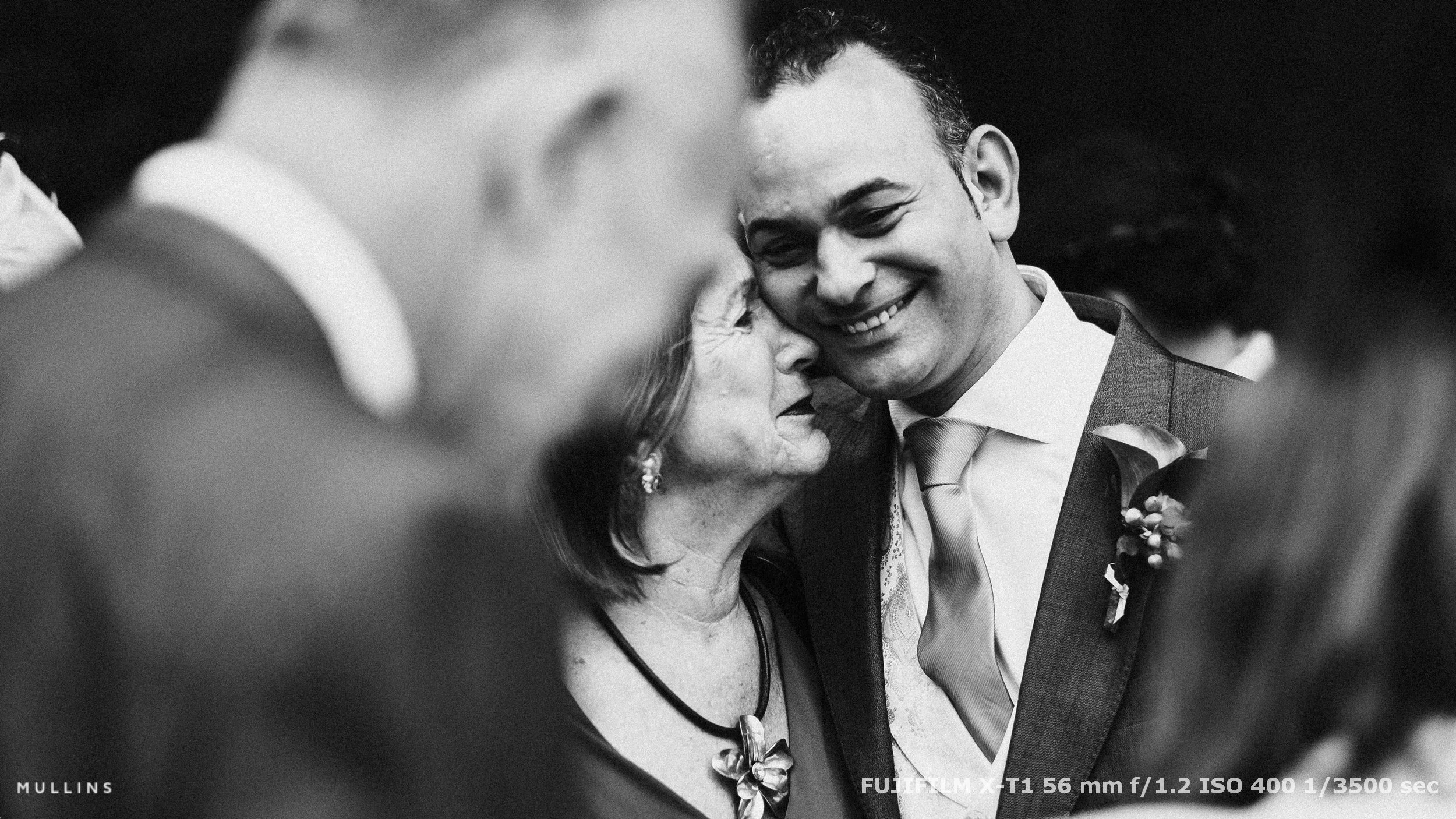
4. Move Like You Belong There
The biggest giveaway isn't really your camera. It's your behaviour.
Photographers who creep around or move with exaggerated stealth are, conversely, the most noticeable people in the room.
Hesitation really draws the eye. Hovering on the edge of a group, camera raised, looks suspicious to guests.
Instead, move with confidence:
Walk purposefully. Know where you're going before you move.
Pause at the edges. When you reach a position, stand still. Let people get used to your presence.
Avoid making eye contact with people you're about to photograph; they'll immediately look at the camera and start performing.
Use both your eyes. Train yourself to notice moments in your periphery without turning your head to look directly. This is a skill borrowed directly from street photography.
Let moments come to you. The instinct is to chase, but the skill and the discipline are to wait.
5. Get Closer — With a Wide Lens
A wide lens at close range is often less noticeable than a long lens from a distance. This might seem counterintuitive, but it’s really true:
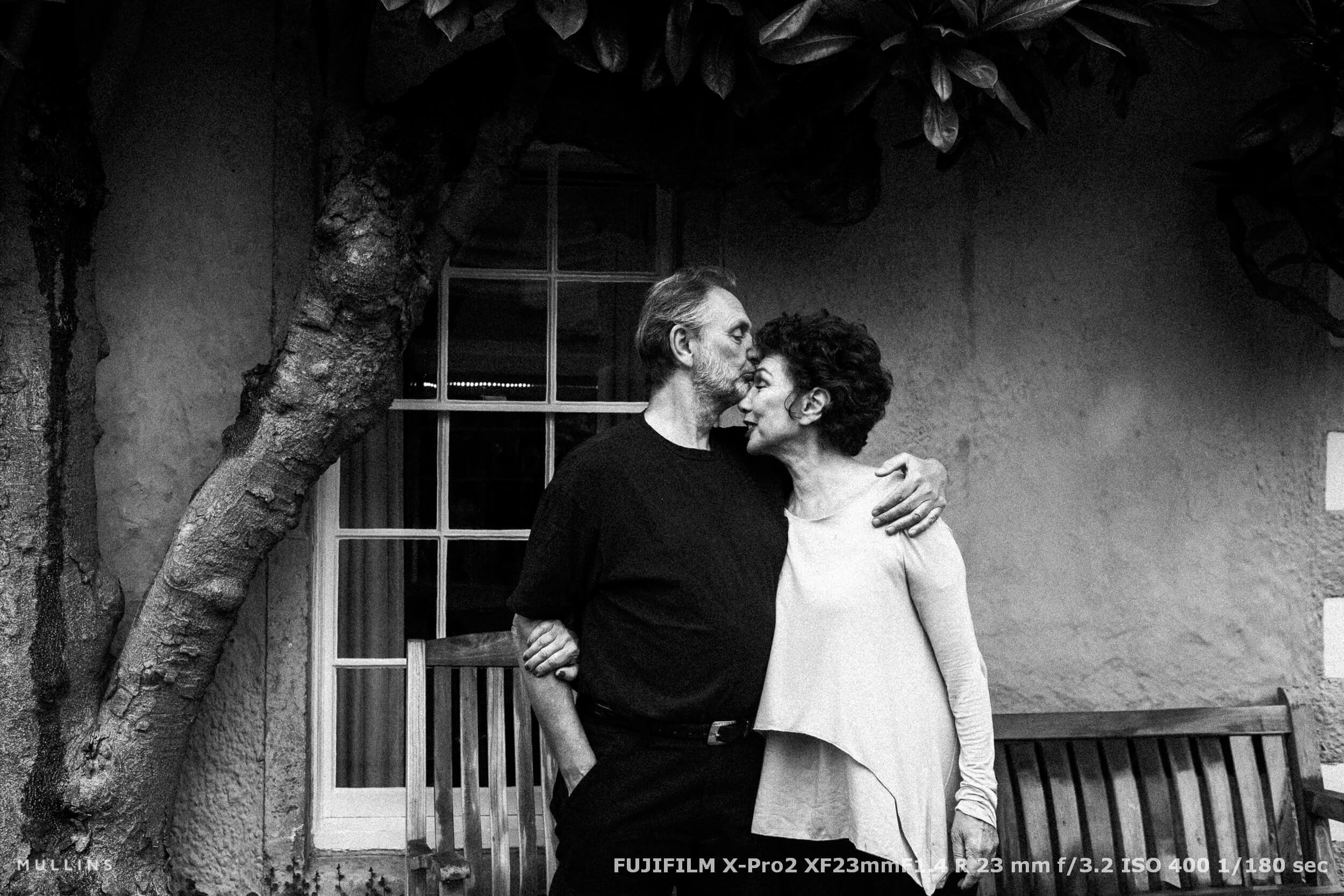
A 200mm lens pointed at someone from across the room can be very obvious. A 23mm lens used at close range makes it look like you're photographing something nearby rather than them specifically.
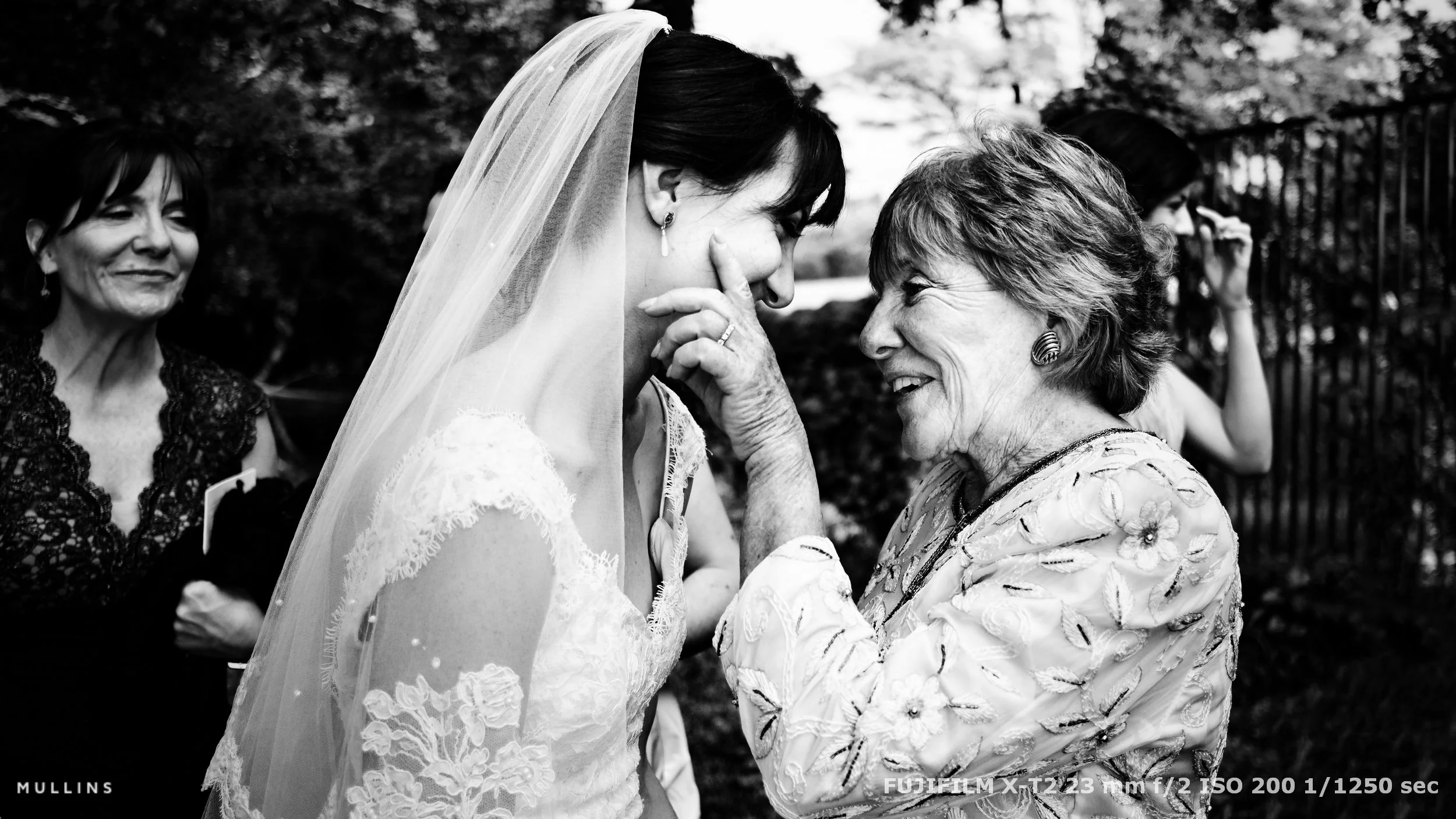
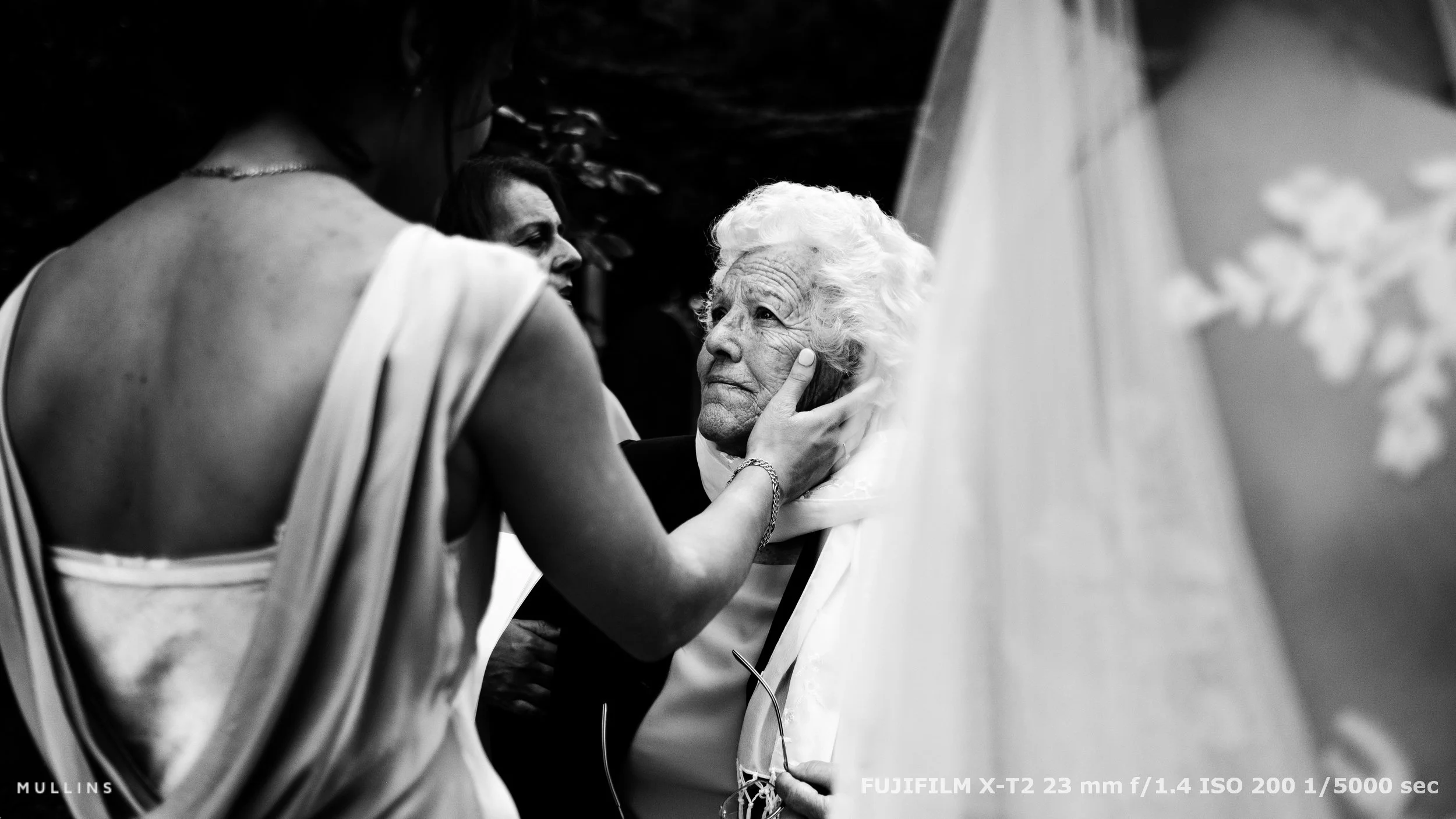
More importantly, close-range wide-angle shooting puts you in the moment rather than observing from the outside. This results in far more emotional photography.
This doesn't mean abandoning telephoto entirely. A 90mm or longer has its place during ceremonies when you genuinely cannot be close.
But for receptions, speeches, and getting-ready moments, learn to work close.
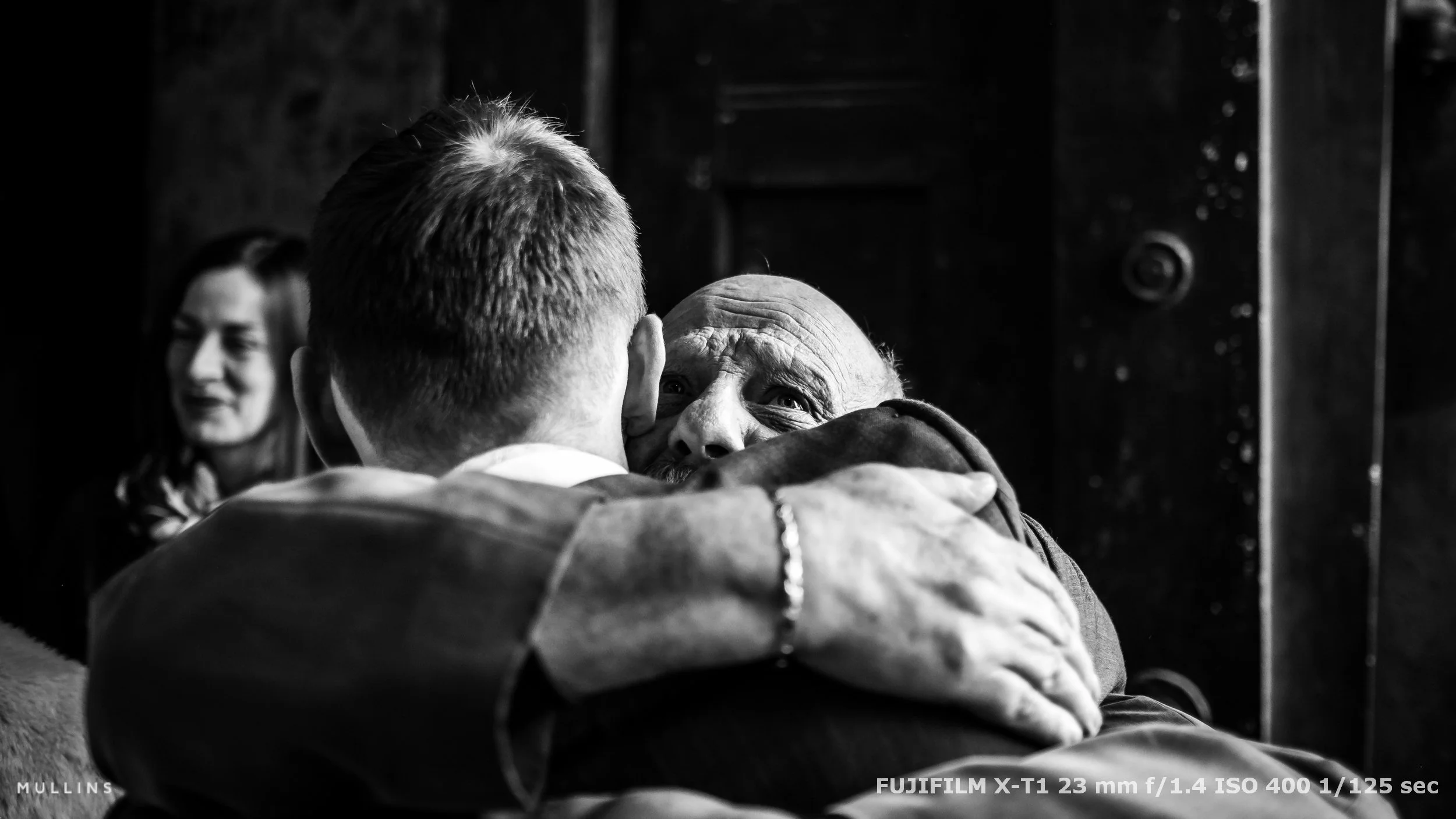
Getting close with a wider lens can lead to powerful images.
6. Read the Room, Not Just the Couple
It’s tempting for new documentary wedding photographers to obsess over the couple. But as you become more experienced, you will obsess over the whole room.
The best candid wedding photos are not always of the bride and groom: the grandmother with a tear in her eye, the best man trying to hold it together before his speech, or two small children completely absorbed in their own world while the ceremony unfolds around them.
Where to look:
Guest reactions during vows and readings
Children (always - they are completely unselfconscious)
The quiet moments between the big moments — a couple holding hands during a speech, a friend whispering something to the bride
The edges of rooms, not just the centres
Anyone who clearly thinks nobody is watching them
7. Build Familiarity Early in the Day
The single most effective invisibility tool isn't really a gear or a technique; it's your relationships.
Spend the first 30 minutes of every wedding doing very little actual photography. Instead, talk to people. Laugh at jokes with the bridesmaids, bimble about a bit. Let the bridal party get used to you as a person before they start seeing you as a photographer.
By mid-morning, you'll have gone from being "that stranger with a camera" to "that person who's been around all day".
At that point, people really do stop registering your camera.
And that's when the real work begins.
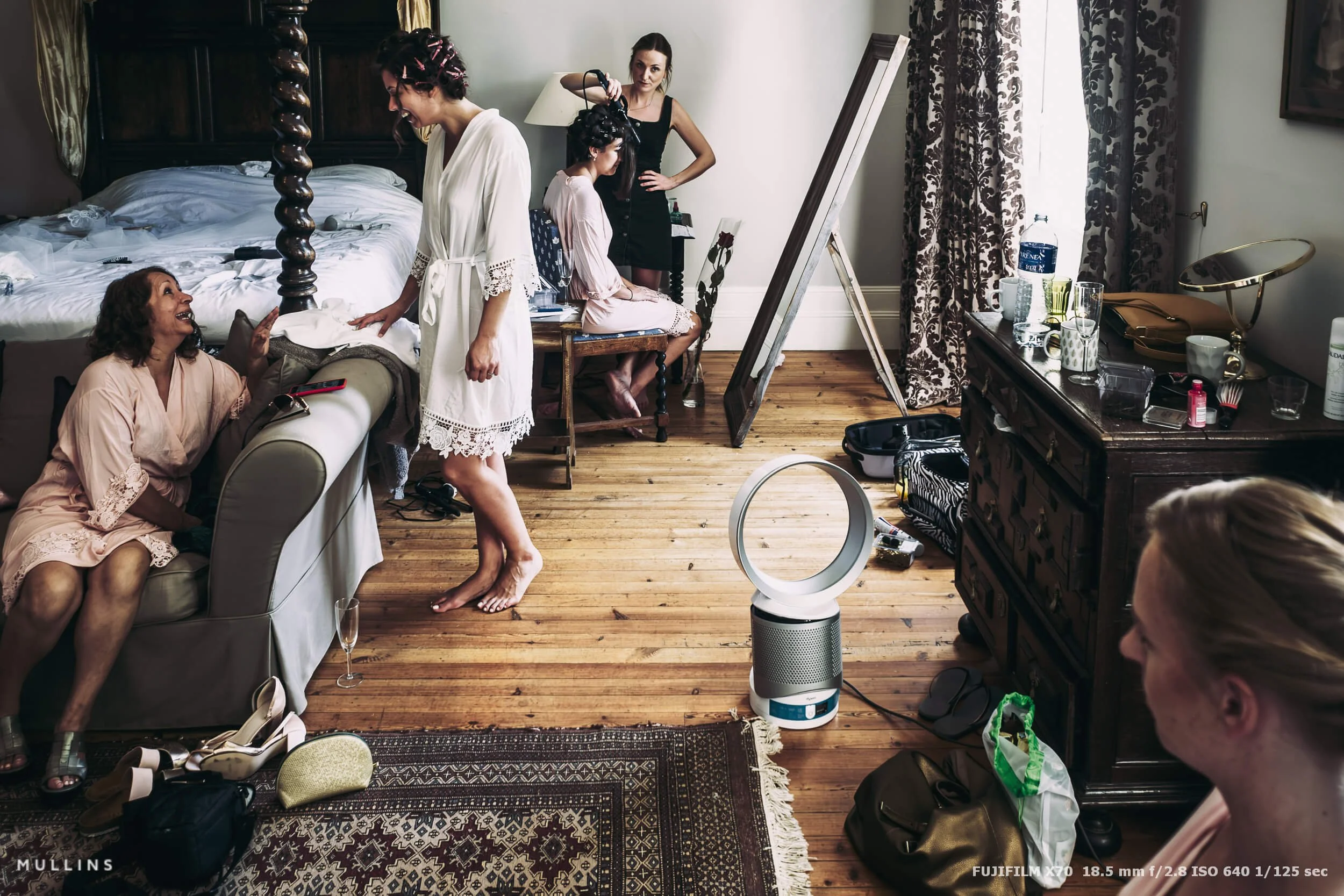
Once you are known, you become part of the scene.
The Street Photography Connection
Everything above has a direct counterpart in street photography.
Street photography is where you develop the muscle memory for documentary wedding work. The anticipation, the peripheral awareness, the ability to pre-visualise where a moment is about to happen, the confidence to raise a camera in a public space.
These are street skills that transfer directly.
If you want to become more invisible at weddings, shoot street photography in between seasons. Walk into busy markets, festivals, and city streets. Work on being present in a crowd without drawing attention. Your wedding work will improve immediately and measurably.
The Art of Documentary Wedding Photography
This is something I cover in depth in my online course built around exactly this approach. The connection between street instincts and wedding documentary work is one of the core pillars of how I teach the style.


Editing that matches the way you shoot
There's no point capturing something real and then processing it into something artificial.
My presets are built specifically for documentary and street-influenced wedding work. They enhance rather than transform — preserving the colour truth of the environment, letting the light be what it actually was, and adding grain that reinforces the documentary feel rather than fighting it.
Edit to feel, not to look. That's the philosophy behind every preset in the pack.
If your editing style is currently undoing the authenticity your shooting style creates, this is where to start.
Explore the Lightroom Preset Collection
The presets come with full instructions and are designed to work across documentary weddings, street photography, and candid family work — the same three contexts covered in this post.
Quick Reference: The Invisible Photographer Checklist
Use this before every wedding:
Arrived early and scouted out all key positions.
Silent shutter enabled for the ceremony and speeches.
Dressed appropriately for the venue's formality.
First 30–45 minutes spent building familiarity, not overshooting.
Two camera bodies ready; minimal lens changes during key moments.
Identify anchor positions for the ceremony, speeches, and the first dance.
Eye contact strategy in place; peripheral awareness active.
Wide prime ready for close-range intimate moments.
Further Reading
If this post was interesting to you, you might like these other articles:


Frequently Asked Questions
-
Not at all — the principles here apply to any system. That said, Fujifilm's compact bodies, silent shutter, and discreet form factor do give genuine practical advantages for documentary work. I cover system choices in detail inside my course.
-
Smile, lower the camera, and wait. Pretend you were photographing something else. Once the self-consciousness passes, and it always does within a minute or two, raise the camera again slowly. Don't make a performance of trying to be invisible. Just be patient.
-
There's a difference between invisibility and passivity. I'm not invisible because I'm avoiding directing — I'm invisible because I'm choosing when to influence a moment and when to let it breathe. That judgement is the skill. I cover this distinction at length in my course The Art of Documentary Wedding Photography.
-
On Fujifilm, my primary pairing is the 18mm f/1.4 and 56mm f/1.2 — a 24mm and 85mm full-frame equivalent. Wide enough to work close, fast enough for low light. I occasionally add a 90mm for ceremony work where I need more distance.
-
Honest answer: years. But the learning curve compresses significantly if you're shooting street photography between weddings, studying your own work critically, and surrounding yourself with photographers who shoot this way.
Bridal prep rooms are often messy, cramped, and full of tricky window light. Here’s how I learned to stop fighting it and use it to tell better stories.