

10 Years of the Fujifilm X70
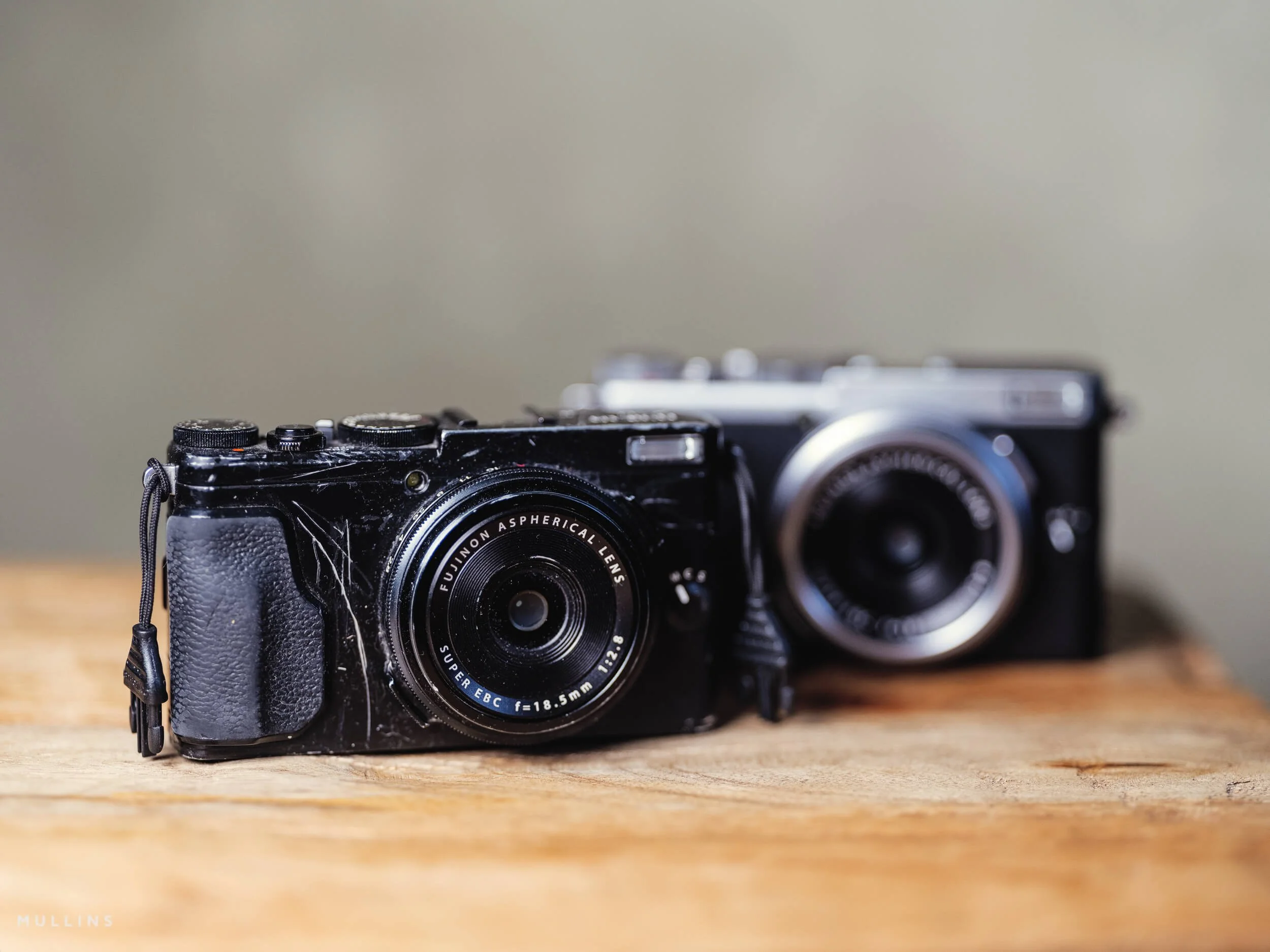
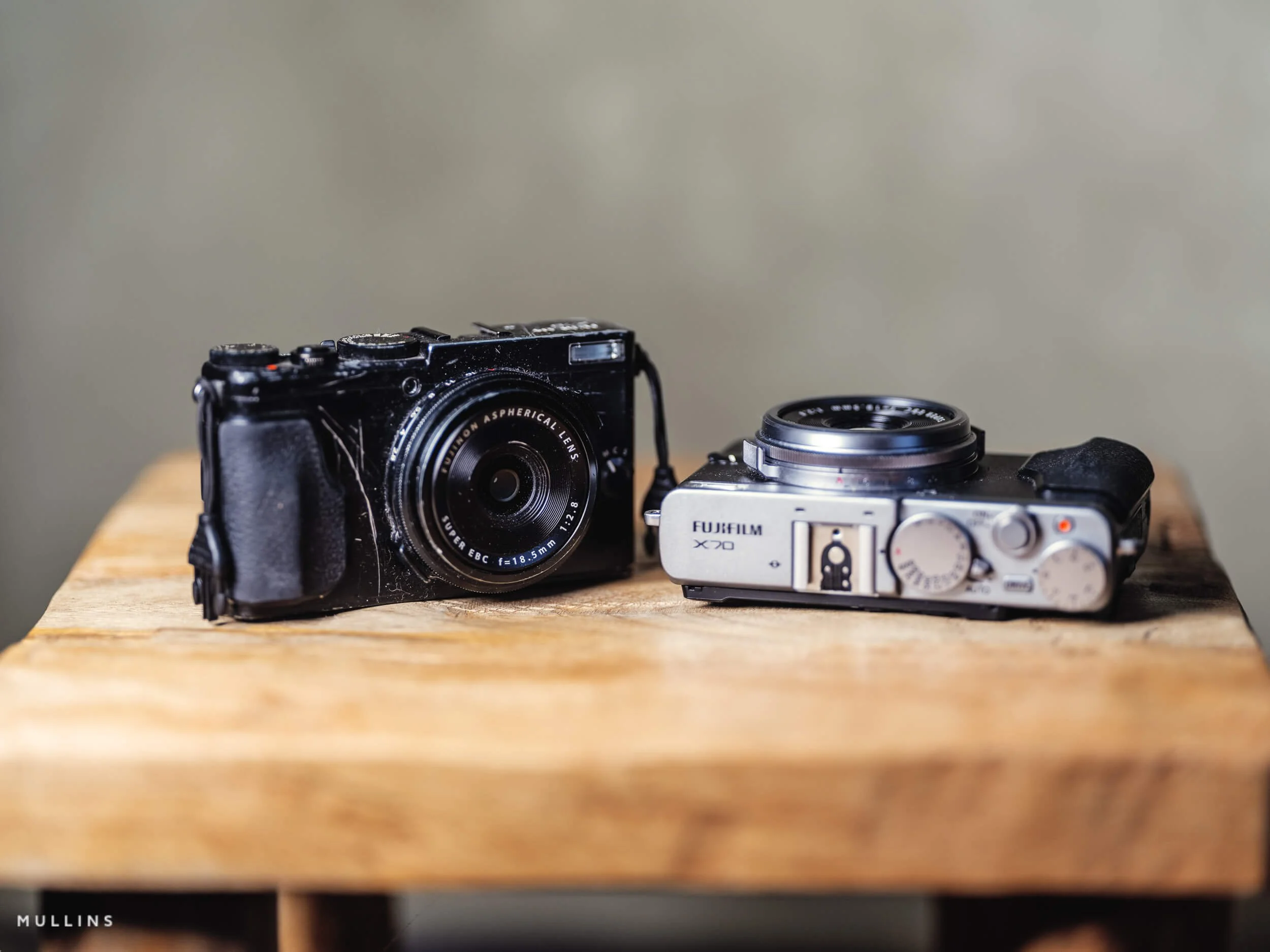
My Well-loved black X70 and my backup silver one.
What this article covers
A 10-year celebration of the Fujifilm X70, and why it is still one of the best “carry everywhere” cameras Fujifilm ever made.
What has aged well (and what hasn’t) if you are thinking of buying one in 2026 (if you can actually find one).
Why Ricoh has been moving fast in this space, and what Fujifilm would need to do to build a proper X70 successor.
Intro
Ten years. That’s ridiculous, really. Honestly, this blows my mind.
The Fujifilm X70 is one of those cameras that I still love and use often. Not because it’s the most advanced thing in the world, but because it’s genuinely small, properly usable, and it feels like it was designed for people like me who like to go out and take photos with it.
I did a similar post a couple of years ago. Back then, I was hopeful of an X80 - but now I’m not sure we will ever see a replacement for the X70: 8 Years With the Fujifilm X70
This is the “10 years on” version. Same love for the camera, but with, perhaps, a more honest look at what has aged, what hasn’t, and why the compact camera space suddenly feels “on trend” again.
Ten years on
If you already own an X70 and it’s working, I think you should keep it. Honestly, don’t overthink it. The number of people in my Facebook community who sell the camera and regret it is astounding.
If you’re thinking about buying one in 2026, it can still be a brilliant little camera, but the used market can be a bit hot, and you’re buying into older tech. Go in with your eyes open, and you’ll probably be very happy.
And if you’re waiting for Fujifilm to make an X70 successor, that’s where this gets interesting. Because while Fujifilm has been busy doing Fujifilm things, Ricoh has been quietly (and not so quietly) pushing hard in the exact pocketable street camera space.
What the X70 got right in 2016
The obvious thing is size. It’s an APS-C camera that feels genuinely compact, not “small for APS-C”. It’s the kind of camera you actually carry, which is basically the whole point of a camera like this.
The 28mm equivalent field of view makes sense for real life. It’s wide enough to work close, wide enough to tell a story, and wide enough to make you move your feet. It encourages a simple approach: light, composition, moment. No drama.
And I still think the tilt touchscreen was a big part of the magic. It made the camera feel modern without turning it into a phone.
What still feels special in 2026
There’s a certain look from that Fujifilm era that I still love. I’m not even sure I can explain it, but it’s something like rich midtones and files that feel lovely without losing that “filmic” charm we all love from Fujifilm cameras.
More than that, though, the camera has a simplicity that’s rare now. So many cameras feel like they’re trying to satisfy everyone. The X70 feels like it was made with a very clear purpose.
And the purpose was simple: get out, carry it, shoot.
The bits that feel dated now
If the same spec camera as the Fuji X70 today, it would raise eyebrows.
Autofocus is the obvious one. It’s fine for street photography and travel, but it doesn’t feel like a modern body once the light drops or things start moving fast. If someone’s expecting today’s tracking behaviour, they’ll be disappointed.
Battery life is another. It’s a “carry a spare” camera, especially if you’re leaning on the screen or connectivity.
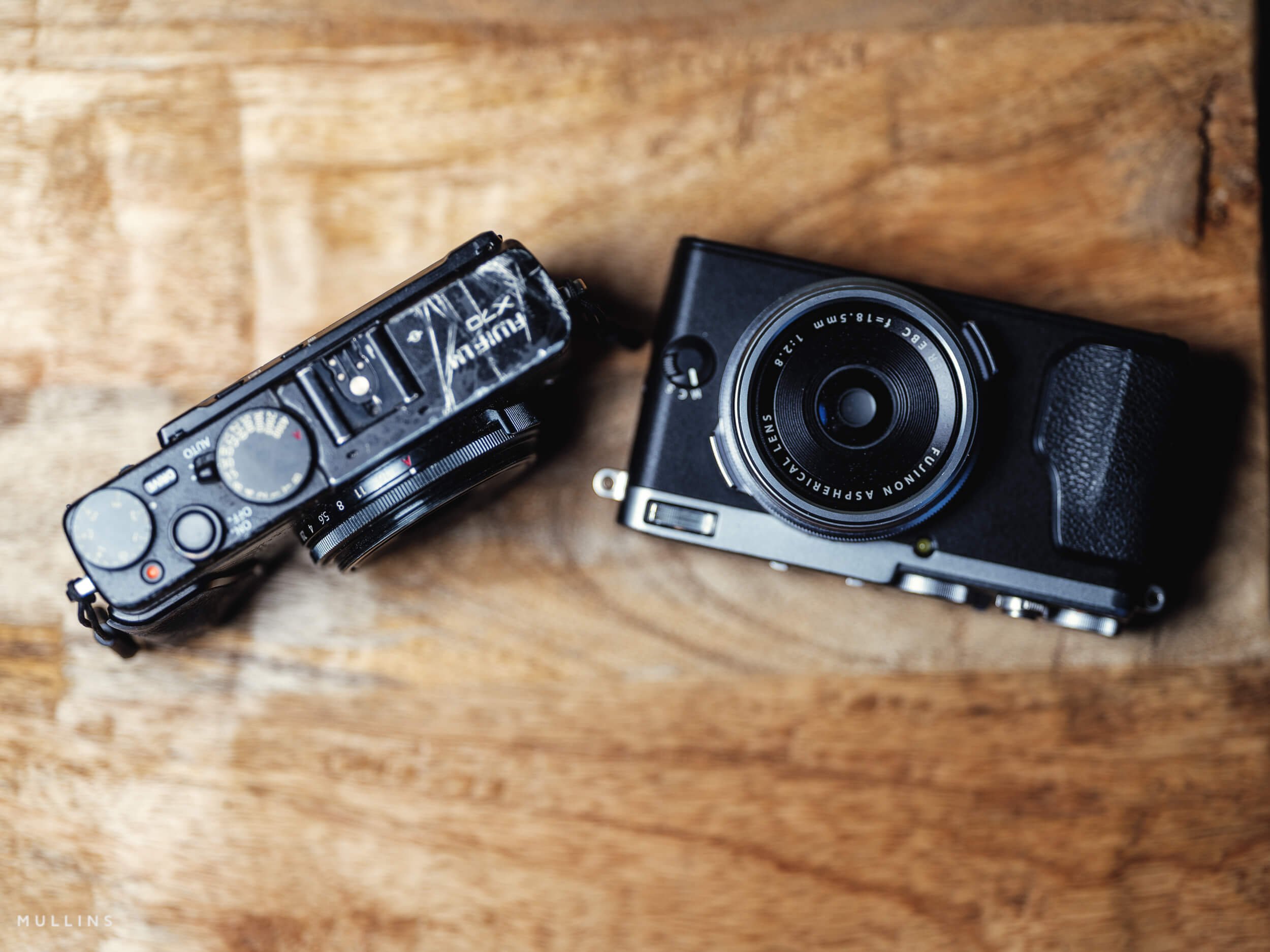
And then there’s the reality of buying older compacts. Some are immaculate. Some have been to war. Buttons wear, dials loosen, and you occasionally find one that’s had a hard life.
You’ll also find that Fujifilm no longer support the X70 - so getting repairs, should you need it, would be very difficult.
Buy carefully. Be brave. Love it.
A Note on the editing of the photos in this post
All the photos in this post were edited using my Lightroom Presets.
I’m mentioning it because people often assume presets are “camera-specific”, and they really aren’t. They’re built to work across any RAW files you throw at them, so they’ll happily handle X70 files, newer Fujifilm bodies, Canon, Nikon, Sony, whatever you’re shooting.
And yes, before anyone asks, they work on Ricoh files too. I won’t hold it against you. If you like the colour and monochrome look you’re seeing here, and you want a fast, consistent starting point for your own edits, you can check out my Presets.

The compact camera comeback (and why the X70 makes sense again)
The timing is funny.
When the X70 came out, it never got the obsession that the X100 line enjoys. But now, the whole idea of a small, fixed-lens, photography-first camera is having its moment in the sun again. People want a camera that feels like a camera. They want a few limits, because limits can be liberating in an odd way, but they don’t want something that gets in the way, or does loads of things they don’t need.
The market shifted, and really, only Ricoh has capitalised on it.
A Selection of Photos Shot with my Fuji X70


Ricoh is picking up the pace (Please, Fujifilm, take note)
In my Fujifilm 2026 wishlist post, I said there’s a genuine space for a serious, pocketable, photography-first compact that isn’t trying to be a content creation device. I still think that’s true.
Ricoh’s pace is the interesting part. They’re not trying to make a camera for everyone. They’re making cameras for people who shoot. They’ve been iterating quickly, releasing niche variations, and it feels like they’re fully committed to owning this category.
That kind of commitment will win the street photography crowd because street photographers don’t want everything. They want the right thing.
A quick comparison table
| Camera | Field of view | Viewfinder | Screen | Stabilisation | The “why you’d pick it” bit |
|---|---|---|---|---|---|
| Fujifilm X70 | 28mm equivalent | No (optional OVF) | Tilt touchscreen | No | Properly small, lovely rendering, a simple street/travel tool you actually carry. |
| Ricoh GR series (GR III / GR IV style) | 28mm equivalent | No (optional OVF) | Rear screen (touch on newer models) | Varies by model | Fast, direct, built around street use. Ricoh has focused hard on this niche. |
| Fujifilm X100 line | 35mm equivalent | Yes | Rear screen | Varies by model | More of a “main camera” fixed-lens tool. Less pocketable, but a deeper all-rounder. |
If Fujifilm made an X80 tomorrow, here’s what I would want
I’m not interested in Fujifilm copying Ricoh spec-for-spec. That’s not really the point.
The point is the shooting experience. Fujifilm has always been brilliant at making cameras that feel like cameras. If they ever revive the X70 idea, the philosophy matters more than the list of features.
It needs to stay APS-C. It needs a genuinely pocketable lens, not something that technically fits a jacket pocket if you don’t breathe in on a Sunday. It needs to be fast and confusion-free. It needs Fujifilm’s colour and monochrome rendering to be a key part of their lineup. And it needs one or two genuinely useful JPEG tools that help you commit in camera, rather than gimmicks.
If Fujifilm did that, it wouldn’t feel like “a Fujifilm that happens to be small”. It would feel like a proper GR challenger that happens to be a Fujifilm.
Another selection of photos taken with my Fujifilm X70


Buying a used Fujifilm X70 in 2026: a quick checklist
If you’re buying an X70 second-hand, don’t just look at the photos and get excited. Do a quick check first. It can save you a headache.
1) Lens and front element: Shine a small light across it. Look for scratches, haze, fungus, or obvious cleaning marks.
2) Sensor dust: Shoot a plain wall or the sky at f/8 or f/11 and check the file. Dust is normal, but heavy spots can mean a deeper clean is needed.
3) Dials and buttons: Turn every dial, press every button. Anything sticky, inconsistent, or “double clicking” is a warning sign.
4) Touchscreen and tilt hinge: Make sure the touchscreen responds properly, and the tilt mechanism feels firm, not loose or crunchy.
5) Battery door and card slot: Check the door closes cleanly and doesn’t wobble. Try the SD card slot too. These are the bits that get stressed over time.
6) USB charging / ports: Plug it in, confirm it charges and connects as expected. Ports can be the first thing to go on older compacts.
7) Focus behaviour: In good light and in lower light, make sure it locks focus without hunting endlessly. A bit of hesitation is normal. Erratic behaviour isn’t.
8) Evidence of knocks: Check corners, hot shoe area, and around the lens ring for dents. A battered body can still work, but it helps explain any weirdness.
9) Included extras: Original charger, spare battery, and a decent strap are a nice bonus. Not essential, but it suggests the owner cared.
10) Return options: If you’re buying online, favour sellers with a return window. With older cameras, that safety net matters.
Ricoh has done it. Could Fujifilm do a monochrome X80?
If Fujifilm wanted to be really brave with an X80, I’d love to see them do what I mentioned in my 2026 wishlist post and go monochrome-only.
Ricoh has basically shown the confidence play here by announcing a dedicated monochrome GR variant, and that’s a bit of a game changer for me: we’re not trying to please everyone, we’re building something for people who actually want to live in black and white.
Fujifilm could do the same, but with its own flavour.
Imagine an X70-sized body, a 28mm equivalent lens again, and an “all in” monochrome experience built around Acros and proper tonal control, with a few genuinely useful options like digital colour filter modes (yellow, orange, red, green), stronger grain control, and a simple way to steer contrast without menu-diving.
It would be niche, of course, and it would annoy the “just give me one camera that does everything” brigade. But that’s kind of the point. A monochrome-only X80 would instantly feel like a cult camera, and it would put Fujifilm right back in the pocketable street conversation in a way that’s hard to ignore in my opinion.
So, should you buy an X70 in 2026?
If you want a small camera that makes you want to go out and shoot, yes, it can still be brilliant.
Just don’t buy it expecting it to behave like a modern flagship. Buy it for what it is: a lovely, pocketable street camera with a wide lens and a lot of heart.
And if you already own one, maybe take it out this week. Give it a proper walk. Ten years is a long time for a camera to still feel loved in the digital age.
Will we ever see an update to the Fujifilm X70?
FAQ
-
Yes, if you want a genuinely small APS-C camera with a 28mm equivalent lens and a simple, photography-first shooting experience. Just be realistic about autofocus, battery life, and the fact you’re buying used.
-
It has a fixed 18.5mm f/2.8 lens, which gives a 28mm equivalent field of view.
-
Yes. It shoots RAW as well as JPEG, which is one reason it has aged better than a lot of small compacts.
-
Not officially. People often call the dream replacement an “X80”, but Fujifilm hasn’t released a direct successor to the X70.
-
Both are excellent street tools. The GR line is very focused on street use and Ricoh has been moving quickly in this niche. The X70 has its own Fujifilm colour and handling charm, plus the tilt touchscreen, and it’s still a joy to carry.
-
Check the lens (scratches, haze), sensor dust (shoot a plain surface at f/8 or f/11), dials and buttons, the touchscreen and tilt hinge, battery door and SD card slot, and the ports and charging. If you’re buying online, a return window really helps.
-
It would be niche, but that’s the point. Ricoh has shown there’s confidence (and demand) for specialised compacts. A monochrome-only X80 built around a great black and white rendering could become a cult camera very quickly.

A complete black and white Profile, Preset & Workflow Pack for Lightroom
Film Edition 5 - Workflow Series (Monochrome) is a structured set of Lightroom profiles and presets designed to help you achieve a finished monochrome look quickly and consistently.
This is not a random “pick a look and hope” pack. It’s designed as a repeatable workflow you can run on a full set of images, with fixes and finishing tools when you need them.
If you edit regularly in Lightroom, you already know the problem. You want a strong black-and-white style, but you also need it to behave consistently across different scenes, lighting conditions, and subjects. This pack is designed to help you move fast without the work looking rushed.
You start with one of the custom monochrome profiles to establish the tonal foundation, then shape the image with workflow presets that are designed to work with that profile rather than fight against it. From there, you can use the included Toolkit for things like AI masking, grain, curves, highlight control, sharpening, finishing touches, and everyday problem-solving inside Lightroom. The product page positions the pack exactly this way, with the profile first, workflow second, then utilities and finishers to refine only when needed.
Built for speed and consistency
If you edit your photos in Lightroom, you already know the problem: you want a strong monochrome style, but you also need it to work across different scenes without constant fighting.
This pack helps you move fast without the work looking rushed.
Fast workflow: fewer decisions, clearer steps.
Consistent results: the set hangs together as a series.
Film-inspired tonality: depth, shape, and texture without the “preset look”.
Useful fixes included: real-world Lightroom problems, solved quickly.
What’s included
11 custom monochrome profiles
20 one-click presets
128 Mullins Lightroom Toolkit presets, including AI masks, fixes, utilities, grain, tone curves, colour helpers, sharpening and finishers
Compatibility
Works with Lightroom Classic and Lightroom Desktop. AI Mask presets require Lightroom Classic 11.0+ or Lightroom Desktop 5.0+.
Three for Two Offer
All preset packs are included in the 3-for-2 offer. Add any three preset packs to your basket, and the cheapest one is free at checkout.