Documentary family photography is not just about photographing families without posing them.
That’s part of it, of course. But for me, the bigger point is this: you are making a record of family life as it actually feels.
Not the version where everyone has been told to behave beautifully for an hour in a park. The real one. The kitchen table, the hallway, the sofa, the negotiations with the kids, the little rituals that every family has.
This post is about how I approach documentary family sessions, why I think they are important, and what this kind of work can teach you about observation, patience, light, composition and moment.
In brief
Documentary family sessions work best when the photographer doesn’t control the day and starts paying proper attention to it.
The aim is not to make family life look perfect. The aim is to photograph it honestly, with care, timing and respect.
A strong documentary family session usually comes from a few very simple things:
-
Observation
Watch before you shoot. Families have routines and habits that can show far more than a posed portrait.
-
Patience
The best moments often happen after the obvious thing has finished.
-
Light
Use what is there. Window light, hallway light, garden light, even the glow from the telly if it belongs to the story.
-
Composition
Homes are busy, but busy does not have to mean messy. Layer the frame, use doorways, shoot through things, and let context do the storytelling.
-
Restraint
Don’t direct anything. Don’t overshoot every emotional moment. Sometimes the most respectful thing you can do is make the photograph and leave the moment alone.
Who this post is for
This is for photographers who want to shoot documentary family photography in a truly candid way.
It might be useful if you already photograph families but feel you rely too much on lighting direction and mild posing. It might help if you are a wedding photographer looking for another way to work with past clients as they grow their families.
And it might help if you are a street or documentary photographer who wants to bring that same observational skill into family spaces.
The principles are the same, really.
People are people. Whether they are getting married, walking through a city, or trying to persuade a toddler to put on shoes, the skill is still built around light, composition, and moment.
Family work is slower in some ways. Then suddenly very fast.
You wait for half an hour, then everything happens in three seconds while someone is holding a banana and another child is crying because the wrong plate has appeared.
What is a documentary family session?
A documentary family session is a candid photographic record of family life.
There is no posing, no “look this way”, no repeated action for the camera. The family carries on with its day, and the photographer observes, reads the room and makes pictures from what genuinely happens.
That does not mean you just turn up and randomly press the shutter.
This is where I think people sometimes misunderstand documentary work. The lack of direction does not mean a lack of skill. In fact, I’d argue it requires more craft, not less, because you are working without the safety net of control.
You can’t say, “stand there because the light is better.”
You can’t move the child back into the doorway because the frame was cleaner.
Well, you can. But then it becomes something else.
For me, documentary family photography is about working with what is in front of you and making the best possible photograph without bending the moment out of shape.

I photograph family sessions this way because it's a wonderful way to tell the story of real life.
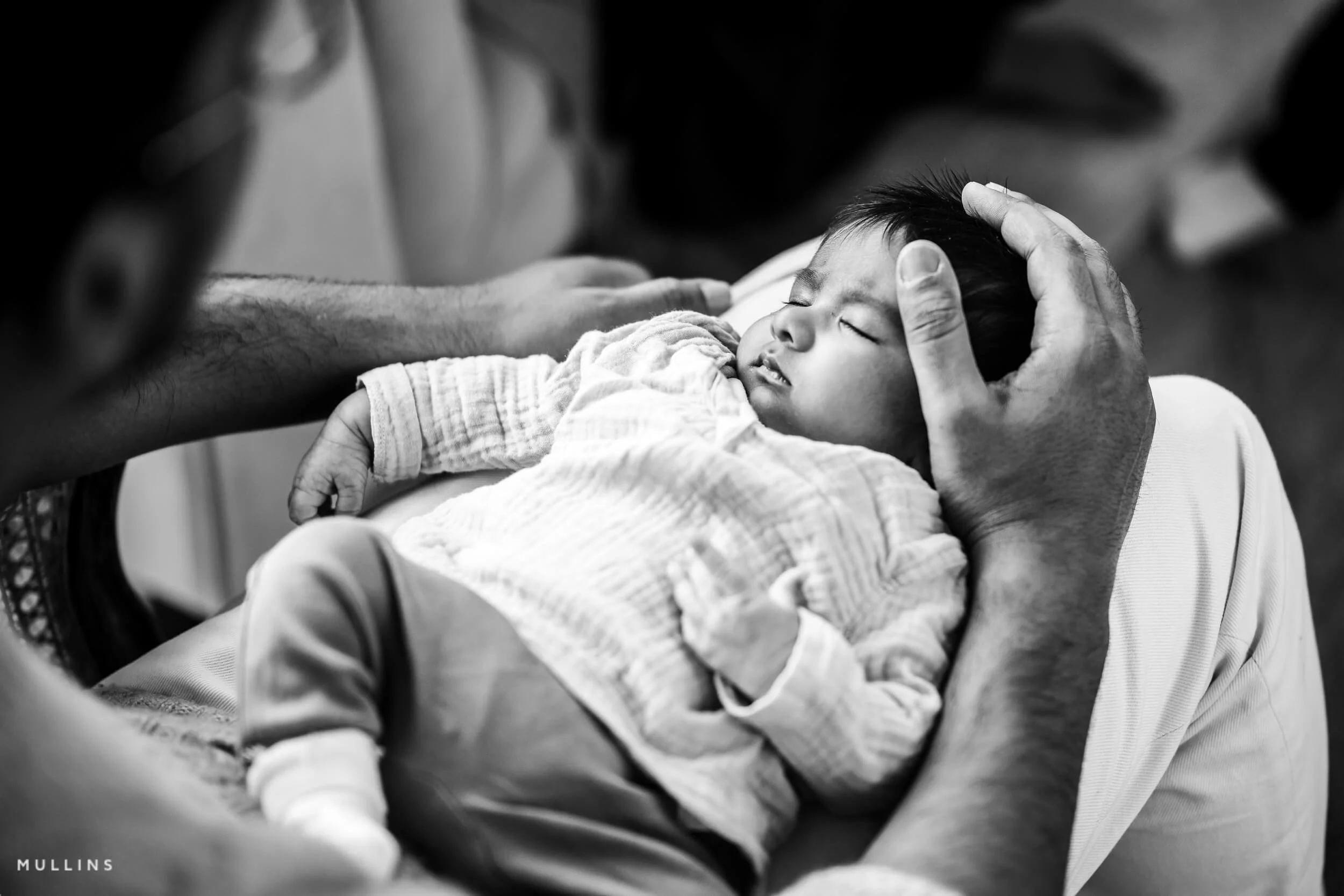
Children do not need to perform to be worth photographing. They are far more interesting when they are absorbed in something, arguing with a sibling or clinging to a parent or basically just being kids.
Parents are the same. They do not need to be posed into looking loving. They already are loving. It just might appear as wiping a face or cutting up toast.
Those things are really important to this approach.
They might not feel important at the time, but family life is made from ordinary moments. And the thing about ordinary moments is that they often become extraordinary later.
A picture of a child brushing their teeth might not win competitions. It might not get hundreds of comments online. But in twenty years, that photograph might be the one that brings so many memories back.
The bathroom tiles. The pyjamas. The tiny hands.
All the things that people forget about, but smile about later.
Your job is not to make the family interesting
I think one of the biggest mistakes photographers make with family work is assuming they have to add interest.
Better location. Better outfits. Better props. Better background. More flattering light. Something “special” happening. But family life does not need to be changed to be interesting.
When I arrive at a family home, I’m not looking for perfection. I’m looking for the everyday stuff.
Where does everyone naturally gather?
Where is the best light?
Which child is wary of me?
Who is the loud one?
Who disappears?
Which parent is a bit wary of the whole thing?
Where does the dog sit?
What happens when the kettle goes on?
These tiny things are not filler and boring; they are part of the overall story.
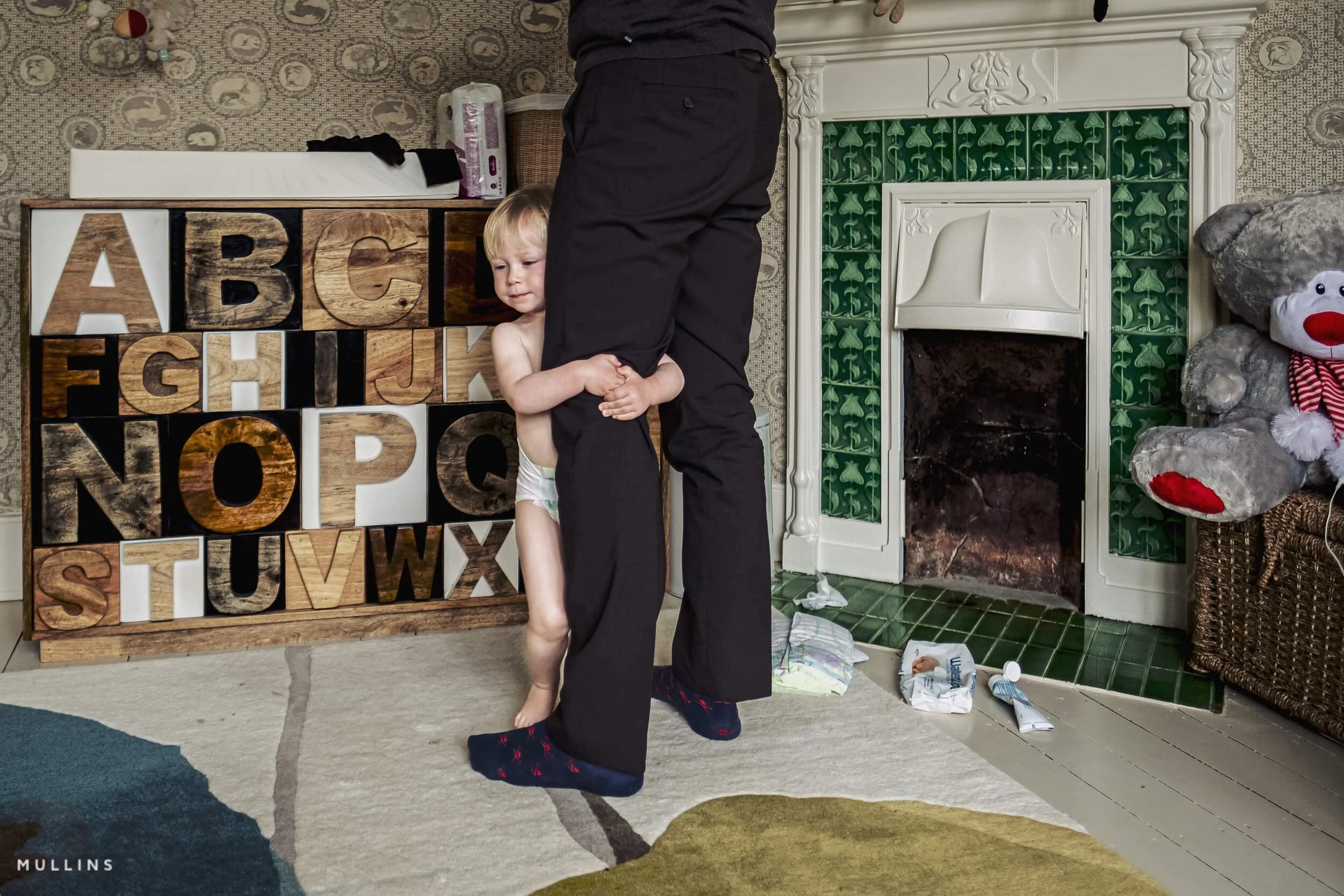
A family home is full of visual clues. Shoes by the door. A mug that gets used every morning. Height marks on a wall. Fridge magnets. These details are not distractions if you use them well.
A photograph that could have been made anywhere is fine. But a photograph that could only have been made in that house, with that family, at that exact point in their lives, is much more powerful.

Start by disappearing
I don’t mean literally, obviously. Although there are days when hiding behind the kitchen island is not a bad tactic.
What I mean is that I try not to make myself the centre of the session.
When I arrive, I usually slow everything down. I say hello. I let the children clock me. I don’t immediately start firing away with my camera.
Children notice everything. They notice the camera. They notice the bag. They notice your shoes. They notice whether the adults are suddenly behaving differently.
Once people realise I’m not going to ask them to stand anywhere or smile on command, the pressure drops. That’s when the session really starts.
The family stops wondering what they should be doing and starts doing what they would have done anyway.
That is when you can begin to photograph properly.

Light, composition and moment still matter
A documentary approach is not an excuse for lazy photography.
You still need light. You still need composition. You still need a moment. That mantra has guided my wedding work for years, and it applies just as much to family sessions.
The difference is that you don’t create those things by controlling everyone. You find them by moving, waiting and paying attention.
Light
I use available light. No flash. No studio lights. Available light only.
Sometimes that means beautiful window light in a kitchen. Sometimes it means a dim hallway. Sometimes it means harsh light through patio doors or gloomy weather, but always available light.
The important thing is not to panic.
If the light is flat, I look for movement and composition. If the light is contrasty, I look for shape. If there is mixed light, I might suggest switching one of the lights off.
Composition
Homes are busy, and that's brilliant but sometimes challenging.
I use doorways, mirrors, shelves, table edges, staircases, curtains, reflections and foreground clutter to build frames.
The trick is not to remove all the chaos. It's all part of the story.
Sometimes that means filling the frame and letting the moment take over. Sometimes it means stepping back and using layers so the viewer can read the picture again and again. Sometimes it means making a very quiet frame where what is missing from the picture is as important as what is included.
In documentary family work, composition is often about deciding what to include rather than what to exclude.
The mess might matter. The plate might matter. The toy on the floor might matter. The half-open door might matter.
It all depends on the story.
Moment
The moment is rarely the most obvious one.
Yes, there are laughs, cuddles and big bursts of energy. But there are also the moments just after those moments. What happens next is as important as what happened before it.
That is where I often find the best photos.
With family sessions, anticipation matters more than reaction. You can almost feel when something is about to happen. A child goes quiet, and a parent leans in: The shape is nearly there.
There is your moment.
Don’t confuse documentary with distance
Being a documentary photographer does not mean being cold, detached or invisible. You are still a human being in someone’s home.
You can talk. You can be kind. You can reassure the kids. You can have a cup of tea if one is offered. You should interact enough that people feel safe.
The key is not to direct the content of the photograph.
There’s a difference between being friendly and staging the scene.
If a child talks to me, I talk back. If they want to show me a toy, I look at it. If they want to play with my camera, I let them (carefully). The session is not some hard-line documentary test. It’s a family home, not a war zone.
I don’t ask them to repeat things.
I don’t say, “do that again.”
I don’t move them into better light.
The trust comes from letting the family feel that the pictures are being made from their real life, not from my idea of what their real life should look like.

Photographing children without controlling them
Children are brilliant because they are terrible models, and I mean that in a good way.
They rarely do what you expect, and they almost never do what you want at the exact moment you want it. That is why documentary family photography suits them so well.
If you try to control children too much, you often get retribution and maybe even anger. Forced smiles, awkward stillness, parents getting stressed, children resisting the whole thing. The session becomes a lot more difficult then.
I would rather let children be themselves.
If they are energetic, photograph that.
If they are shy, photograph the shyness carefully.
If they are cross, don’t instantly put the camera down as if they are in trouble. Obviously be sensitive, but family life includes frustration, tiredness, sulking, waiting and sometimes boredom.
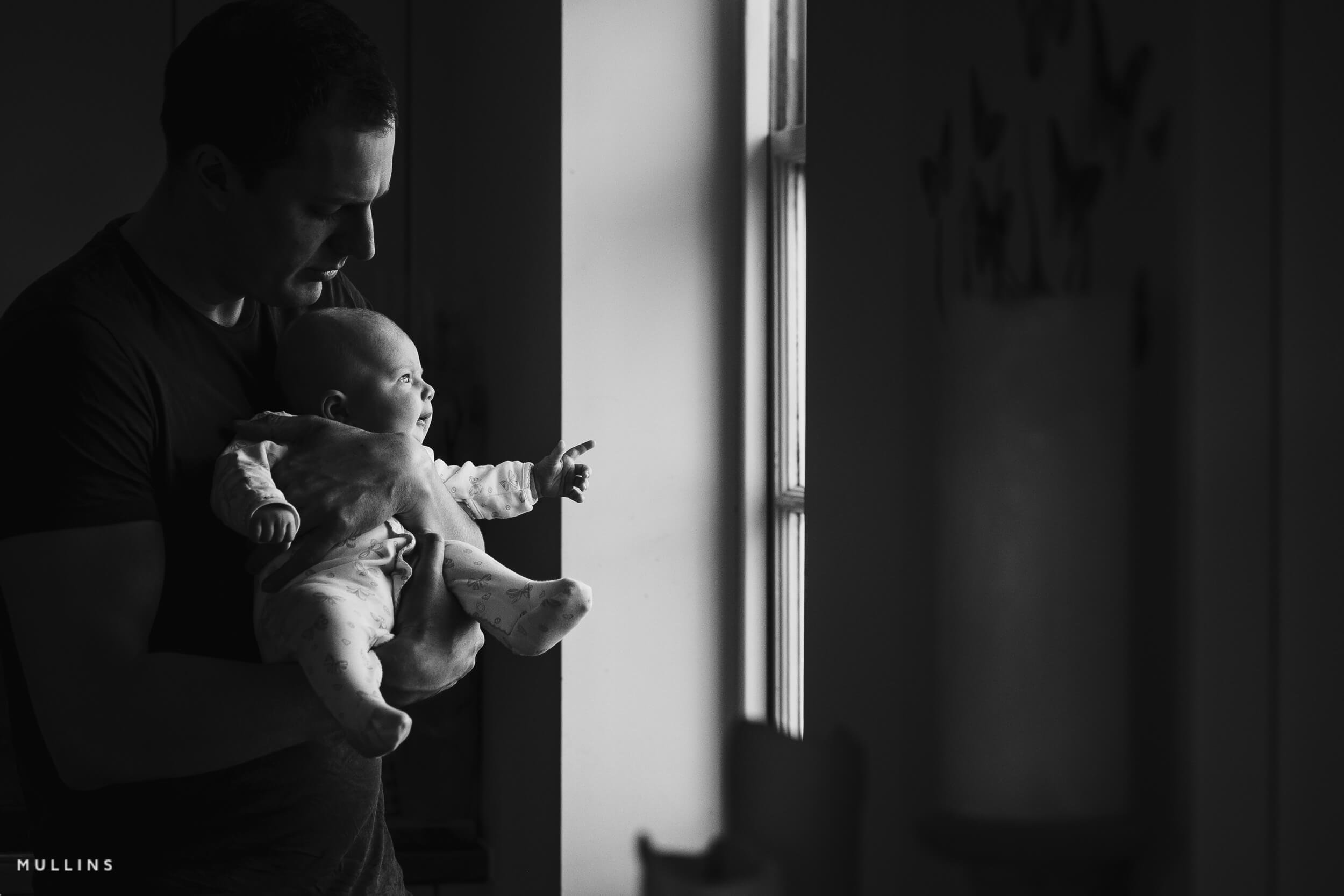
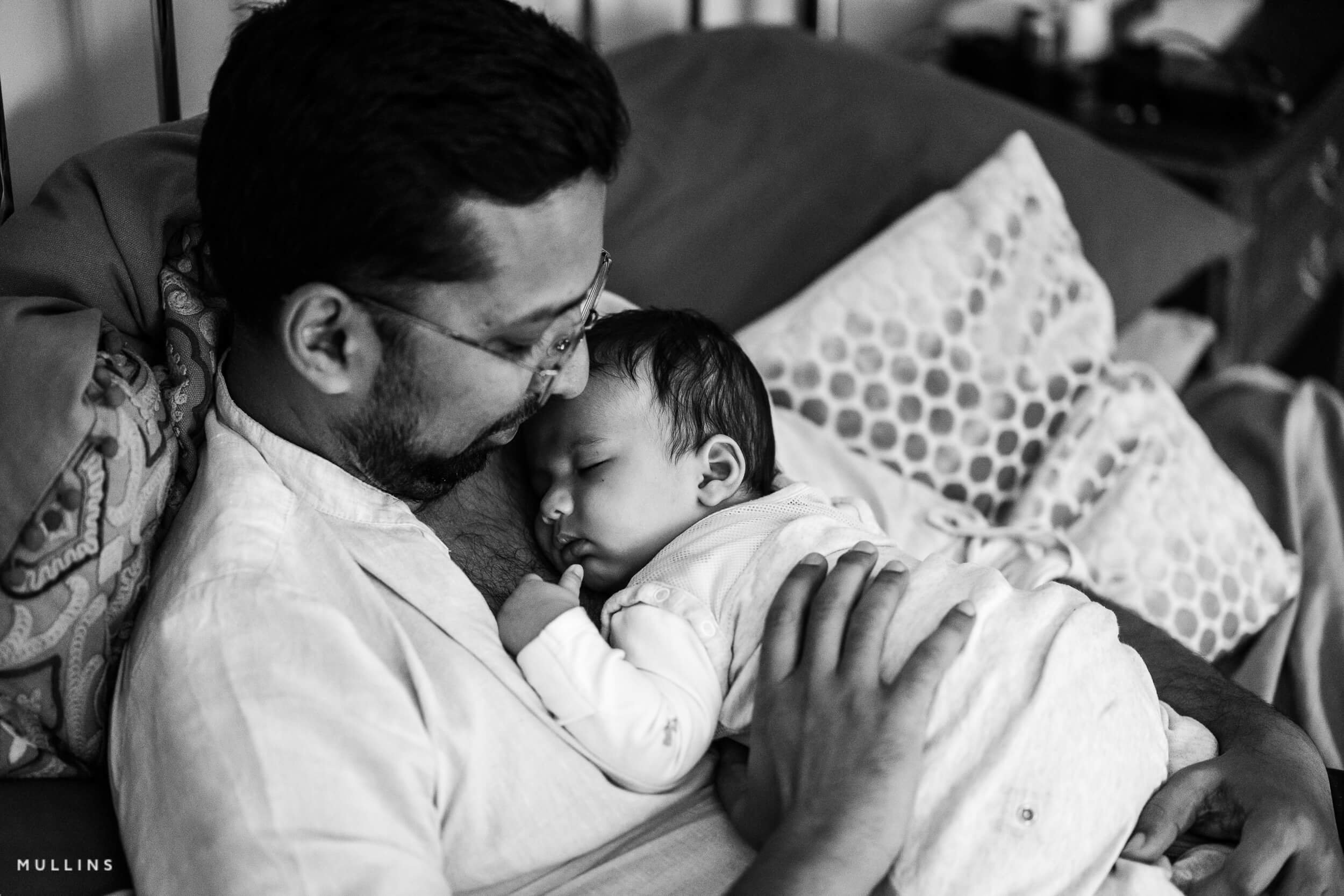
A parent comforting a child after a wobble can tell you more about that relationship than a perfectly posed picture in a studio.
The main thing is to work at the child’s pace.
That might mean backing off. It might mean photographing through a doorway. It might mean staying with the wider scene until they forget about you a bit. It might even mean not taking the photograph at all.
Not every moment needs to be photographed.
A documentary family session should not feel like a random collection of nice pictures.
It should feel like a proper story.
That does not mean every picture needs to be amazing. In fact, you need slower pictures for the stronger ones to stand out properly. You need establishing frames, transitions, details etc.
I try to think in sequences:
-
→
Where are we?
The house, the room, the garden, the walk to the park.
-
→
Who is here?
Not just portraits, but people in context.
-
→
What is happening?
Breakfast, play, bath time, getting shoes on, story time.
-
→
What does it feel like?
Loud, calm, chaotic, tender, funny, tired.
-
→
What details will matter later?
Hands, toys, clothes, rooms, habits, objects.
-
→
Where does the story end?
A quiet moment, a final frame, a natural ending.
A two-hour mini session might only tell one small chapter. A full Day in the Life session can move from breakfast to bath time, giving you a much deeper story.
Neither is better in every situation. They just tell different kinds of stories.



The value of repeat sessions
One of the things I love most is photographing the same family over time.
There is something lovely about returning, and the clients become friends. You see the children grow, obviously, but you also see what stays the same.
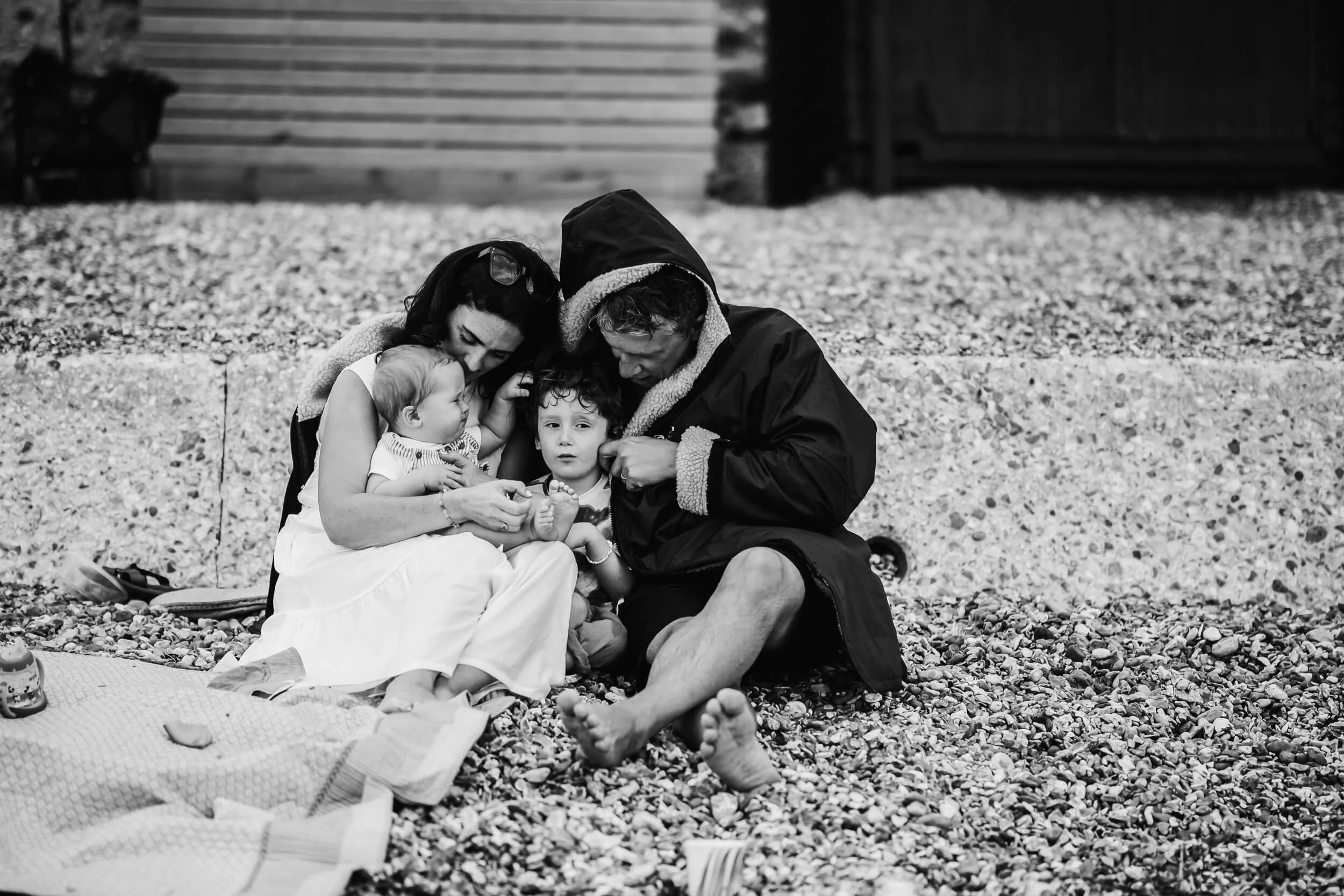
A single session can be beautiful, but repeated documentary sessions become something else. They become an archive of memories for the family.
I’ve photographed families from birth onwards, and those pictures gather strength over time because they are connected.
For photographers, this is worth thinking about commercially and creatively.
If you photograph weddings, there is a natural continuation here. You may already have the trust of the couple. You know how to work unobtrusively. You understand their family dynamics. Documentary family photography can be a very natural and perhaps lucrative extension of that relationship.
Editing documentary family sessions
The edit is where you can bring the story to life.
I don’t think every technically successful image should make the final set. That’s true of weddings too, but it’s especially true with family work because ordinary life can produce a lot of almost-pictures. They can be tempting to keep, but editing tightly will be more rewarding for the client.
A good edit needs discipline.
Repetition can be useful if it builds into something, but too much repetition makes the gallery feel tired. One picture of a child brushing teeth might be perfect. Twelve probably implies you couldn’t decide.
I usually think about a few things when editing:
Does this image add something new?
Does it help the story move?
Is the emotion real, or just convenient for me?
Would the family care about this in twenty years?
Is the frame strong enough to hold attention, or will they flick past?
Does colour help, or would black and white simplify it?
I like delivering both colour and monochrome because they do different jobs.
Colour can hold memory beautifully. The yellow shoes, the red socks, the colour of a bedroom wall that will be painted over at some point.
Black and white can strip away distractions and draw more attention to emotion.
How I edit my images today
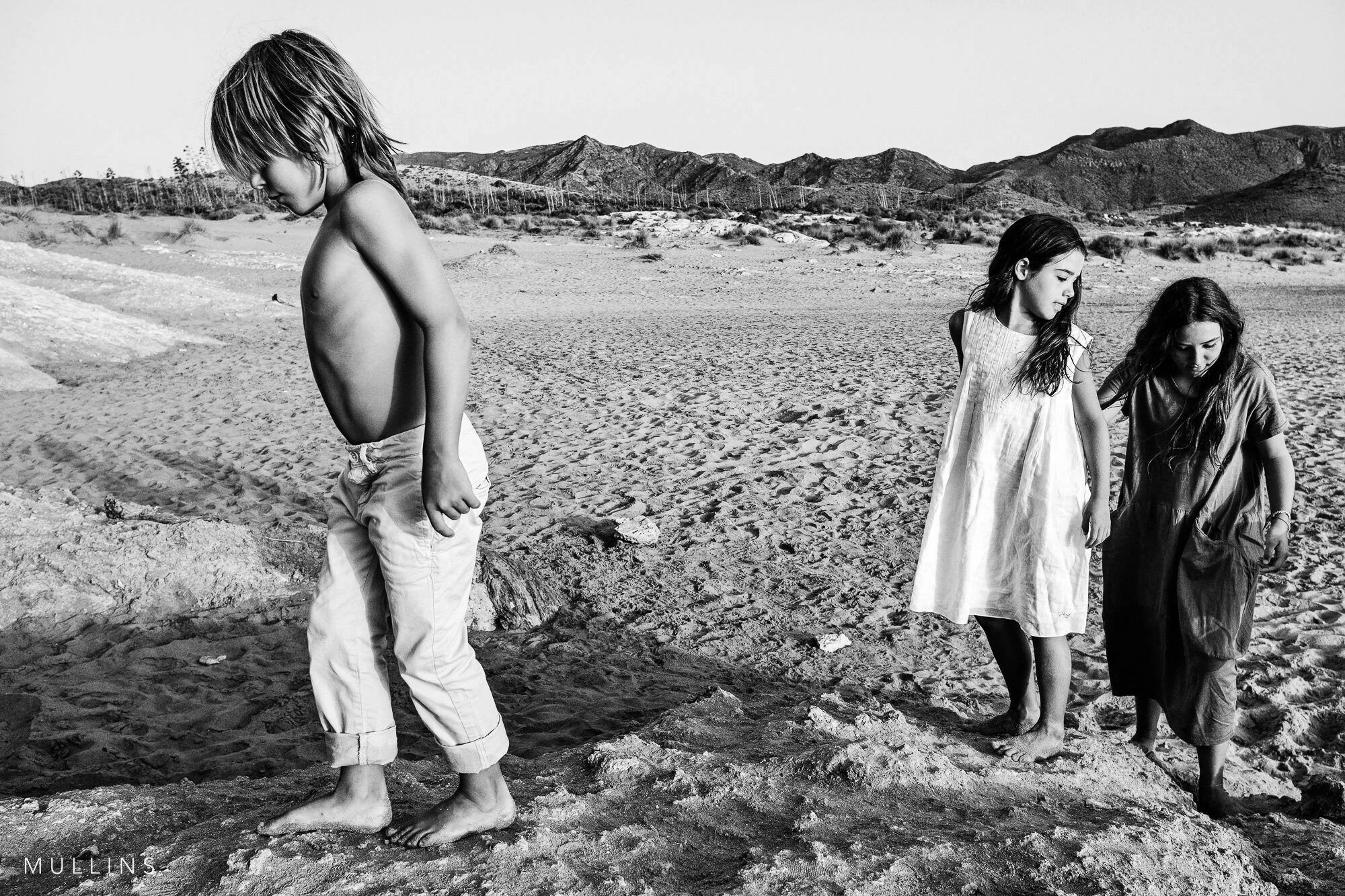
Every black-and-white frame in this post was processed with my own Lightroom presets, the same ones I use on real weddings and family documentary work.
Gear matters less than your behaviour
Photographers love talking about gear. I do, too, and I talk about it a lot on this blog.
But in documentary family sessions, your behaviour matters more than your camera.
Small, quiet cameras help. Fast lenses help. Good high ISO performance helps. A simple two-body setup is what I use so I can switch focal lengths quickly.
But the best equipment choice is the one that lets you stay responsive. You really don’t want to be fiddling about in your bag looking for the perfect lens. I shoot almost everything on a 23mm and 85mm (ff equiv.) combination.
So yes, choose good tools but stop fiddling with them and watch what is happening.

A few mistakes photographers make with documentary family work
-
01
Shooting too loosely
Candid does not mean careless.
Machine gunning the session at 30 frames per second does not make you a good storyteller or observer.
You still need to make decisions.
-
02
Waiting for only big emotion
Laughter is great, tears too. But most family life happens in between all this stuff.
Look for concentration, boredom, touch, habit and body language.
-
03
Being too passive
There is a difference between not directing and not working.
You should be moving. Reframing. Reading the room. Predicting. Adjusting your position. Thinking ahead.
You are not controlling the family, but you are absolutely responsible for the photograph.
-
04
Overshooting emotional moments
Sometimes photographers shoot through everything because they are afraid to miss something.
I understand that. But there are moments where overshooting changes the mood. Especially with children.
Make the picture. Then perhaps stop.
You don’t have to squeeze every drop out of a moment for it to matter or worse, to disrupt the moment completely
-
05
Delivering too much
A documentary gallery should feel thought-out, not dumped into a collection.
If the family has to wade through hundreds of weak duplicates to find the pictures that are important, you have pushed your editing-boredom onto them, and they are unlikely to become repeat clients.
Edit properly.

Practical exercises for photographers
If you want to get better at documentary family photography, you don’t need to start by booking clients.
You can practise anywhere. In your own home, with your own family or with friends.
Exercise 1: Photograph one routine
Choose one ordinary routine and photograph it properly.
Breakfast. Bath time. Homework. Shoes by the door. A dog walk. Not the whole day. Just one routine.
Your goal is to create a short sequence of 8 to 12 images that tells the story without posing or interrupting.
Exercise 2: Work one room
Pick a room and stay there for 30 minutes.
Find three different compositions without moving anything. Use the light as it is. Look for foreground, background, reflection, shadow and gesture.
This is harder than it sounds, which is exactly why it’s a great exercise.
Exercise 3: Wait for the second moment
When something obvious happens, make the picture.
Then wait.
Often the better photograph comes just after the one you thought was “the shot”, when people relax or react. Don’t miss these by chimping on the back of your camera.
Exercise 4: Make one frame with three layers
Try to build a frame with foreground, subject and background all contributing something.
Family homes are full of layers. Doorways, tables, toys, mirrors, windows. Use them.
Exercise 5: Edit for story, not quantity
Take a small set of images and reduce it by half.
Then perhaps reduce it again.
Ask what each image does. If two images do the same job, keep the stronger one.
This is painful, but really useful. A tight edit will win you repeat business.

I honed my skills by photographing my own family way before I offered this as a commercial offering.
Why family sessions will make you a better photographer
Documentary family work improves your photography because it’s hard. In some ways, harder than photographing weddings.
You cannot rely on epic locations. You cannot rely on golden hour. You cannot rely on styling. You cannot rely on people doing what they are told.
You have to see and become a proper observer of life.
That is why I think this kind of work is so valuable for photographers, even if family photography is not your primary source of income.
It teaches patience and anticipation. It teaches you to work in bad light and ordinary rooms. It teaches you that story is often hiding in the bits you’ve been ignoring.
And perhaps most importantly, it reminds you why photographs matter in the first place.
Not for likes.
Not for awards.
Not for proving how clever we are.
But because people change. Children grow. Houses move.
And a photograph, if made honestly, can be the most nostalgic and powerful experience for people in years to come.
Honestly, real life is enough.
FAQ: documentary family sessions for photographers
-
Start with one small routine rather than trying to photograph a whole day. Choose something simple, such as breakfast, bath time or a walk to the park, and practise building a sequence without directing anyone.
-
I avoid direction during the actual storytelling because it changes the nature of the moment. You can still communicate, reassure and be friendly, but the photographs should come from what genuinely happens rather than from repeated or staged actions.
-
There is no single perfect lens, but wider lenses are often useful because family life happens in small rooms and close spaces. The important thing is to choose equipment that lets you move quietly, work quickly and avoid interrupting the family.
-
A short two-hour session can tell one chapter of family life. A full Day in the Life session gives you a deeper story, usually from morning into evening. The right length depends on whether you want a glimpse or a fuller visual record.
-
Both can work. Colour is brilliant for memory and context, while black and white can simplify a frame and draw attention to gesture, shape and emotion. The choice should support the image rather than follow a fixed rule.
-
You don’t make them interesting by adding drama. You make them interesting by noticing light, gesture, relationships, repetition, detail and timing. Ordinary moments become meaningful when they are photographed with care.
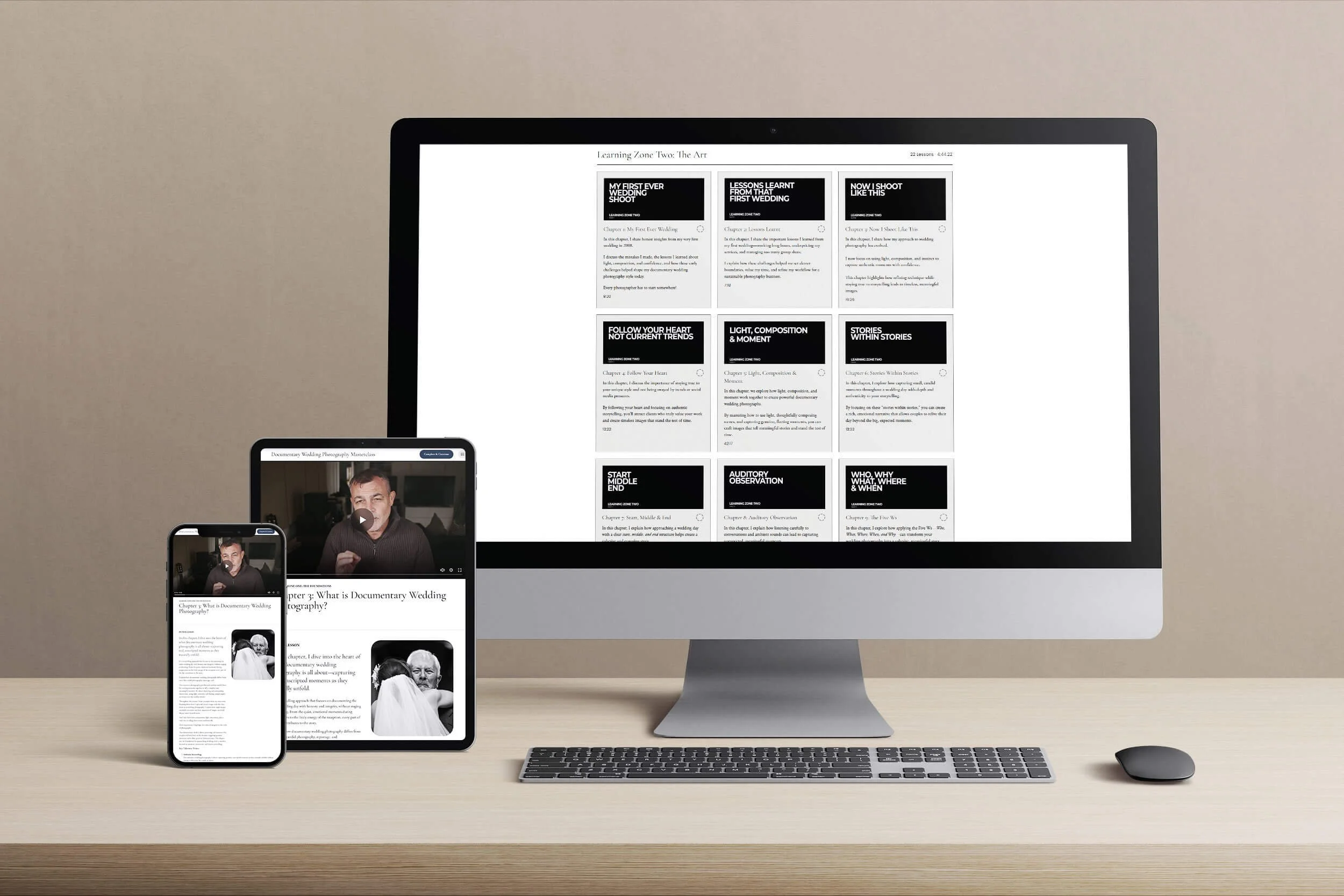
If you’re a photographer trying to develop a more honest, observational way of working, you might enjoy my education pages for photographers. I teach the same core ideas through my workshops, online courses and mentoring.